

Preis nach Wahl 
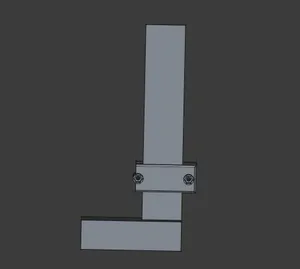
противооткатный упор 1/10
Cults3D
This collection gathers 3D models that hold things in place: door wedges, stops for casters and bed frames, anti-roll rings for bottles and small items. Most files are made for 3D printing in flexible or rigid filament, depending on how much grip the part needs. It helps you find a stop by the surface it touches and the load it has to resist. Polyzon does not confirm whether models are free, their price, license, official status, affiliation, safety or fitness. Check the current terms at the source.
Der Text dieser Sammlung ist auf Englisch verfasst; die Suche selbst funktioniert in jeder Sprache.
 Eine Sammlung von Polyzon · 48 Modelle von 5 Plattformen
Polyzon stellt diese Sammlung aus den Suchergebnissen der angebundenen Plattformen zusammen. Dubletten und Modelle ohne Vorschaubild werden entfernt, schwache Treffer rutschen ans Ende, der Rest bleibt in der Reihenfolge der Suche. Die Modelle gehören ihren Urhebern – die Bedingungen findest du auf der Seite des jeweiligen Modells.
Auswahlregeln: Polyzon-Redaktion · Text aktualisiert: 10.10.2026


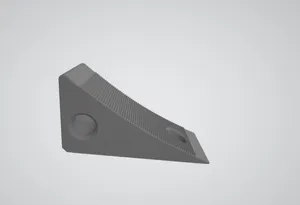


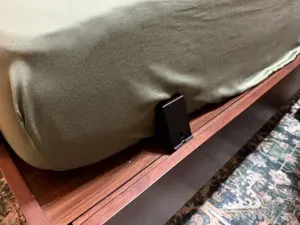
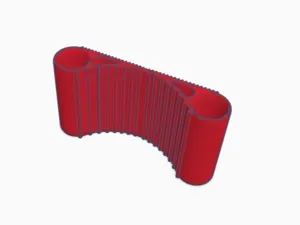
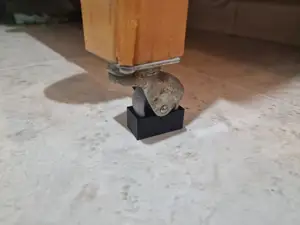


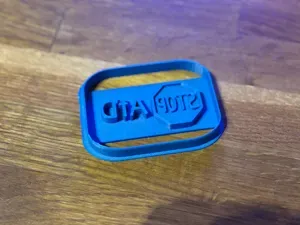
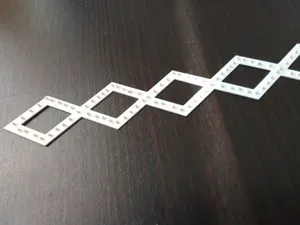

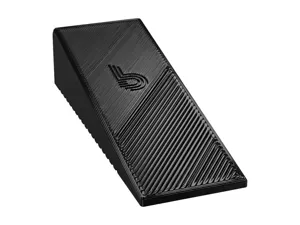


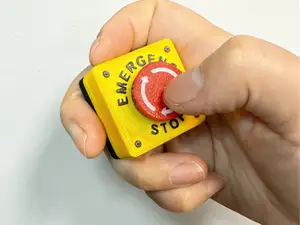

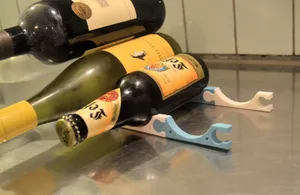


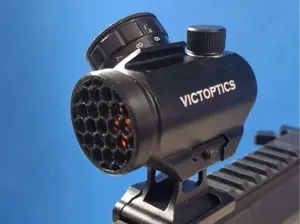
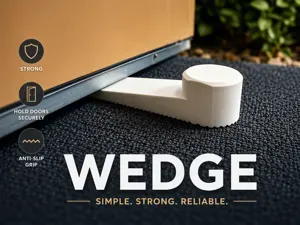

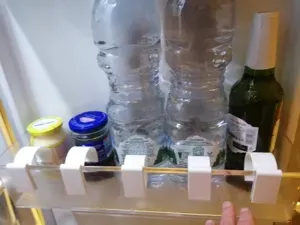
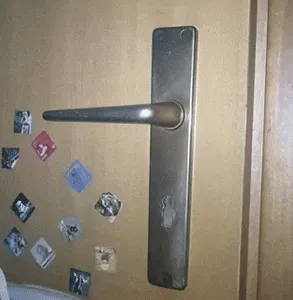
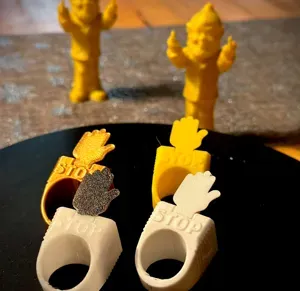


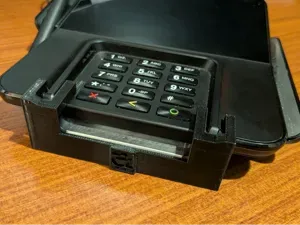

The models differ mainly in what they block and how they grip. Door wedges rely on a sloped face and grooved underside to hold a leaf open on a hard floor. Caster and bed-frame stops sit under a wheel or a leg and use a lip or a cup shape. Bottle and shelf stops are usually low rings or rails that keep a cylinder from rolling. Grip rings and similar parts wrap around a handle or a base instead of standing on the floor.
When choosing a file, look at the dimensions first: the gap under the door, the wheel diameter, the bottle radius or the distance between furniture legs. Check how many parts the model has and whether they assemble with glue, screws or a press fit. Read the material the author lists — flexible filament for grip surfaces, stiffer plastics for wedges that take a load — along with layer height, wall count and infill. Photos of real prints show whether the grooves and contact faces came out clean.
Print orientation matters more here than in decorative work, because the part is loaded along one axis. A wedge printed flat keeps its layers across the load, while a tall stop may need supports under an overhang; the author's notes usually say which way to place it. If a model is too small or too large, scaling changes wall thickness and the fit of grooves, so adjust dimensions rather than the whole file. To widen the search, try synonyms such as doorstop, chock, anti-slip pad, bumper or holder stop, and related topics like furniture feet, cable clips and shelf organisers.


Der komplette Themenkatalog – von Wohnen & Haushalt bis CNC, mit Suche auf allen angebundenen Plattformen.

