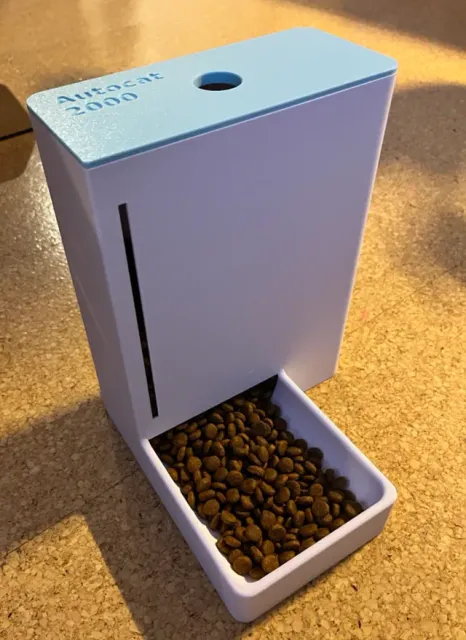

Free %2Fhttps%3A%2F%2Ffbi.cults3d.com%2Fuploaders%2F14264381%2Fillustration-file%2F6e08411f-9fd0-411a-a219-71941c53d4d9%2F20190511_104008.jpg&w=640)
Полностью автоматическая кормушка для кошек
Cults3D
This collection gathers 3D-printable cat feeders, from motorised dispensers and hoppers to tilted bowl stands and puzzle feeders. Each entry is a model file you can slice for your own 3D printer and adjust to the size of your cat and its kibble. It helps if you already know whether you want a plain stand or a build that needs extra hardware. Polyzon does not confirm whether models are free, their price, license, official status, affiliation, safety or fitness. Check the current terms at the source.
 A Polyzon collection · 48 models from 6 platforms
Polyzon assembles this collection from search results on the connected platforms. Repeats and models without a preview are removed, weak matches go to the end, and the rest keeps the search order. Models belong to their authors — check the terms on each model's page.
Selection rules: the Polyzon editorial team · Text updated 2026-10-16

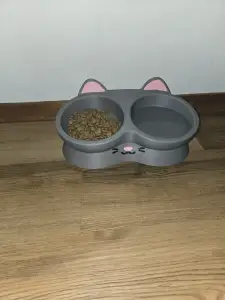



%2Fhttps%3A%2F%2Ffbi.cults3d.com%2Fuploaders%2F13100539%2Fillustration-file%2Fd46eec42-548e-4b6e-ad81-84df59cad992%2Fa6dbdcf68bd348e9d6a141d68636a101_display_large.jpg&w=300)
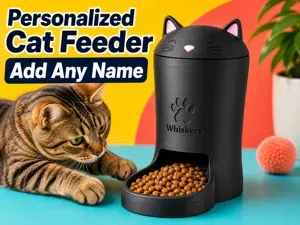
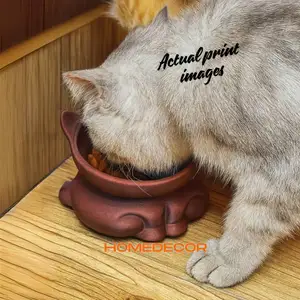

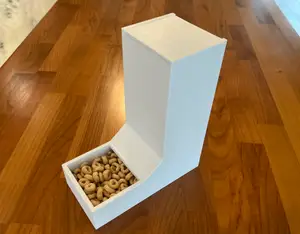
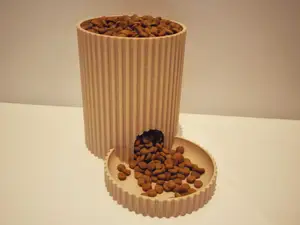
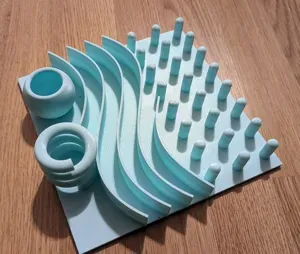


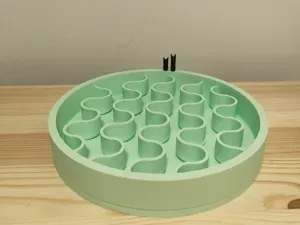
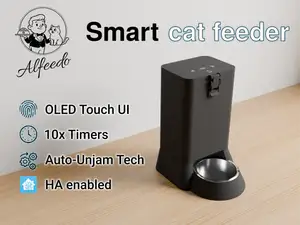


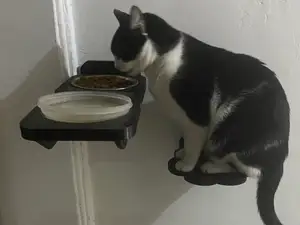

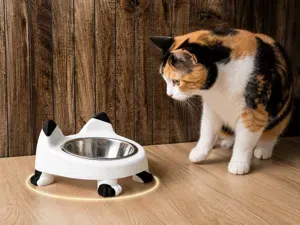
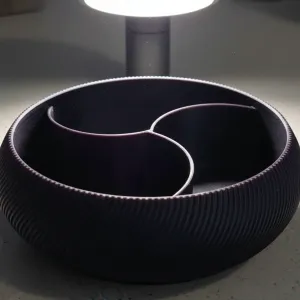

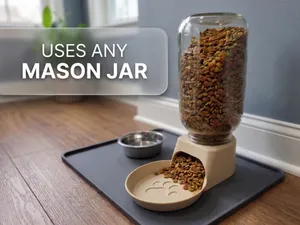


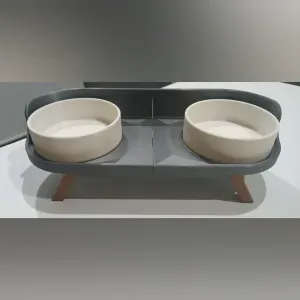


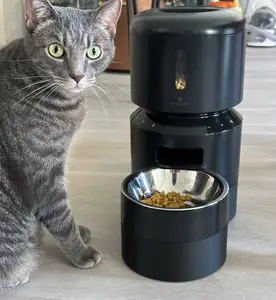
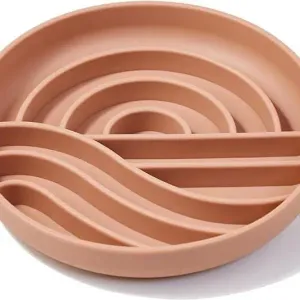


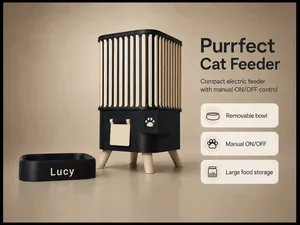


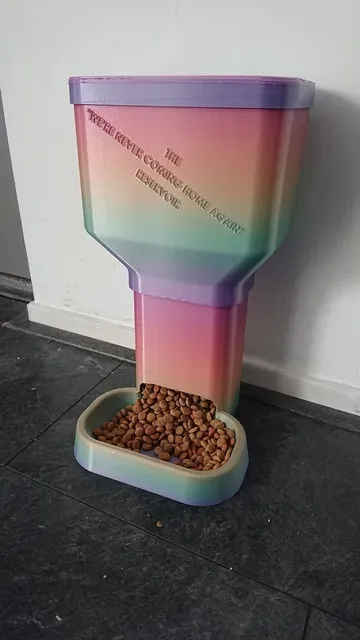
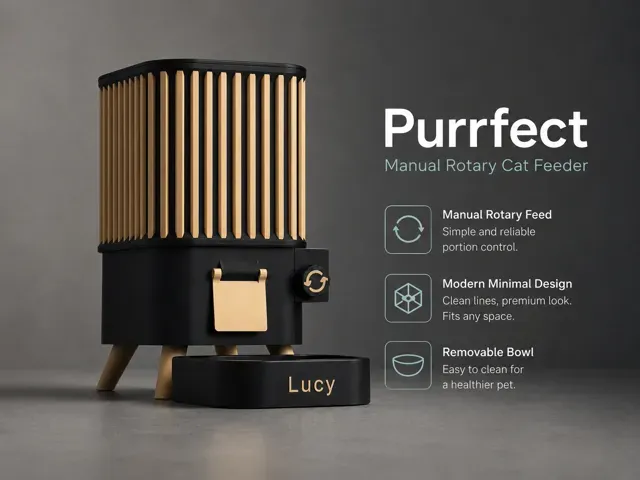
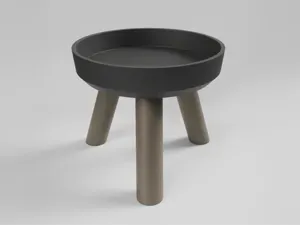
The designs split into a few groups. Automatic dispensers use a motor, auger or drum to release portions, while manual hoppers and gravity feeders rely on a chute and the cat's own paw. Raised and tilted stands hold a separate bowl at an angle, and slow-feed or puzzle shapes make the cat work for each piece of kibble. Some models are shells for an Arduino or similar board, so the printed part is only one piece of the build.
Before printing, read the model page for the bowl diameter, the kibble size the chute is drawn around, and the number of printed parts and fasteners. Check whether the author lists supports, layer height, material and infill, and look at photos of finished prints to see how the parts fit together. If the food touches the print, note how the surfaces are finished and how the bowl or hopper is removed for washing.
Search results widen if you try other wordings: bowl holder, food dispenser, kibble dispenser, slow feeder, puzzle feeder, raised bowl stand. Related topics such as pet bowls, dog feeders and small electronics enclosures often use the same hinges, threads and mounting points. Combining a feeder term with a mechanism, a mounting type or a board name usually narrows the list faster than adding adjectives.
The full catalog of topics — from home & household to CNC, searchable across the connected sources.