
Free 
Teddy Bear Cookie Cutter
Thingiverse
This collection gathers 3D models of teddy bears in a standing pose, from small charms to shelf figurines and kitchen cutters. It is useful when you want a single recognizable shape for 3D printing and need to compare how different authors approach the same subject. Each entry links to the source page, where the file format and printing notes are listed. Polyzon does not confirm whether models are free, their price, license, official status, affiliation, safety or fitness. Check the current terms at the source.
 A Polyzon collection · 45 models from 4 platforms
Polyzon assembles this collection from search results on the connected platforms. Repeats and models without a preview are removed, weak matches go to the end, and the rest keeps the search order. Models belong to their authors — check the terms on each model's page.
Selection rules: the Polyzon editorial team · Text updated 2026-10-14

%2Fhttps%3A%2F%2Ffbi.cults3d.com%2Fuploaders%2F15062235%2Fillustration-file%2Fe5777ccd-4742-401e-8a08-adc5e774c3eb%2F59413A9B-5482-451F-B580-0915CDE6EBD3.jpeg&w=300)



%2Fhttps%3A%2F%2Ffbi.cults3d.com%2Fuploaders%2F14296153%2Fillustration-file%2Ff839b057-4344-42e5-80eb-8e572aad33b4%2FWhatsApp-Image-2025-01-29-at-9.05.29-AM.jpeg&w=300)
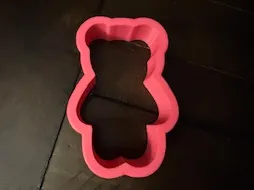

%2Fhttps%3A%2F%2Ffbi.cults3d.com%2Fuploaders%2F37539974%2Fillustration-file%2F9c70c9cd-73bd-431c-83ba-9099195728b3%2FGemini-zodiac-bear-keychain-3d-print.jpeg&w=300)
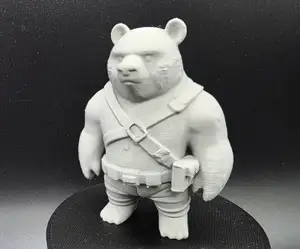

%2Fhttps%3A%2F%2Ffbi.cults3d.com%2Fuploaders%2F37539974%2Fillustration-file%2F38e61fe9-5d65-4a17-b9c7-3466d864398e%2FVirgo-zodiac-bear-keychain-3d-print.jpeg&w=300)
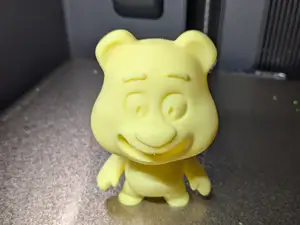

%2Fhttps%3A%2F%2Ffbi.cults3d.com%2Fuploaders%2F13318406%2Fillustration-file%2F44494ca8-514c-4666-8803-e471fb873940%2FOsito-Rilakkuma-parado.jpg&w=300)
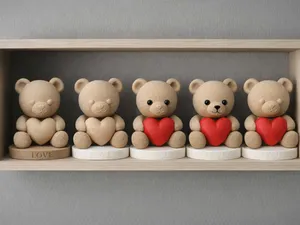

%2Fhttps%3A%2F%2Ffbi.cults3d.com%2Fuploaders%2F14296153%2Fillustration-file%2F44c773fc-7b0e-478e-85bf-bef5bd1078cf%2FWhatsApp-Image-2025-01-29-at-9.05.29-AM.jpeg&w=300)

%2Fhttps%3A%2F%2Ffbi.cults3d.com%2Fuploaders%2F37539974%2Fillustration-file%2F37b732f6-4f55-443b-bbbf-b467367692c3%2FScorpio-zodiac-bear-keychain-3d-print.jpeg&w=300)

%2Fhttps%3A%2F%2Ffbi.cults3d.com%2Fuploaders%2F37539974%2Fillustration-file%2F4934172b-68eb-4902-8285-761151dd5237%2Faquarius-zodiac-bear-keychain-3d-print.jpeg&w=300)


%2Fhttps%3A%2F%2Ffbi.cults3d.com%2Fuploaders%2F37539974%2Fillustration-file%2F51250c11-88c4-4a5c-a97d-2493d1fa00c7%2Fteddy-bear-zodiac-keychain-Aquarius.jpeg&w=300)
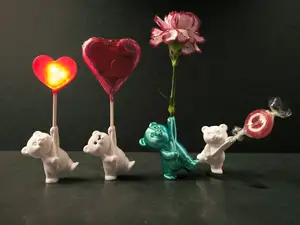

%2Fhttps%3A%2F%2Ffbi.cults3d.com%2Fuploaders%2F24534378%2Fillustration-file%2Faff5a734-0299-453f-ae05-263a2975762f%2FAsset-4%25404x.png&w=300)
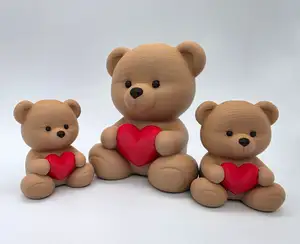

%2Fhttps%3A%2F%2Ffbi.cults3d.com%2Fuploaders%2F13829972%2Fillustration-file%2F0bbf8973-9d32-40c0-ab99-95d6943079ed%2FMisMalyGif.gif&w=300)
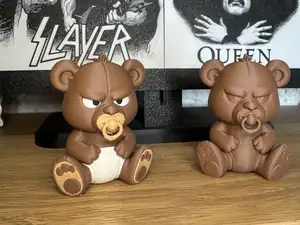

%2Fhttps%3A%2F%2Ffbi.cults3d.com%2Fuploaders%2F41631657%2Fillustration-file%2F07905b78-6bfb-4251-ab50-7518186a34fe%2Fteddy-love-1.png&w=300)
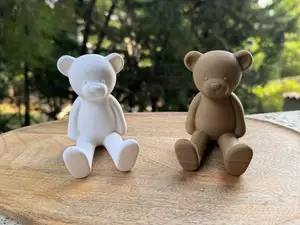

%2Fhttps%3A%2F%2Ffbi.cults3d.com%2Fuploaders%2F48674330%2Fillustration-file%2Fcfea6284-ba20-4782-b7df-b3a316416bdd%2F0.png&w=300)
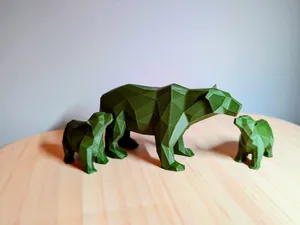

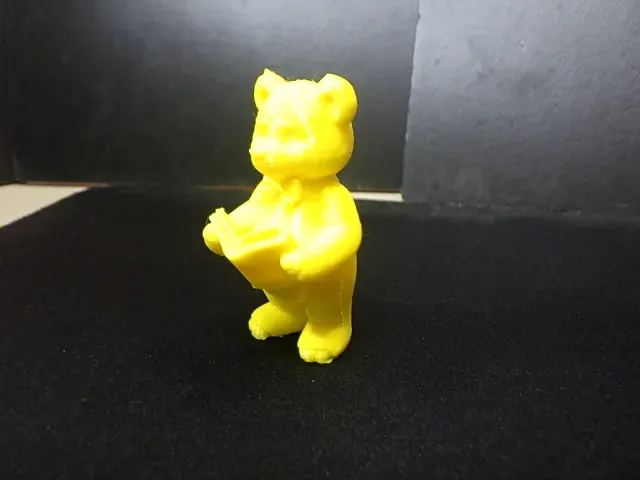
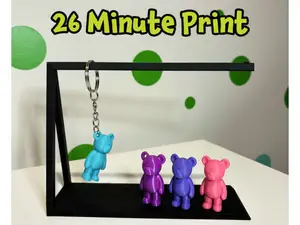
The most common group is the standing bear as a solid figure, sometimes with a prop such as a book, sometimes as a plain toy silhouette. Alongside them are practical items built on the same shape: cookie cutters, keychains, vases and money banks, where the bear is a decorative outline rather than a detailed sculpture. A third group is stylized geometry, including low-poly and perforated surfaces that read as a bear from a distance but print as faceted or hollow forms.
When choosing, look at the overall height and scale first, since the same pose can be a few centimetres tall or a tabletop piece. Check how many separate parts the author includes and whether they join with pins, glue or friction, and read the notes on supports, wall thickness and infill. For small charms and cutters, thin ears and paws are the areas that usually need attention; for larger figures, a hollow or shelled model changes both print time and weight. Photos of real prints on the model page show how the surface and proportions come out.
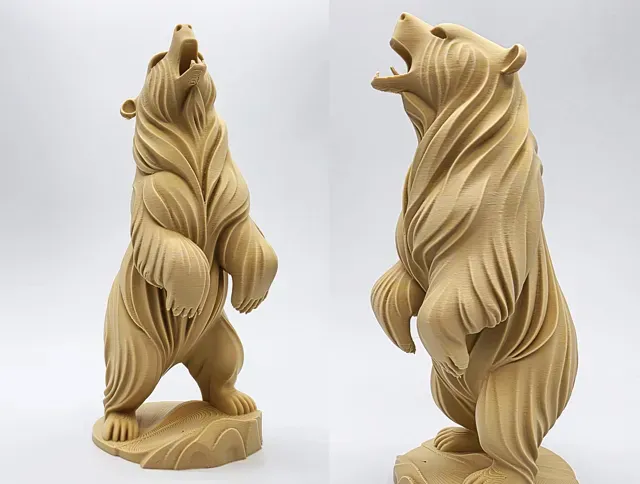
To widen the search, try synonyms such as plush bear, toy bear or bear cub, and add the pose or use you have in mind: sitting, standing upright, keyring, cutter, vase, ornament. Related subjects like zodiac signs, reading figures or carved-style animals often appear under the same bear shape and can lead to variants you would not find under one phrase. Combining a material or printer type with the subject also helps narrow results.
If the pose matters more than the details, filter by silhouette and height rather than by style. If you plan to scale the model, remember that cutters and keychains lose strength when enlarged, while decorative figures can usually be resized within the limits the author describes.

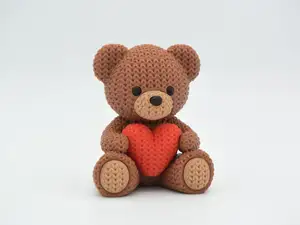


The full catalog of topics — from home & household to CNC, searchable across the connected sources.
%2Fhttps%3A%2F%2Ffbi.cults3d.com%2Fuploaders%2F30442429%2Fillustration-file%2F83abd814-664f-4467-8705-523721e55ec8%2FST1.png&w=640)