%2Fhttps%3A%2F%2Ffbi.cults3d.com%2Fuploaders%2F16378121%2Fillustration-file%2Fc72e687b-37d1-42a6-b385-c41ebba61645%2F100_1221-2.jpg&w=640)
Free 
Customizable Drawer Handle or Cabinet Handle
Thingiverse
This collection gathers 3D models for recessed handles that sit flush with cabinet and drawer fronts, along with knobs, pull handles and the jigs used to cut the recess. It is useful when you want to replace a broken handle or match a front panel without buying a whole new set. Most files are made for 3D printing in plastic, so wall thickness and mounting method matter more than on a metal part. Polyzon does not confirm whether models are free, their price, license, official status, affiliation, safety or fitness. Check the current terms at the source.
 A Polyzon collection · 46 models from 3 platforms
Polyzon assembles this collection from search results on the connected platforms. Repeats and models without a preview are removed, weak matches go to the end, and the rest keeps the search order. Models belong to their authors — check the terms on each model's page.
Selection rules: the Polyzon editorial team · Text updated 2026-10-11
%2Fhttps%3A%2F%2Ffbi.cults3d.com%2Fuploaders%2F16378121%2Fillustration-file%2Fc72e687b-37d1-42a6-b385-c41ebba61645%2F100_1221-2.jpg&w=300)

%2Fhttps%3A%2F%2Ffbi.cults3d.com%2Fuploaders%2F37132406%2Fillustration-file%2F8cfb7e76-928b-48d2-a704-db8e48ce23df%2FGemini_Generated_Image_kkbxr2kkbxr2kkbx.png&w=300)

%2Fhttps%3A%2F%2Ffbi.cults3d.com%2Fuploaders%2F15469858%2Fillustration-file%2F33115f9d-931a-4d2a-8098-c773441d90a4%2FPortafilter-holder-for-Sage-Breville-Barista-BES-870-878-880-Dual-5.jpg&w=300)

%2Fhttps%3A%2F%2Ffbi.cults3d.com%2Fuploaders%2F29502277%2Fillustration-file%2F004ca5fb-52ed-4620-a695-4e0fb7e6a3f2%2F1Poign%25C3%25A9e-ronde-bouchon-de-porte-EXULT3D.jpg&w=300)


%2Fhttps%3A%2F%2Ffbi.cults3d.com%2Fuploaders%2F133%2Fillustration-file%2F532fc32c-316c-404c-9c67-95265f516f62%2F3D-printable_cabinet_knob_by_Creative-Tools.com_v9.jpg&w=300)


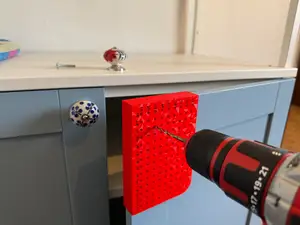

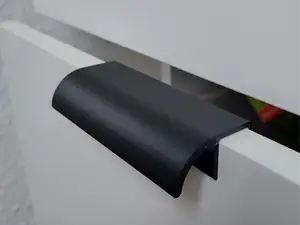

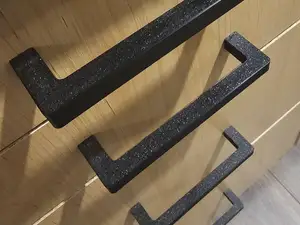

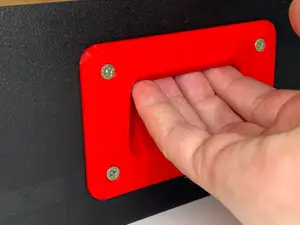

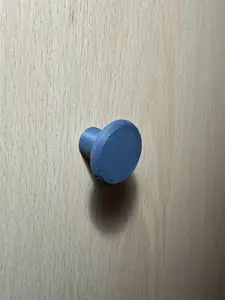

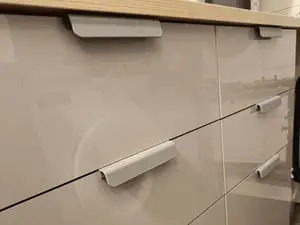



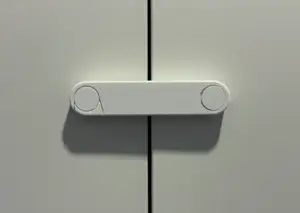

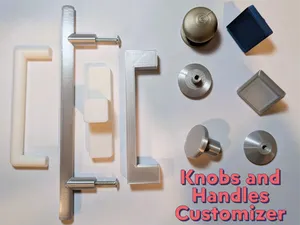

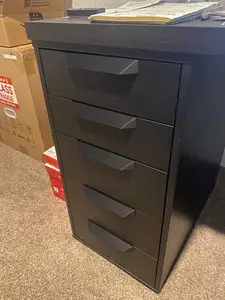

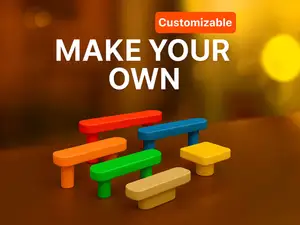


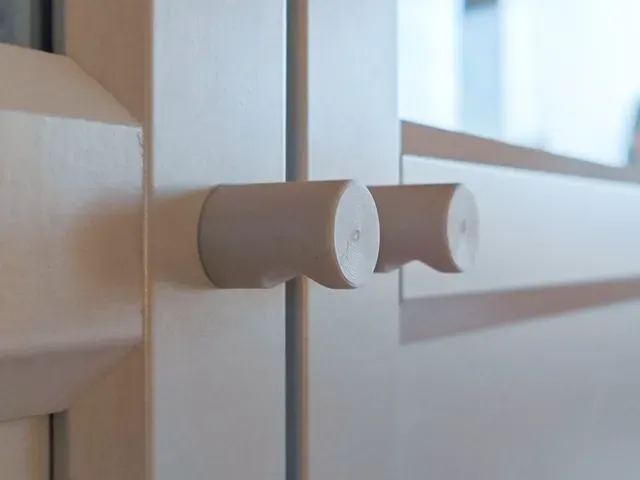
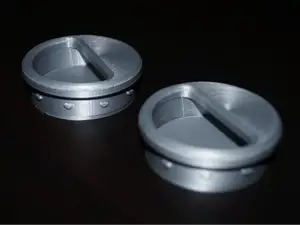
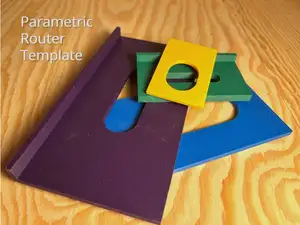
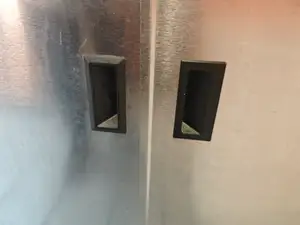
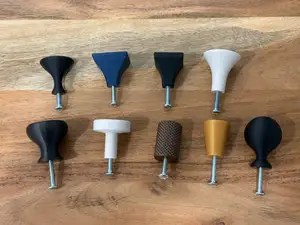
The models fall into a few groups. Recessed handles are shaped as a shallow cup or a slot that is sunk into the door, while knobs and pull handles sit on the surface and are fixed with a screw or a printed post. Jigs and templates are a separate group: they guide a drill or a router so the recess matches the handle, and they are usually printed as flat plates with holes or a fence. Some files are parametric, so you can change length, depth or screw spacing before exporting the STL.
When choosing a model, look at the dimensions the author lists: overall length, recess depth, screw hole spacing and the thickness of the door or drawer front it is meant for. Check whether the handle is printed as one part or several, how it is fastened, and whether the model needs supports on the underside or inside the cup. The material and settings on the model page matter too, since a thin printed handle flexes under load and a coarse layer height shows on a visible front. Photos of real prints help you judge the surface and the fit.
To widen the search, try synonyms such as flush handle, inset pull, finger pull, cup handle or mortise handle, and related terms like cabinet knob, drawer pull, handle jig and router template. Adding a size or a shape helps, for example round, rectangular or long. If you are working on a specific piece of furniture, search by the type of front, such as sliding door, wardrobe or kitchen cabinet, rather than by the handle alone.


The full catalog of topics — from home & household to CNC, searchable across the connected sources.
%2Fhttps%3A%2F%2Ffbi.cults3d.com%2Fuploaders%2F14565779%2Fillustration-file%2F7b0a48e5-5668-46c1-b68e-4b5cb354c5f2%2FFlip-5.0.png&w=640)
