
Free 
Insta360 Luna Ultra – Robot Dog Buddy
MakerWorld
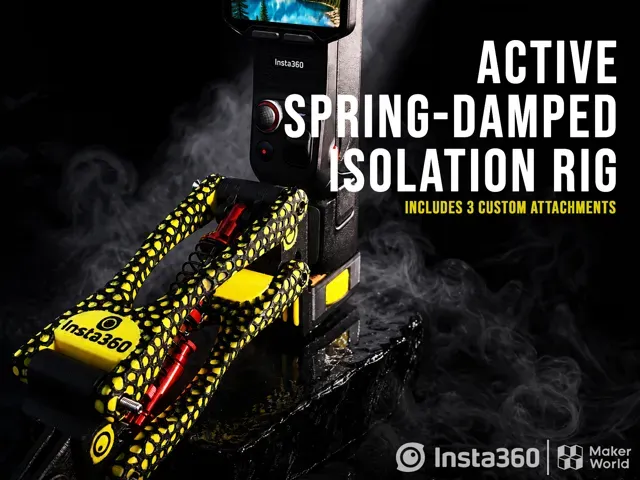

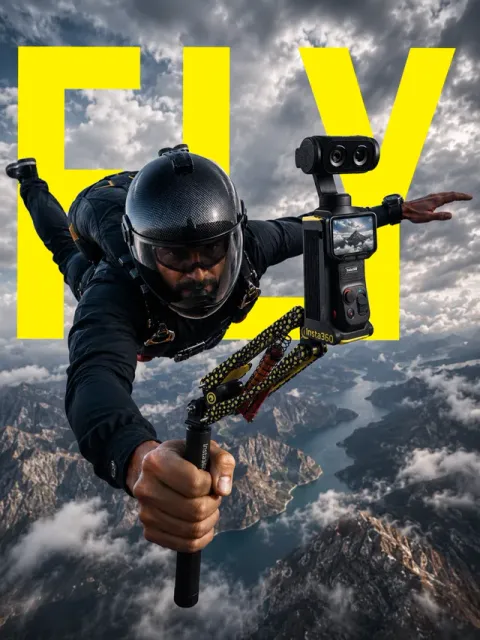

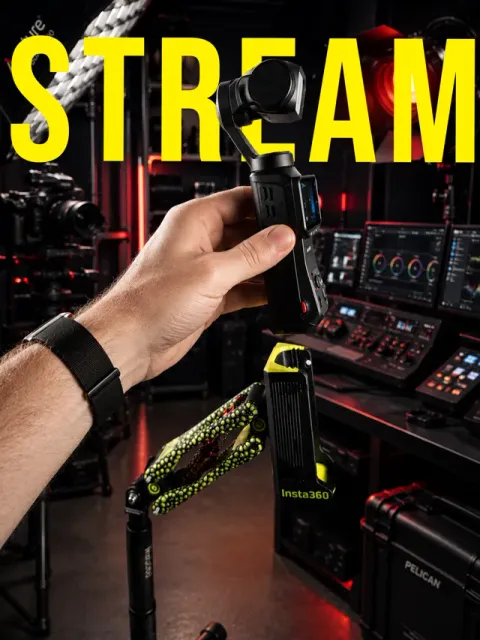
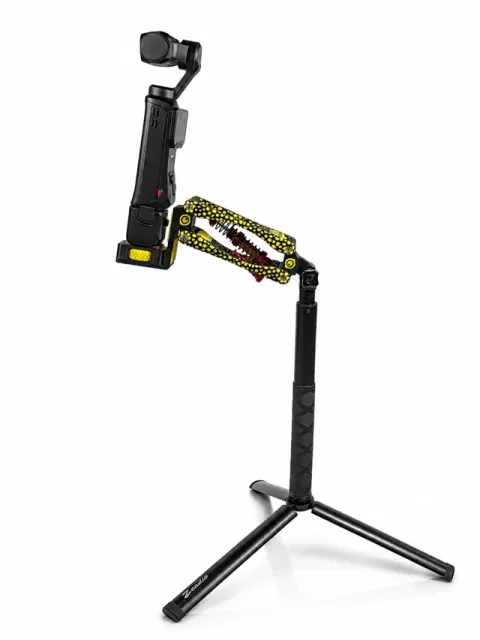
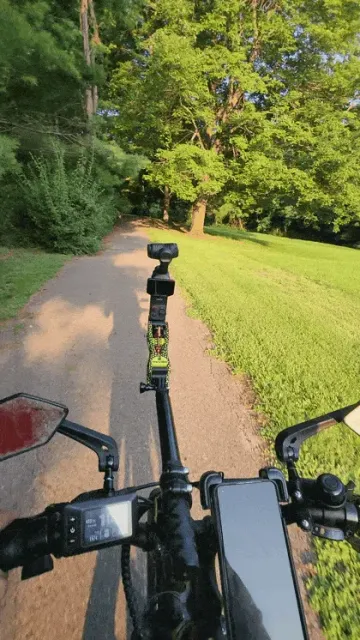
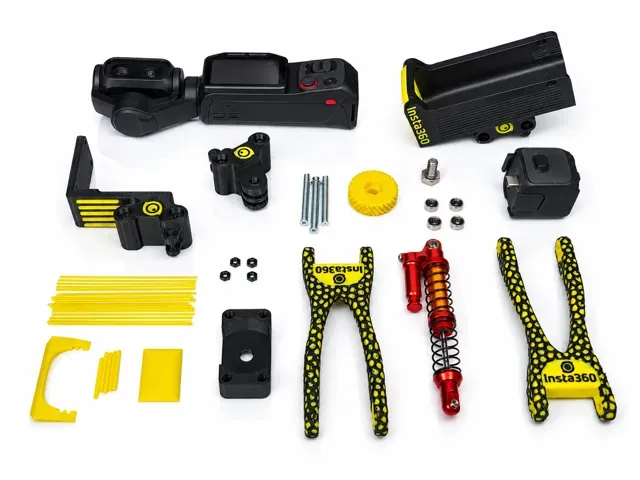
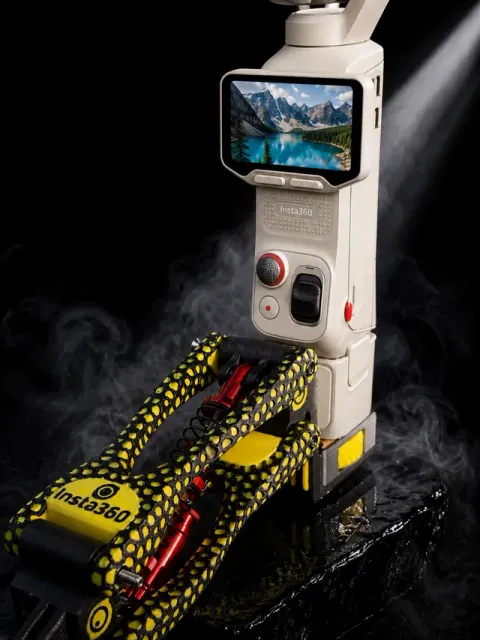
Active Spring-Damped Isolation Rig
A Mechanical Z-Axis Stabilization Platform for Insta360
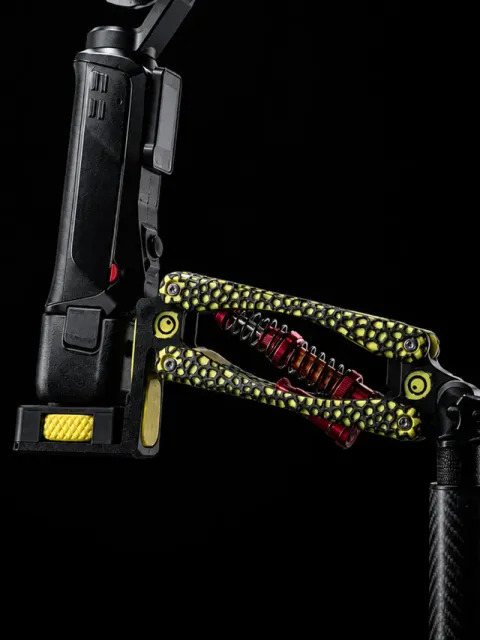
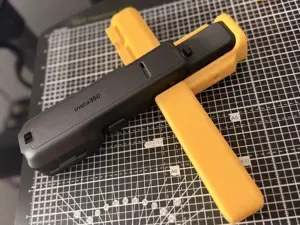
The Active Spring-Damped Isolation Rig is a compact, scientifically designed mechanical stabilization system developed specifically around the Insta360 Luna Ultra . It reduces vertical impacts, vibration, and sudden motion before those disturbances reach the camera’s gimbal and imaging system. Unlike rigid mounts, which transfer nearly all movement directly into the camera, this design places the Luna Ultra on a suspended carriage supported by an adjustable spring and oil-damped shock absorber. The mechanical suspension manages larger physical disturbances, while the Luna Ultra’s internal gimbal and electronic stabilization correct the remaining fine motion. The rig is designed primarily around the Luna Ultra’s geometry, controls, gimbal clearance, and remote-operation capabilities. Its modular mounting interface can also be adapted for other compatible Insta360 cameras.
Boost Me If you enjoyed this design and appreciate the amount of engineering, CAD modeling, prototyping, and testing that went into developing it, I would greatly appreciate a Boost. Every Boost helps support future projects like this and allows me to continue designing highly detailed, functional, and open-source creations for the community.
Thank you for your support. Happy filming! Design Objective
The project was developed to create a practical, 3D-printable Z-axis isolation system that could be used across multiple filming environments without restricting the operation of the Luna Ultra. The main design requirements were:
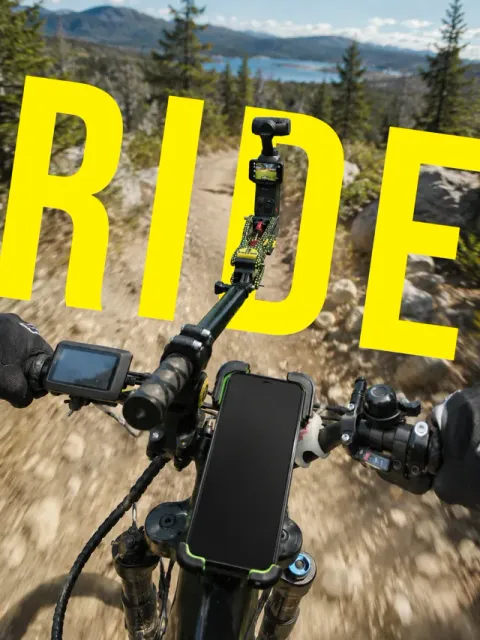
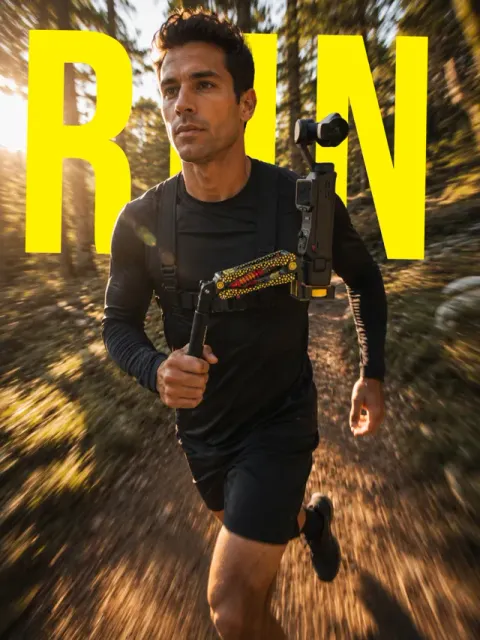
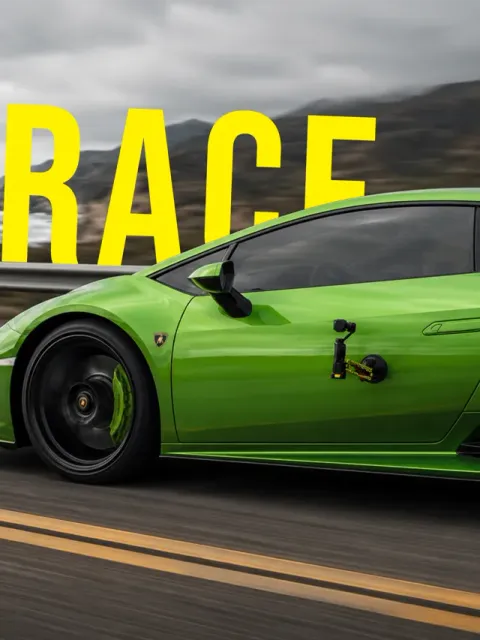
- Reduce vertically transmitted shock and vibration - Preserve unrestricted gimbal movement - Maintain access to controls, ports, screen, microphones, and cooling areas - Support handheld, tripod, bicycle, pole, suction-cup, and vehicle-mounted use - Use readily available hardware - Remain easy to print, assemble, maintain, and customise - Avoid specialised machining The result is a lightweight mechanical isolation platform that works with the Luna Ultra rather than replacing its existing stabilization system.
How the System Works?
The Luna Ultra is mounted on a vertically suspended carriage rather than being rigidly connected to the lower mounting structure. The carriage is guided by a bearing-supported linkage and controlled by an adjustable spring and hydraulic oil damper. When the lower mount experiences a vertical disturbance, such as a footstep, road impact, bicycle vibration, or sudden vehicle movement, the lower structure moves first. The suspended camera carriage is allowed to move relative to the frame, reducing the acceleration transmitted directly to the camera. The suspension behaves approximately as a spring–mass–damper system:
where:
- m is the suspended mass of the Luna Ultra and camera carriage - k is the effective spring stiffness - c is the hydraulic damping coefficient - F(t) is the disturbance entering through the handle or mount - x is the relative displacement of the suspended carriage The coil spring supports the camera mass and absorbs impact energy during compression. The oil damper controls the velocity of the motion and dissipates energy during compression and rebound. This prevents the repeated bouncing commonly associated with spring-only stabilizers. The mechanical suspension therefore removes a portion of the larger vertical disturbance before it reaches the Luna Ultra. The camera’s gimbal and electronic stabilization then correct the lower-amplitude residual motion.
Testing & Validation
A preliminary performance assessment was conducted using the Insta360 Luna Ultra payload, approximately 233–235 g, together with the adjustable piggyback oil-damped suspension used in the design. The assessment compares the expected vibration transmitted through a conventional rigid mount with the Active Spring-Damped Isolation Rig during walking, running, cycling, vehicle mounting, and rough-terrain use. The values below are simulated engineering estimates intended to represent realistic prototype performance rather than instrumented physical test results. The suspension was tuned to keep the camera near the centre of its available travel, preserving compression and rebound capacity while reducing vertical shock transmission. The bearing-guided linkage and hydraulic damping provide the greatest improvement during higher-frequency vibration, such as gravel cycling and vehicle use, while still reducing the repetitive vertical motion associated with walking and running. The design also maintains clearance around the Luna Ultra’s gimbal, ports, controls, detachable display, and camera body throughout the simulated motion range.
* Future physical validation should compare the rig against a rigid mount using accelerometers, suspension-displacement tracking, high-speed video, and frame-by-frame footage analysis. Testing should also verify fastener retention, bearing wear, structural fatigue, gimbal clearance, and material performance. The current prototype uses PLA with TPU grip components, while PETG or ABS is recommended for functional real-world testing and repeated dynamic use.
Test Scenario Rigid Mount RMS Acceleration
Active Isolation Rig
Estimated Improvement
Walking 0.42g
0.27g
36%
Running 0.91g
0.54g
41%
Ashpalt biking 0.68g
0.29g
57%
Gravel Biking 1.18g
0.43g
64%
Vehicle Mount 0.82g
0.27g
67%
Rough Terrain 1.46g
0.42g
71%
Suspension System
The central suspension component is an adjustable piggyback oil shock absorber paired with a coil spring. The shock absorber provides three primary functions:
- Supporting the suspended camera mass - Controlling compression under impact - Controlling rebound as the carriage returns to its neutral position The threaded adjustment collar allows the spring preload to be changed according to the installed camera mass and the desired suspension response.
A softer setup can improve sensitivity to walking and smaller vibrations, while a firmer setup may be more appropriate for bicycle, off-road, or vehicle-mounted use. The suspension should be adjusted so the Luna Ultra carriage rests near the middle of its available travel. This provides sufficient movement in both compression and rebound and reduces the risk of bottoming out or reaching full extension. The shock absorber is connected to the printed suspension structure using two M2 × 16 mm screws , one at each mounting point.
Hybrid Manufacturing Approach
Default (0.2mm layer, 2 walls, 15% infill)
Single Plate (0.2mm layer, 2 walls, 15% infill)

%2Fhttps%3A%2F%2Ffbi.cults3d.com%2Fuploaders%2F39376351%2Fillustration-file%2Fde0ab176-2644-4b24-a3f5-63b2874c0f2c%2FGemini_Generated_Image_85ghqg85ghqg85gh.jpeg&w=300)
%2Fhttps%3A%2F%2Ffbi.cults3d.com%2Fuploaders%2F39376351%2Fillustration-file%2F12a64040-6a3a-4880-9f65-23beae9b9937%2FGemini_Generated_Image_l1nefgl1nefgl1ne.jpeg&w=300)
%2Fhttps%3A%2F%2Ffbi.cults3d.com%2Fuploaders%2F39376351%2Fillustration-file%2F2e07bea5-185f-4a14-babc-e2a05d121601%2FGemini_Generated_Image_im7eluim7eluim7e.jpeg&w=300)
Names are used only to indicate the source of a result. Polyzon is not affiliated with the listed sites.