
Free 
N5 Mini: A 3D-Printed 5-Bay NAS (175x175mm)
MakerWorld
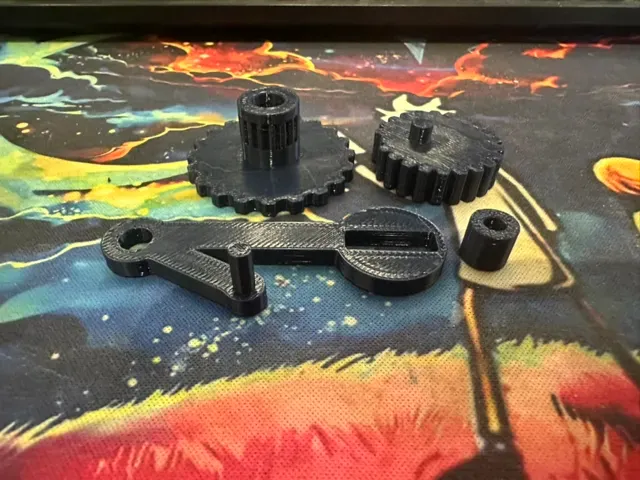
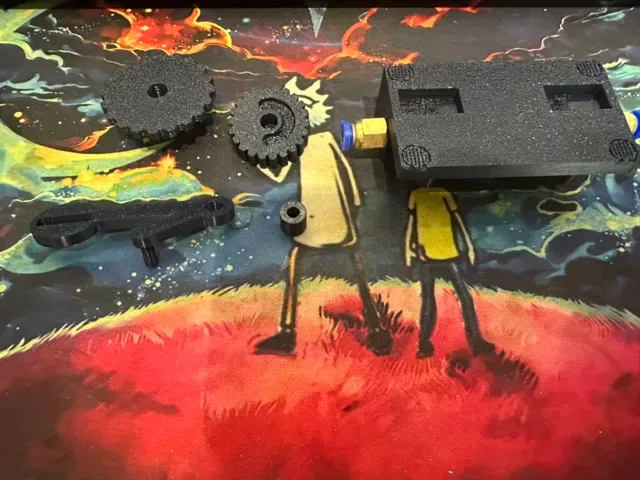
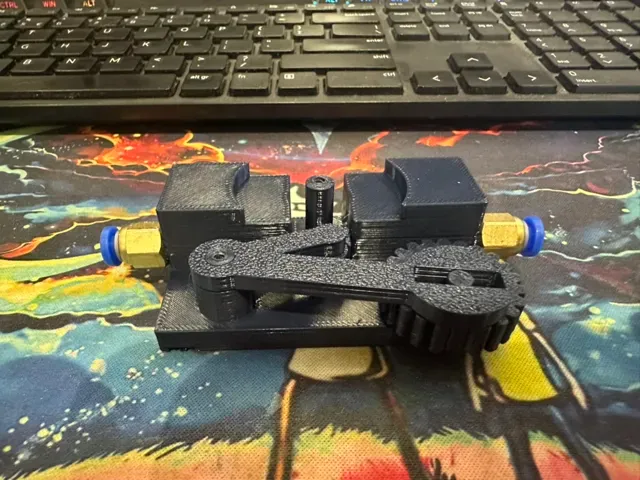
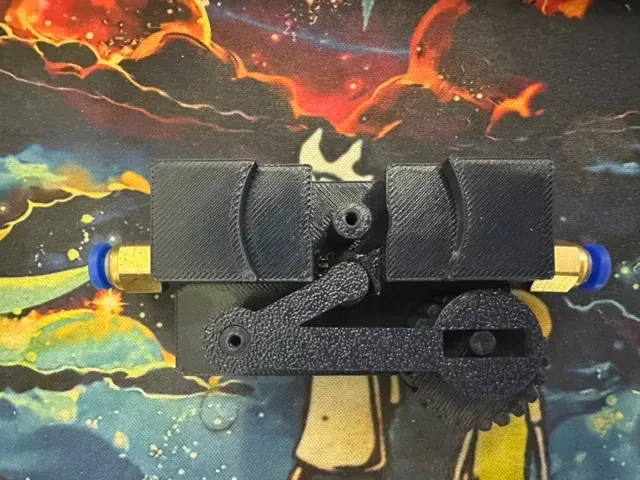
Why I made this
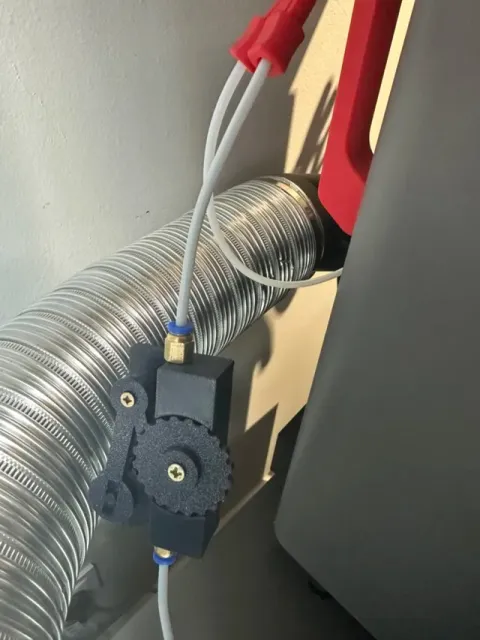
I print a lot of TPU 90A and I keep it in a drybox with a bowden line running to the
printer. Loading it is the worst part. Soft filament buckles the moment you push it,
so you end up standing there feeding it a centimetre at a time, and if you let the
printer's extruder pull it in instead you are waiting several minutes.
So I went looking for a manual feeder. I found plenty. None of them did what I needed.
They all have the same problem: the drive gear is always clamped. That is fine while
you are loading, but the moment the print starts, that same grip is dragging on the
filament the printer is trying to pull. With TPU that is exactly what you do not want.
A couple of designs had a release, but they released by loosening a screw - which means
you are unscrewing and re-screwing the same plastic thread every single print, and it
will strip.
I could not find anything that just worked, so I designed my own.
What it does
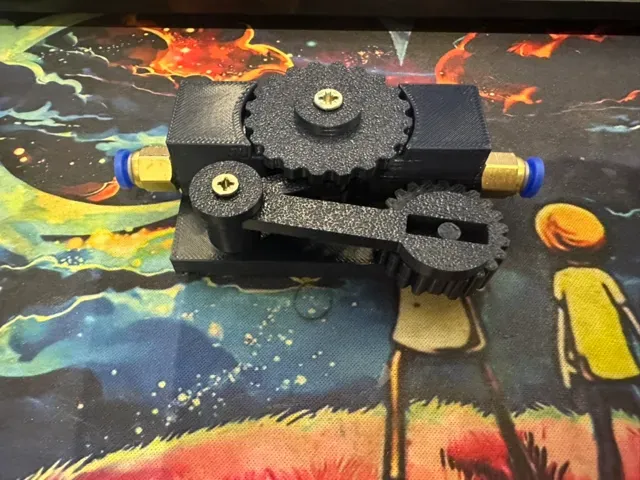
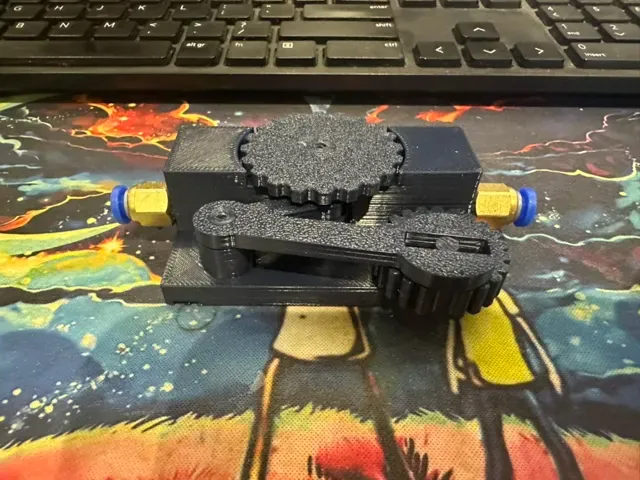
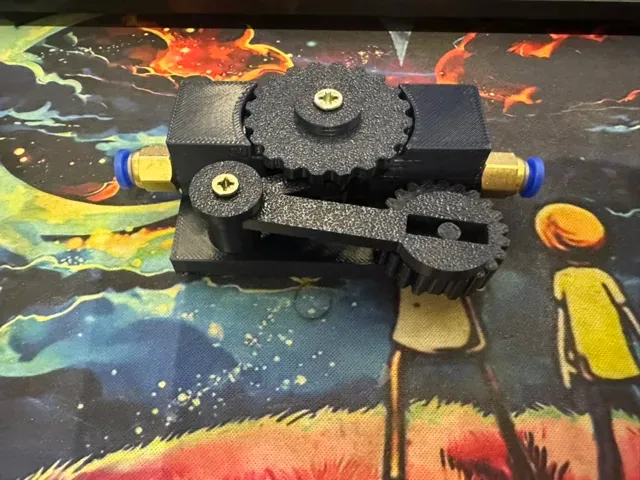
One lever, two positions.
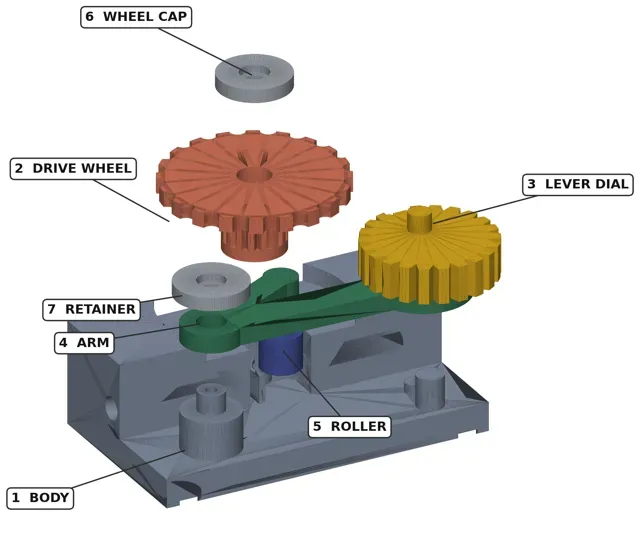
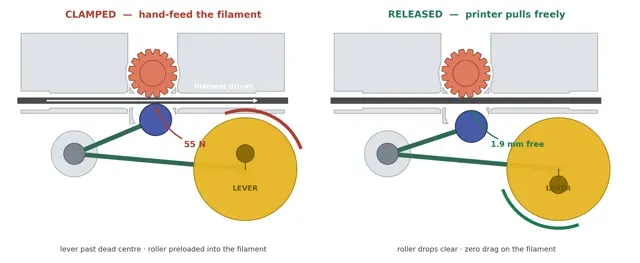
Clamped - flip the dial until it clicks past the stop. A roller pushes the filament
up into a 16-tooth drive wheel and holds it there with about 55 N. Turn the big knurled
wheel and the teeth bite the TPU and drive it down the tube. The whole bowden run loads
in seconds.
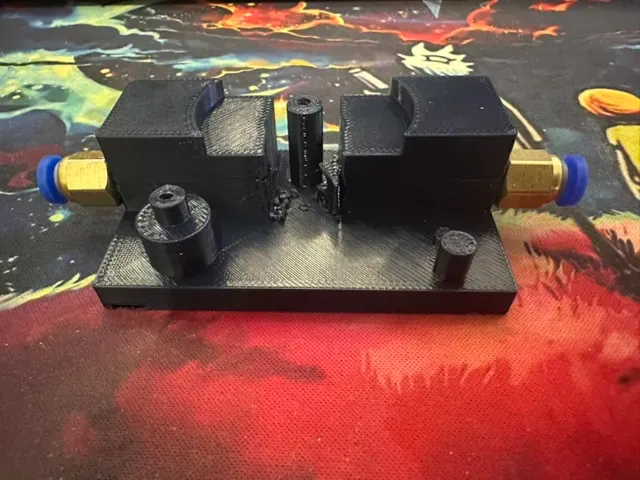
Released - flip the dial back. The roller drops 1.9 mm clear. Nothing is touching
the filament any more. The printer pulls through a plain 4.2 mm channel with zero extra
drag, exactly as if the feeder were not there.
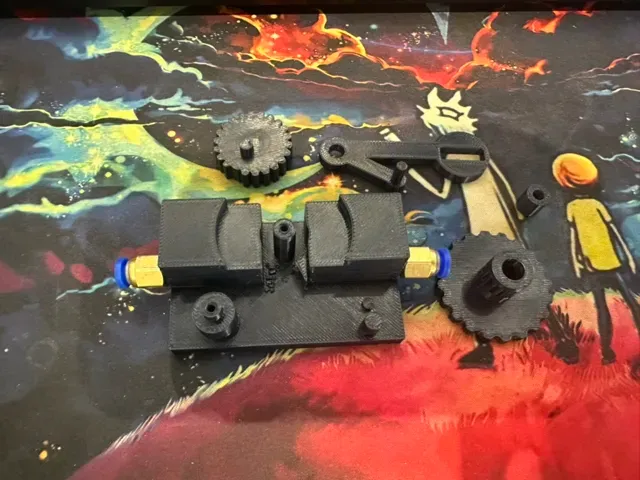
No screw to undo. No spring to fit. Two M3 screws hold the whole thing together and
that is the entire hardware list.
Print it in PETG
Not PLA. This matters more than usual, because the arm is not just a lever - the narrow
section between the pivot and the tail is the spring. It flexes about 3 mm every time
you close the lever. In PETG that works out at 32 MPa, which the material handles fine.
PLA is roughly 1.75× stiffer, so the same deflection becomes about 56 MPa and the beam
cracks, usually after a handful of cycles.
PCTG and ABS are fine too. Everything else prints in whatever you like.
Specs
Size: 74 × 43 × 23.5 mm, free-standing, sits inline on the tube
Filament: 1.75 mm - tuned for TPU 90A, works with anything
Connections: 2 × PC4-M6 push-fit - M6 thread, not M10
Clamp force: 55 N at the roller
Release clearance: 1.9 mm below the filament
Hardware: 2 × M3×10 |
Supports: none, anywhere
Material: about 50–60 g of PETG
0.24mm layer, 4 walls, 30% infill


Names are used only to indicate the source of a result. Polyzon is not affiliated with the listed sites.