
Free 
Scarwalk — complete cooperative printed dungeon crawl
Printables
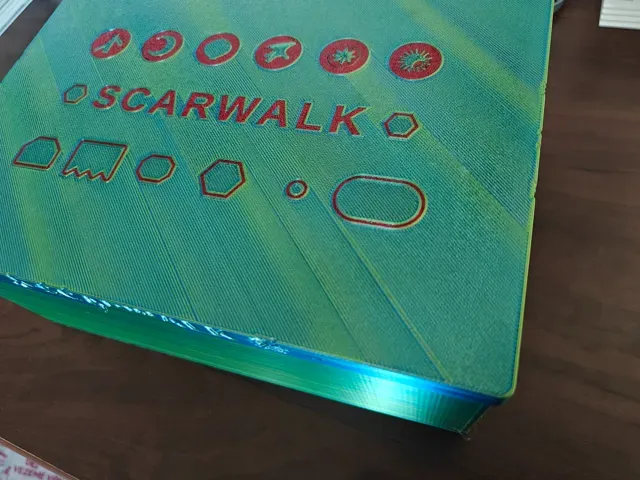
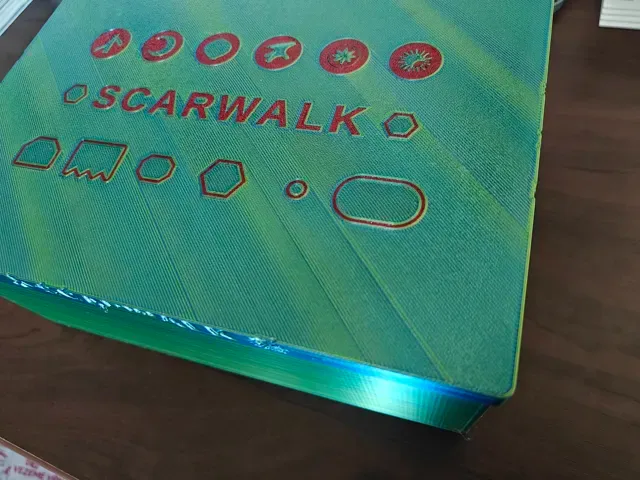
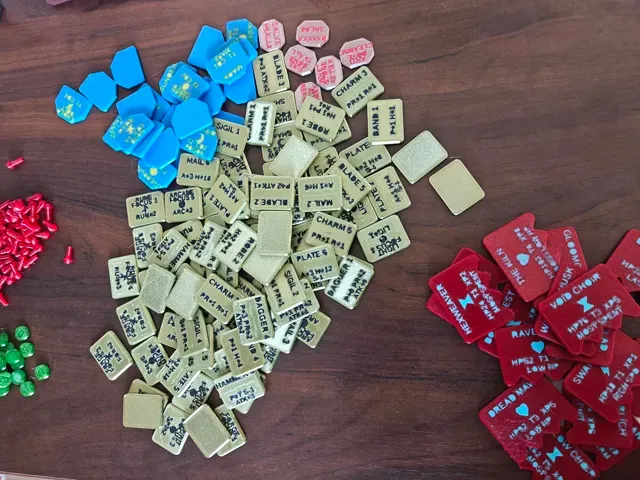
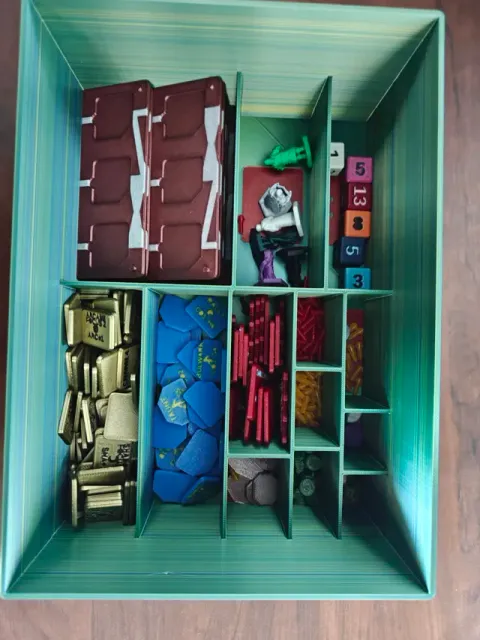
SCARWALK is a complete cooperative dungeon crawl for 1–4 players. You print the character boards, branching map, six damage dice, every spell, every item, every enemy, markers, optional miniatures and a fitted storage box. A complete run takes about 75–90 minutes .
▶ Watch the rules and a complete winning run: https://youtu.be/FwqXDmjhqGM
What kind of game is it?
Scarwalk is for a group that wants to solve combat together. There is no hidden traitor and no private hand. The party chooses its action order openly, creates a shared pool of six elements, predicts deterministic enemy targets and drafts loot into builds that must survive three acts.
It is suitable for 1–4 players, age 12+ . A solo player controls one compensated hero; at higher counts each player controls one hero. It is a substantial print with short English labels. It is not intended as a five-minute filler or a language-free children’s game.
The loop
- Build one act from a start strip and four shuffled body strips. - Place face-up node markers so the route can be planned while the exact encounter stays hidden. - Move upward through five rows. Fight, shop, camp, visit a shrine, open a cache or risk an elite. - Draft gear, spells and consumables as a party. - Defeat the act boss, heal 30%, rebuild the map and continue. - Defeat the third boss to win. A different map every act
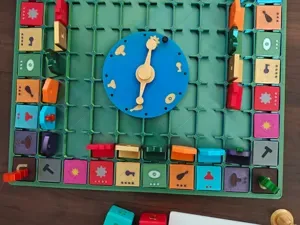
Sixteen interlocking strips form the map: four start strips and twelve shuffled body strips. One start plus four bodies creates a five-row route. The connectors are generated so every physical stack is legal: no dead ends, no stranded node and every route reaches the boss in the same number of steps. The twelve-strip bag produces 47,520 distinct act maps before node types are drawn.
You never move sideways or backwards. At each row you choose one of the nodes reached by the printed connector legs. The whole route is visible, but the specific enemy and loot tiles remain face-down until reached.
Six node types
- Fight: ordinary enemies and one loot draw. - Elite: tougher enemies, two loot draws, one from the next act band, and triple gold. - Shop: reveal an offer and buy tiles for 20 gold each. - Camp: heal every hero by half maximum HP or upgrade one spell. - Shrine: upgrade one spell for free. - Cache: take a free loot offer without fighting. The included two-colour node plate prints 40 markers : 18 fights, 5 elites, 5 camps, and 4 each of shop, shrine and cache. Keep every marker body and ink colour identical so a face-down result cannot be identified by colour.
Combat
Each round, enemies reveal intent, the party discusses the order, every surviving hero takes one action, then enemies act. A hero may cast a ready spell, spend a consumable or make a basic attack. Nobody loses a whole turn: even with every spell cooling down, the basic attack remains available.
Enemy targeting is printed on its tile: lowest HP, highest Armour, highest Speed, most exhausted or last attacker. Taunt overrides the printed rule. Because targeting is deterministic, the party can see who is threatened and arrange shields, healing, setup and damage around it.
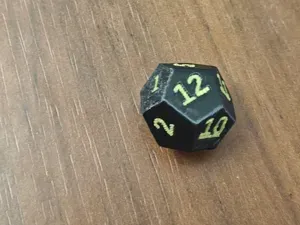
Damage uses six printed dice. Tier I rolls 1–3; Tier VI rolls 9–13. Roll the named damage die plus one ordinary d6 from home. The ordinary die crits on 6 and lands status riders on 4+, modified by Precision and Resolve. Each hero may reroll one damage die per fight.
Shared elements and combinations
The six traditions are light, shadow, arcane, rune, spirit and forge. Elements belong to the whole party.
- Infusing an element makes it Strong immediately. - A later spell may consume a live element to roll three tiers higher. - Strong becomes Waning, then Inert, at round ends. - A hero’s affinity rolls its matching spells one tier higher and slows that element’s decay. No spell requires an element. A missed setup reduces the bonus; it never prevents a player from acting. This lets one class create an opening and another cash it in during the same round.
The six classes
All six boards use the same 240 × 170 mm footprint and organizer layout. Their stats, affinity and socket allowance create different jobs.
Class Practical advantage Trade-off
Sentinel 36 HP and 3 Armour; safest defender; extra armour socket; rune affinity 0 Precision and 0 Speed
Cleric 30 HP, 3 Resolve; extra spell socket; light affinity for healing and shields modest direct damage
Hunter balanced Power, Precision and Speed; extra weapon socket; spirit affinity less durable than Sentinel
Alchemist two extra consumable sockets, extra drafted tile, forge affinity relies strongly on drafted kit
Rogue 3 Precision and 3 Speed; extra trinket and draft; shadow affinity 24 HP and 0 Armour
Elementalist highest starting Power, extra spell socket, arcane affinity 24 HP, 0 Armour and 0 Resolve
The engraved once-per-combat ability names and RELIC socket are reserved for a later expansion and have no effect in this edition . Use the printed stats, affinity and socket allowance.
What is included
Group Files / quantity Purpose
Character boards 6 _2c.stl one per class
Map 4 start + 12 body strips shuffled branching route
Node markers 1 plate, 40 markers fight, elite, shop, camp, shrine, cache
Spells 1 plate, 25 tiles damage, healing, shields, elements and statuses
Gear 2 plates, 90 tiles weapons, armour and trinkets
Enemies 1 plate, 17 tiles all enemies and three bosses
Consumables 1 plate, 6 tiles healing, shields, damage and refresh effects
Damage dice tiers I–VI increasing damage ladder
Pegs 60 30 red HP and 30 gold XP
Other markers 6 element, 24 status, 1 round shared state visible on the table
%2Fhttps%3A%2F%2Ffbi.cults3d.com%2Fuploaders%2F49531410%2Fillustration-file%2F05a013b6-b9f1-4259-8ac3-ad7e08fe3e09%2Fs359t3.jpg&w=300)




Names are used only to indicate the source of a result. Polyzon is not affiliated with the listed sites.