
Free 

Rover X1 Charging Dock — Dock. Charge. Go.
MakerWorld
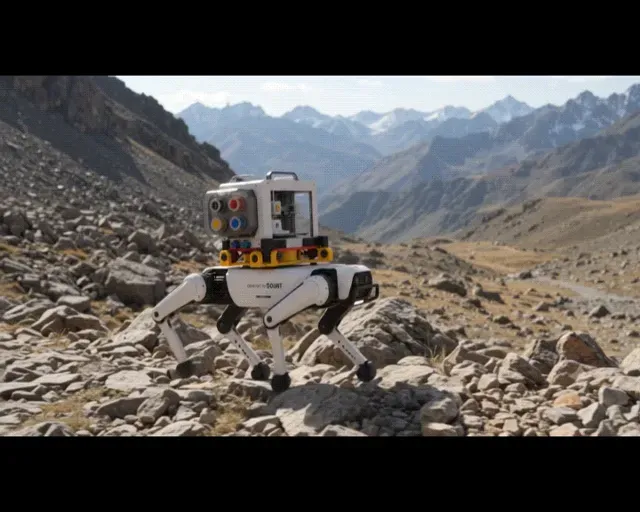
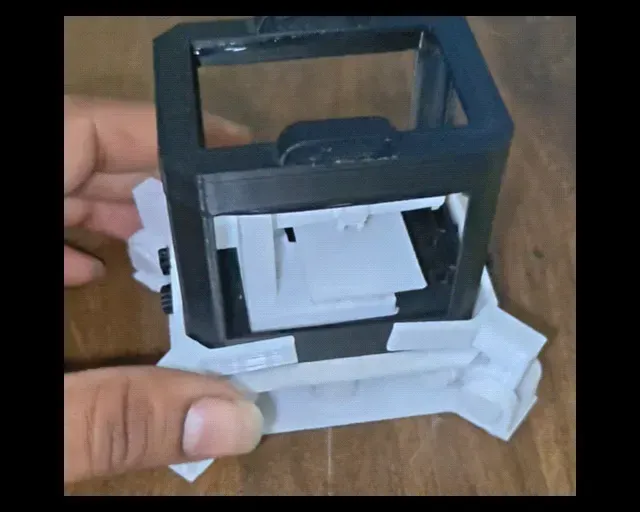
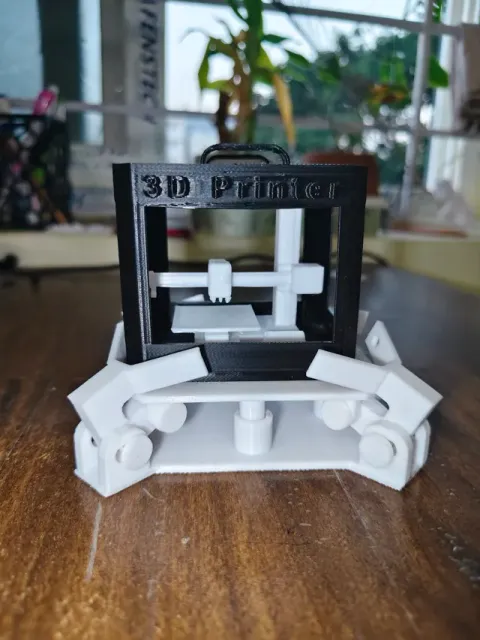
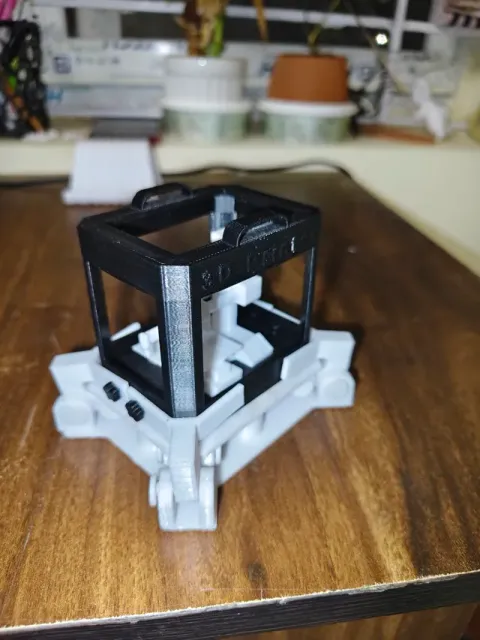
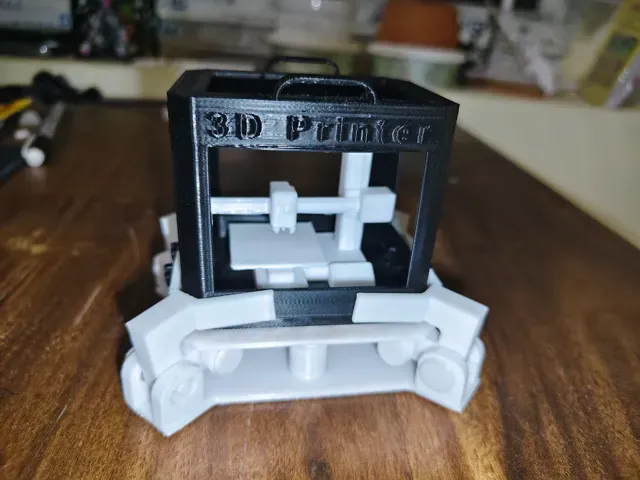
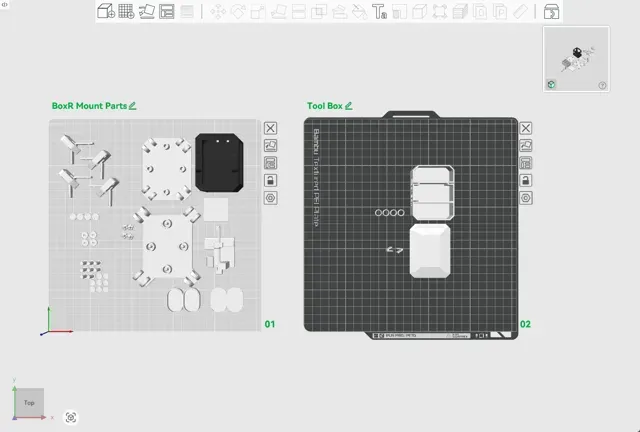
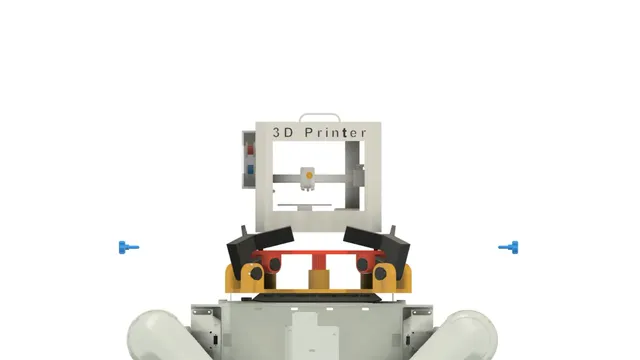
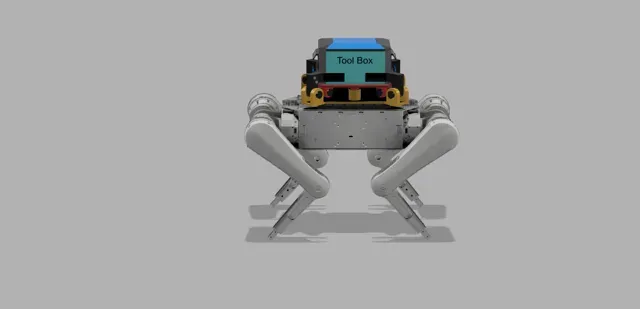
You may be wondering why the printer is mounted on a robotic dog, the INFFIN Rover X1 .
At first glance, it may simply look like a 3D printer being transported by a robot. But the idea behind it is much bigger.
The core idea is to address a serious real-world problem at an industrial scale. The exact problem I intend to solve, and if successful, this concept could open a new way of thinking about remote manufacturing.
We know that 3D printing has already transformed manufacturing, but it still has limitations. One of them is where the printe r can actually be deployed. A printer may be portable, but portability alone does not give it the ability to independently reach a remote location.
That is where the Rover X1 comes in.
Rather than simply making the printer portable so that it can be carried and used, we are giving the printer legs . The objective is to allow the manufacturing system to move from point A to point B with a robotic platform and operate where conventional manufacturing equipment may be difficult to deploy.
This could open possibilities for industries that need manufacturing capability in remote locations and across challenging terrain. The same underlying concept becomes even more relevant when we look beyond Earth.
NASA has already demonstrated 3D printing in space. In November 2014, the first 3D printer was installed and operated aboard the International Space Station. Then, in December 2014, NASA transmitted a ratchet-wrench design from Earth to the ISS, where the printer manufactured the wrench in about four hours. This demonstrated an important principle:
Instead of sending a finished tool, a digital design can be sent and the physical object can be manufactured where it is needed.
NASA continues to investigate additive manufacturing and in-space manufacturing as potential ways to reduce dependence on resupply, particularly for future long-duration missions. Mars makes this problem even more significant because transporting every possible spare part from Earth would impose substantial logistical constraints.
This is the context in which 3D BoXR was developed.
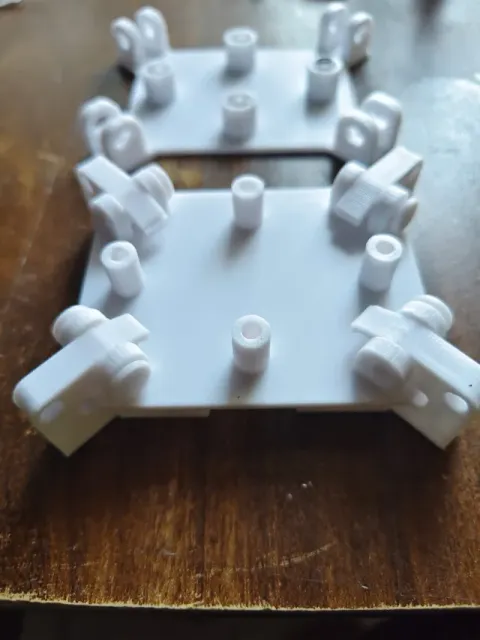
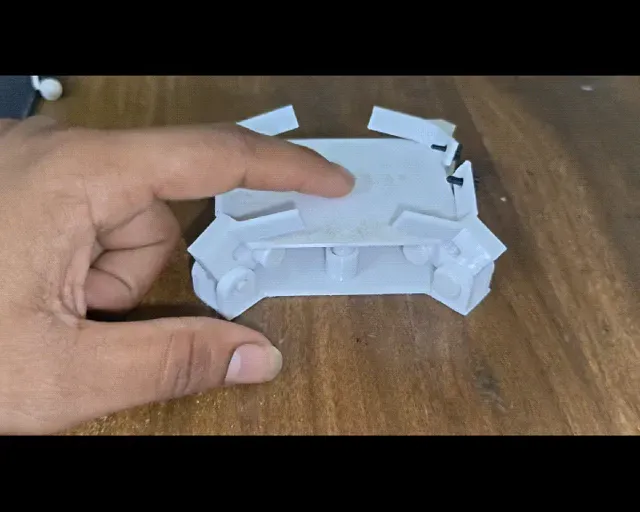
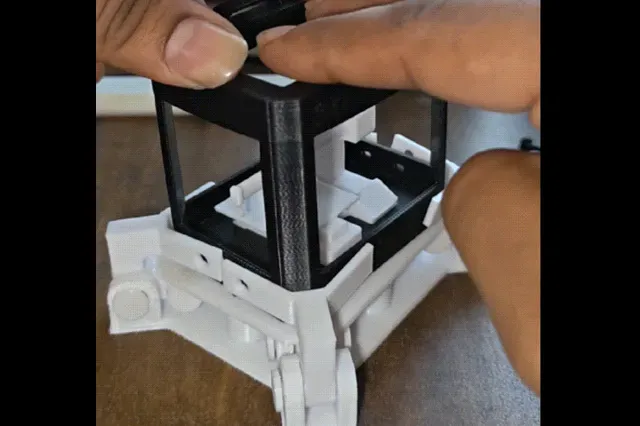
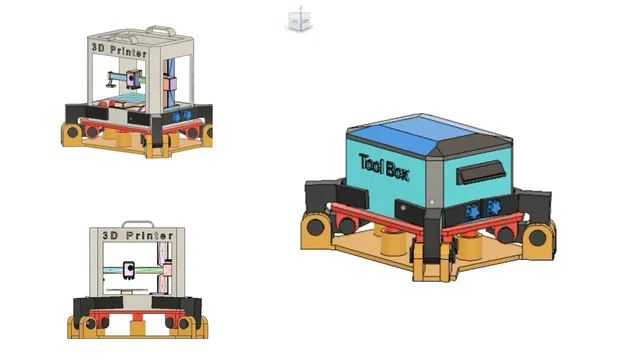
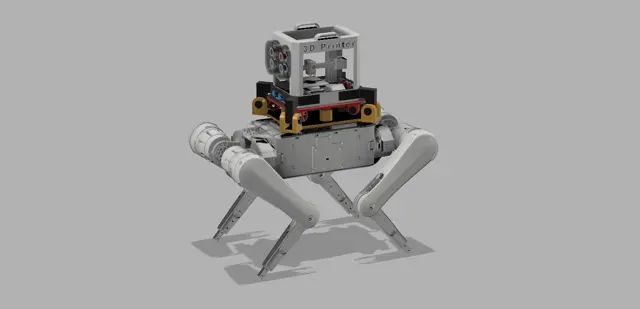
3D BoXR is designed to carry a compact 3D printer using the Rover X1, turning the robot into a mobile manufacturing platform. The printer is secured using the BoxR Mount, a quick-release mounting system that allows the printer to be attached to and detached from the robot while functioning as part of a modular payload interface.
But putting a 3D printer on a robotic dog is not simply a matter of mounting one on top.
The moment the printer becomes mobile, new engineering challenges appear, such as vibration, shocks, payload stability, mounting strength, power requirements, and print quality. This project therefore explores not only the concept itself but also the practical challenges involved in building and testing a proof of concept.
I understand that many people may consider this idea ambitious. But the objective is clear: to explore whether manufacturing capability itself can become mobile.
And that is the challenge I want DOBOT to take on.
(img1 & 2 - AI generated)
What does 3D BoXR
3D BoXR represents the idea of carrying a 3D printing box through remote environments .
At its core, the system combines three elements:
Rover X1 → BoxR Mount → 3D Printer
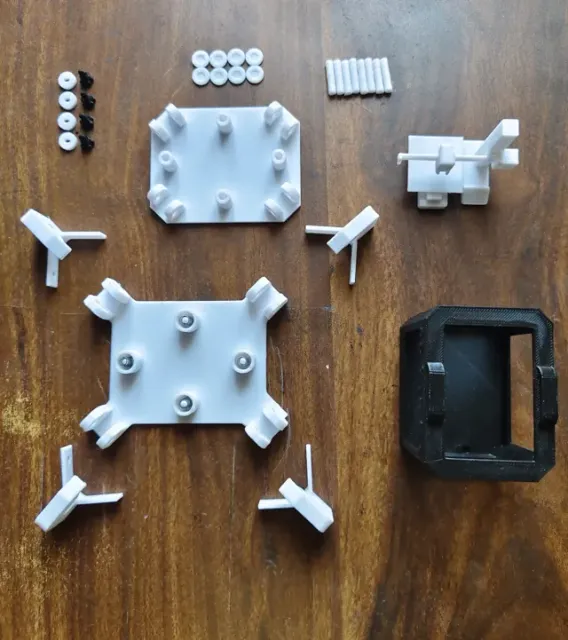
The Rover provides mobility, the BoxR Mount provides a quick attach/detach interface, and the printer provides the manufacturing capability.
(Visuals are original, not AI generated.)
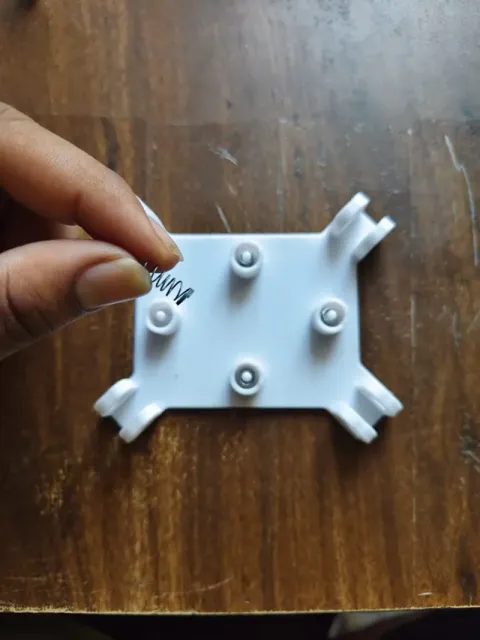
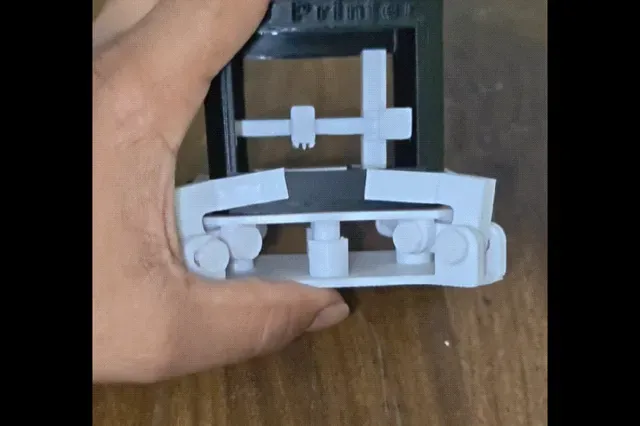
To ensure the printer withstands shocks in rough terrain, spring suspensions have been added as a proof of concept.
(Visuals are original, not AI generated.)
The goal is not simply to carry a printer. It is to give manufacturing the ability to move.
(Image is AI Generated)
The Story Behind 3D BoXR
My brother works as a technician , and his work often takes him to different locations to inspect, maintain, and repair equipment. Some of these jobs take him far away from workshops, warehouses, and the places where spare parts are normally stored.
Through his work, I began to notice something that stayed in my mind.
A technician can arrive at a site with the knowledge, tools, and experience needed to carry out a repair, yet the repair can still come to a complete stop because of one small missing component.
I remember thinking about what happens in that situation. Imagine my brother reaching a remote site to repair a piece of equipment and discovering that a small bracket, cover, connector housing, or similar component has been damaged. The component itself might be small and relatively simple, but without that one physical part, the repair cannot be completed.
Everything else is already there.
The technician is there. The equipment is there. The tools are there. The knowledge to perform the repair is there.
But the repair is still waiting on one small component.
That is what made me question the way spare parts are transported to remote locations. The obvious solution is to carry more spare parts. But that creates another problem:
- How do you know in advance which part is going to fail?
You cannot realistically carry every possible replacement component for every situation. Doing so would require more storage, more weight, and more logistics, while many of those parts may never be used.
So I started thinking about the problem differently.
2. What if, instead of trying to carry every possible spare part, we could carry the ability to make some of those parts when they are needed?


Names are used only to indicate the source of a result. Polyzon is not affiliated with the listed sites.