
Free 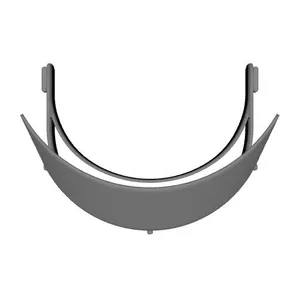
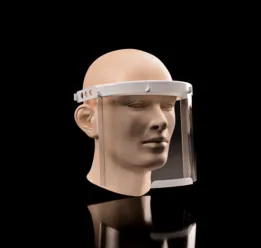
DtM-v3.1 Face Shield PPE, 3D printable headband NO LOGO
NIH 3D
The FDA has authorized production of protective face shields outside of the normal clearance pathway during the Covid-19 pandemic, based on Part 5, section D of the “Enforcement Policy for Face Masks and Respirators During the Coronavirus Disease (COVID-19) Public Health Emergency Guidance for Industry and Food and Drug Administration Staff.
This face shield has undergone review in a clinical setting and is recommended when fabricated as instructed.
*See "Documentation" tab for Information For Use.
Faceshield 1
3 simple parts:
ONE - 3D Printed Headband/ Visor Frame
- Amazon Basics – PTEG 3D Printer Filament, 1.75 mm, White - http://stl.wadebnolan.com/8t6 TWO - Face Shield
- Fellowes – Thermal Laminating, with UV protection, 9” x 11.5”, 3 mil Thickness THREE - Elastic Buttonhole Strap
- Daystart – 1” buttonhole knit stretch elastic, 5 yards = 15 straps, White FEATURES
(sources are linked below)
- Similar to NIH reviewed 3D printed PPE - Adjustable elastic strap supports snug fit - Closed brim adds good seal to the forehead - Full face length - Shield offers UV protection, water resistance - Design uses friction to hold the shield in place (i.e., does not require penetrations in shield material to install) Made and submitted by:
Wade Nolan and Sunshine Scott Nolan
Mission:
Why FACESHIELD 1 exists
Our mission is to provide fast, simple and effective 3D printed PPE equipment options for frontline healthcare providers.
In response to COVID-19 pandemic and based on CDC guidance :
"To support strategies or options to optimize supplies of facemasks in healthcare settings when there is limited supply." It does not address other aspects of pandemic planning; for those, healthcare facilities can refer to COVID-19 preparedness plans.
Surge capacity refers to the ability to manage a sudden, unexpected increase in patient volume that would otherwise severely challenge or exceed the present capacity of a facility. While there are no commonly accepted measurements or triggers to distinguish surge capacity from daily patient care capacity, surge capacity is a useful framework to approach a decreased supply of facemasks during the COVID-19 response."
References:
CDC Strategies for Optimizing the Supply of Facemasks
NCBI NIH Face shields for infection control: A review
Background:
Faceshield 1 originated based on CDC recommendations for Healthcare Professional strategies for optimizing the supply of facemasks and use of homemade masks.
In short, Homemade masks should ideally be used in combination with a face shield that covers the entire front (that extends to the chin or below) and sides of the face.
Made and tested in
Forest Park-South Avondale, Birmingham, Alabama
Assembly process:
- 3D printed with modified Anet A8 - A blue cone mask, Faceshield 1, and disposable latex gloves were worn during assembly. Faceshield 1 Prototype Presentation
https://www.canva.com/design/DAD4JveNcQM/91kYHcGcam3UX-U-YKyLHA/view?utm_content=DAD4JveNcQM&utm_campaign=designshare&utm_medium=link&utm_source=sharebutton
Thank You!
UAB Radiation Oncology ad hoc 3D Print PPE Team
(Popple, Stanley, Thomas and Willey)!
Special thanks to sources:
HanochH https://www.thingiverse.com/thing:4233193/remixes
Thingiverse
NIH 3D Print Exchange
Names are used only to indicate the source of a result. Polyzon is not affiliated with the listed sites.
Comments