
Free 
Anti-vibration feet for Ender 3 and other printers with 4040 V-Slot profile
Printables


UPDATE (04 Apr 2020) A year later, the open-ended feet are still holding up well on my Ender 3. Not surprised, since they're not that springy, but it's good to know a design's stable before putting your printer on it!
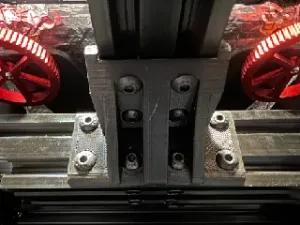
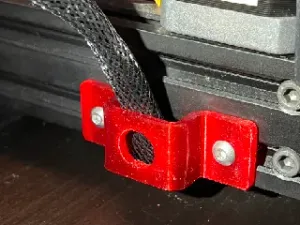
UPDATE (13 Apr 2019): Attached photos are of the 25 mm version fitted to my Ender 3 after printing in Orange SainSmart TPU using some unconventional settings. See Print Settings below for further details.
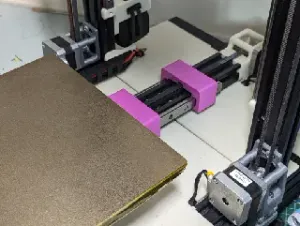
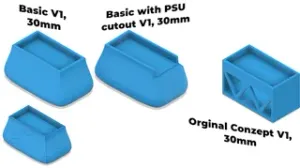
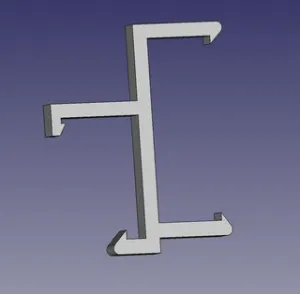
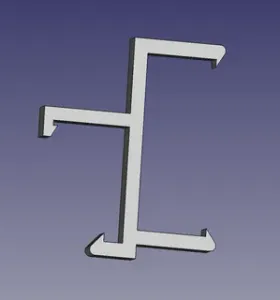
Originally designed by C3D_Miguel on Thingiverse, these feet are designed to snap or slide into the aluminum extrusion frame of the Creality Ender 3 and, if printed in flexible filament, help dampen printer vibration. The originals are about 18 mm tall (not including the fastening tabs).
I wanted more height so I could use the tall version of the Ender 3 Control Box Case by Mvieleers , which needs ≥ 20 mm of clearance.
I therefore created these scaled versions with 22.5 mm and 25 mm clearance in Tinkercad. The tabs for interfacing with the aluminum extrusion have not been scaled, so they should have the same fit as the original.
Print Settings
Printer Brand:
Creality
Printer:
Ender 3
Rafts:
No
Supports:
No
Resolution:
0.24
Infill:
variable (30% as pictured)
Filament: SainSmart TPU (as pictured) or other appropriately not-too-flexible material
Notes:
Three perimeters and 20% infill with a fairly stiff flex filament (SainSmart TPU, Shore 95 A) yielded a not-so-flexible foot. But layer adhesion was very good, so dropping back to 2 perimeters and/or 0% infill would probably yield a more compliant foot.
Using a rigid (PLA/ABS/PETG) filament should also work, but the feet would dampen less vibration and would need to be slid into place from an open end.
UPDATE (13 Apr 2019): I reprinted with 2 perimeters and zero (!) top and bottom layers for a more flexible part. The result was more flexible but still plenty strong and quite interesting!
The photographed part uses 30% grid infill with 14° and -14° infill to make the lines perpendicular to the tapered foot sides. Rectilinear infill would've only printed one angle per layer, which risked being droopy, messy, and too flexible.
With these settings, the appearance of the infill will change based on where you place the parts on the print bed. So use the layer preview to tweak part placement (see photo from Simplify3D g-code view).
Other salient print settings:
- 0.5 mm retraction at 50 mm/s (probably should've been none) - 0.5 mm wipe distance - 220°C hot end, 80°C glass bed with Aqua Net - 50% fan from layer 4 onward - 20 mm/s default speed, 60% all underspeeds - Single extrusion walls and fills allowed
Category: 3D Printer Parts





Names are used only to indicate the source of a result. Polyzon is not affiliated with the listed sites.
Comments