
Gratis 
Benchynator - print-in-place, transformer robot.
MakerWorld
This collection covers transforming robot 3D models: print-in-place designs that change shape straight off the build plate, vehicle-to-robot conversions, character figures and monster-like pretenders. The files are shared as STL and similar formats for 3D printing, from keychain scale up to larger display pieces. It is a useful place to compare how different authors handle joints, panels and part counts. Polyzon does not confirm whether models are free, their price, license, official status, affiliation, safety or fitness. Check the current terms at the source.
Esta colección está escrita en inglés, pero la búsqueda funciona en cualquier idioma.
 Una colección de Polyzon · 48 modelos de 7 plataformas
Polyzon reúne esta colección a partir de los resultados de búsqueda de las plataformas conectadas. Se eliminan los duplicados y los modelos sin vista previa, las coincidencias débiles van al final y el resto mantiene el orden de la búsqueda. Los modelos pertenecen a sus autores: consulta las condiciones en la página de cada modelo.
Criterios de selección: el equipo editorial de Polyzon · Texto actualizado el 13/10/2026



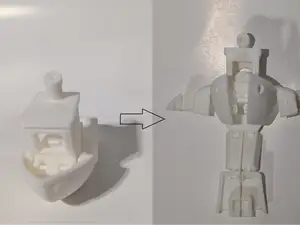
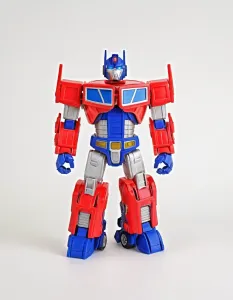

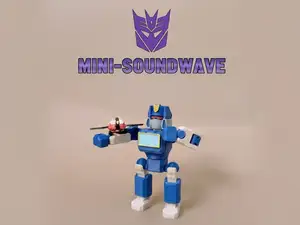
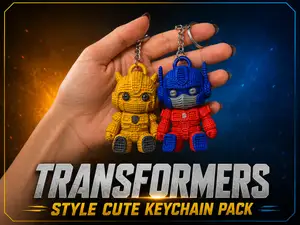
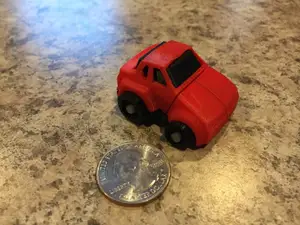


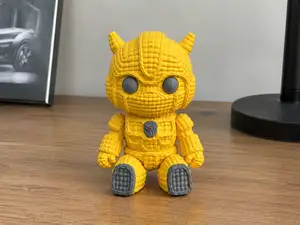
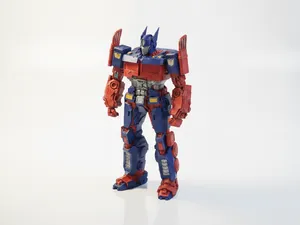
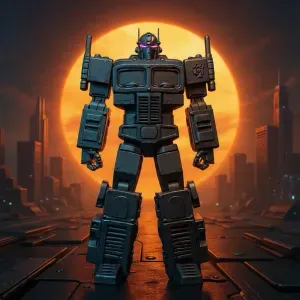
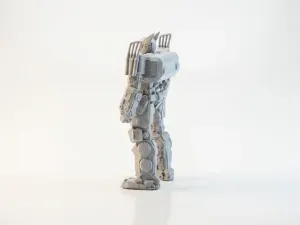


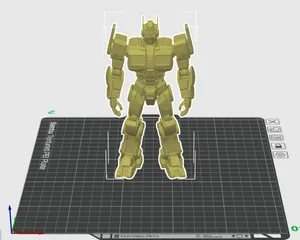


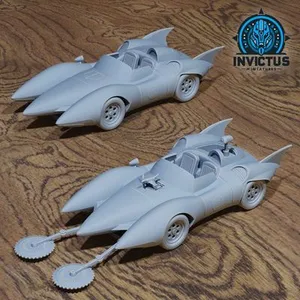


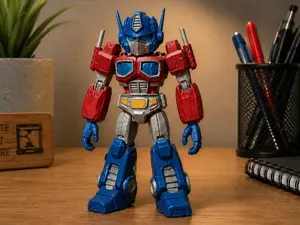
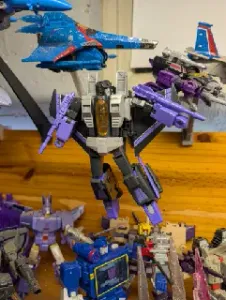


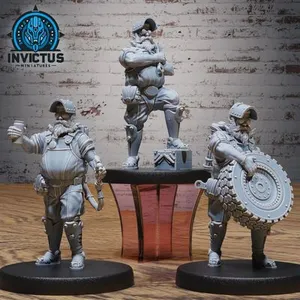


Print-in-place designs appear often: the joints are modelled into the body, so the robot arrives from the 3D printer already assembled and can be folded or posed. Character robots follow a recognizable silhouette and head shape, while vehicle conversions begin as a car or similar body and unfold into a figure. Monster and pretender variants use organic shapes and extra parts, and novelty pieces turn everyday objects into transforming forms.
Before printing, read the author's page: overall size and scale, number of separate parts, whether supports are needed, and the material and settings the author lists. Photos of real prints show how the joints move and where thin walls or tight gaps sit. On print-in-place models the clearance between moving parts depends on your 3D printer's calibration, so a small test at the same scale is worth the time.
To narrow the search, try synonyms such as transforming robot, convert, fold-out, mech or figure, and pair them with a scale or a body type. Related topics include print-in-place toys, articulated robots, vehicle models and mecha miniatures. Adding a transformation style or a mode to the query usually returns fewer, more relevant results.


El catálogo completo de temáticas, del hogar al CNC, con búsqueda en todas las plataformas conectadas.