
Gratuit 
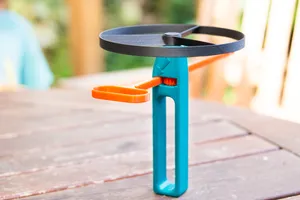
Toroidal Rotor 4 Strong Flying Propeller
Thingiverse
This collection gathers 3D models of flying propellers, from small pull copters to fully printed wings. It is useful if you want a quick 3D printing project that actually leaves the ground, or a base for experimenting with rotors and launchers. The range is wide, so the notes below help you pick a starting point. Polyzon does not confirm whether models are free, their price, license, official status, affiliation, safety or fitness. Check the current terms at the source.
Le texte de cette collection est rédigé en anglais ; la recherche, elle, fonctionne dans toutes les langues.
 Une collection Polyzon · 47 modèles sur 3 plateformes
Polyzon compose cette collection à partir des résultats de recherche des plateformes connectées. Les doublons et les modèles sans aperçu sont retirés, les correspondances faibles sont placées à la fin, et le reste suit l’ordre de la recherche. Les modèles appartiennent à leurs auteurs : consultez les conditions sur la page de chaque modèle.
Règles de sélection : la rédaction de Polyzon · Texte mis à jour le 13/10/2026




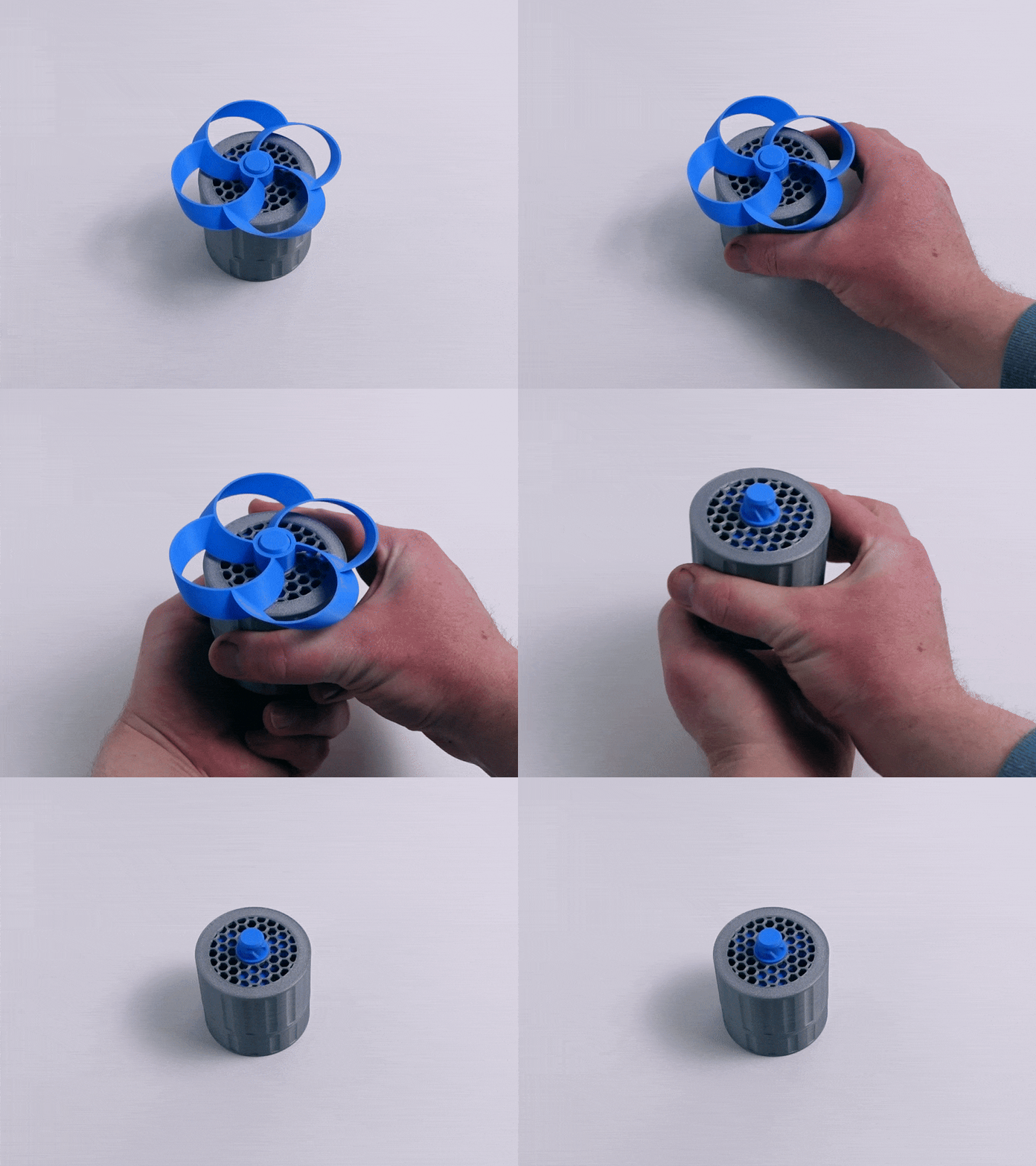


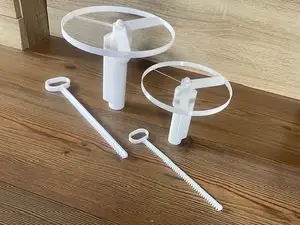


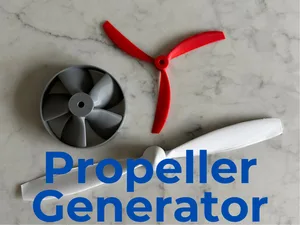


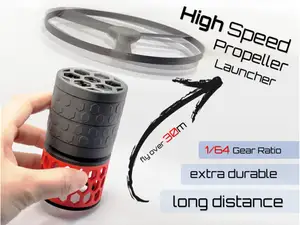


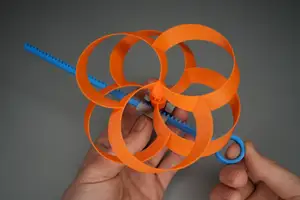


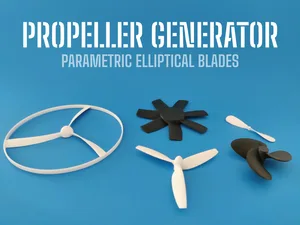


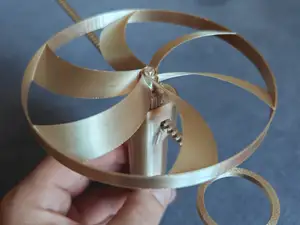


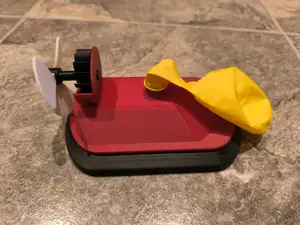




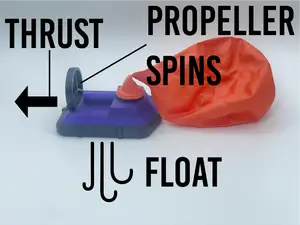

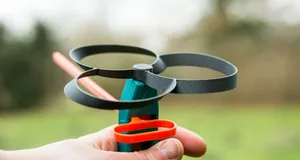


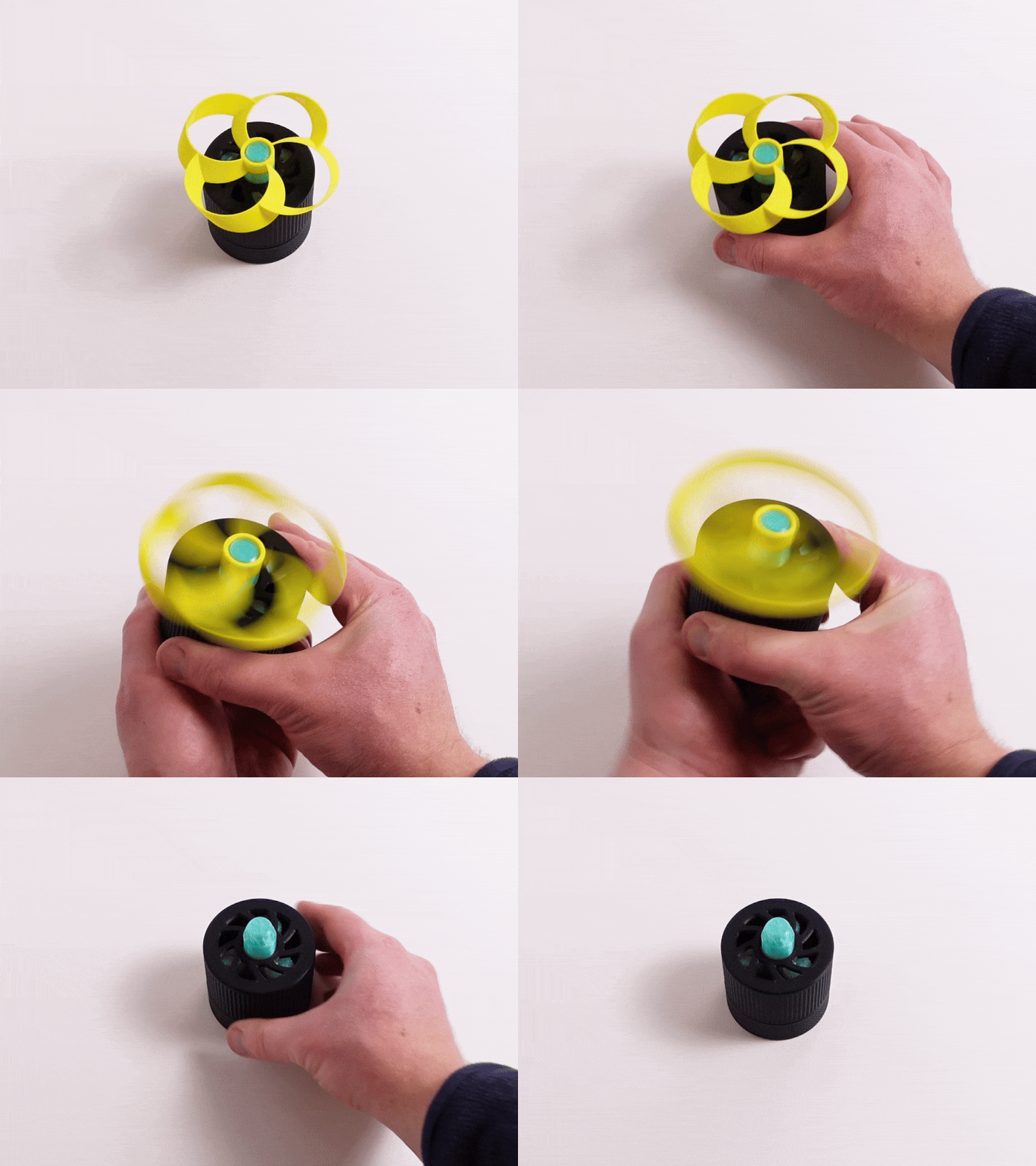


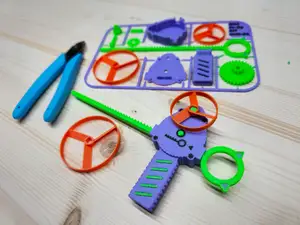
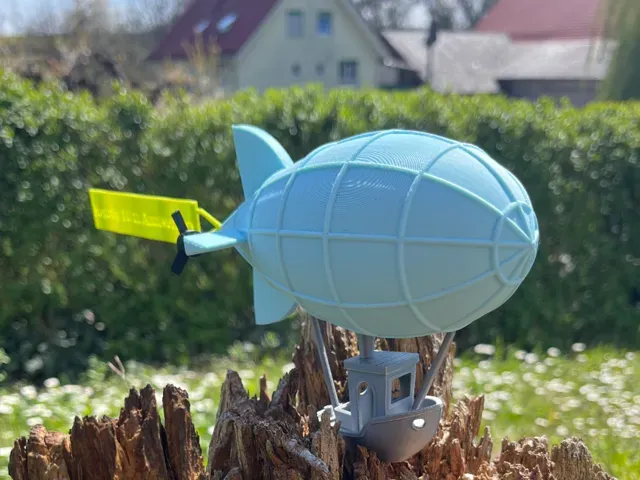
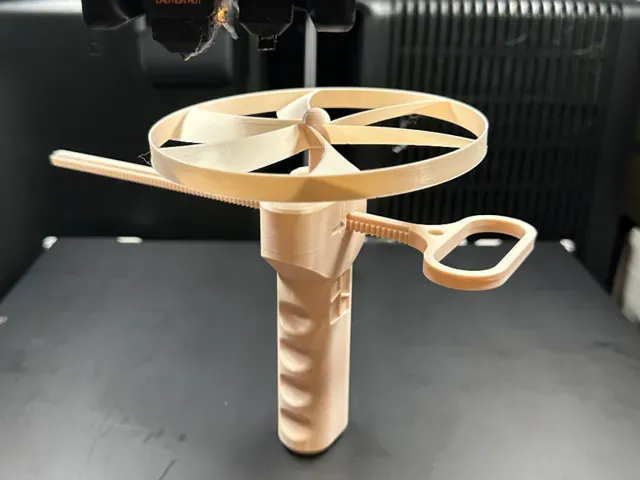
The most common group is the hand-launched kind: a propeller on a stick or a string, spun and released upward. Alongside it sit print-in-place spinners that come off the plate as one moving piece, launchers that use gears or a spring to build up rotation speed, and larger airframes such as printed flying wings and quadcopter frames. Toroidal rotors and parametric propeller generators appear too, aimed at people who want to tune blade shape rather than copy an existing toy.
Before printing, read the author's page for the part count and whether the model needs supports or glue, since multi-part wings and launchers differ a lot here. Blade geometry and wall thickness matter more than colour: thin blades in a brittle material can snap on the first throw, while flexible filaments bend instead. Check the material and layer settings the author lists, and look at photos of real prints to judge scale and how the parts fit together.
To widen the search, try related wording such as pull copter, spinner, whirligig, launcher, rotor, flying wing or quadcopter frame. Adding a size or use to the query, like desk toy or outdoor, narrows the results further. If you want to modify rather than print as-is, terms like parametric or customisable lead to generators where blade count and diameter can be adjusted.



Le catalogue complet des thèmes, de la maison à la CNC, avec une recherche sur tous les sites connectés.