Gratuit 
Мини футляр для карт памяти MicroSD
Cults3D
This collection gathers 3D models of cases: travel boxes for small personal items, holders for parts, sleeves for devices and decorative containers. Each listing comes from a different author, so the geometry, wall thickness and closure style vary a lot. It is a useful starting point if you want to print a container around an object you already own rather than design one from scratch. Polyzon does not confirm whether models are free, their price, license, official status, affiliation, safety or fitness. Check the current terms at the source.
Le texte de cette collection est rédigé en anglais ; la recherche, elle, fonctionne dans toutes les langues.
 Une collection Polyzon · 48 modèles sur 4 plateformes
Polyzon compose cette collection à partir des résultats de recherche des plateformes connectées. Les doublons et les modèles sans aperçu sont retirés, les correspondances faibles sont placées à la fin, et le reste suit l’ordre de la recherche. Les modèles appartiennent à leurs auteurs : consultez les conditions sur la page de chaque modèle.
Règles de sélection : la rédaction de Polyzon · Texte mis à jour le 14/10/2026





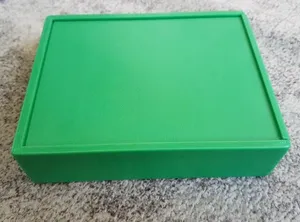


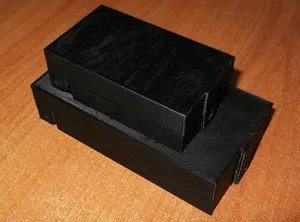


The models split into a few groups. Travel cases are usually compact, with a lid that snaps or slides shut, and are sized around one object such as a toothbrush or earplugs. Storage holders for batteries, needles, bobbins or cartridges tend to be open trays or compartment boxes. Device sleeves and boxes for controllers, meters, phones or styluses follow the outline of the hardware, while organizers for pills or business cards are flat and divided into sections. Decorative cases take the shape of a heart, a chest or a book and are chosen for their look as much as for what they hold.
Before printing, open the author's page and read what is stated there: overall dimensions and scale, the number of separate parts and how they join, whether the lid uses a hinge, magnet, screw or friction fit, and whether supports are needed for the overhangs. Check the material and settings the author lists, since a thin snap-fit lid behaves differently in rigid and flexible filaments. Photos of real prints are the most useful reference for wall thickness and clearance between moving parts.
If the results are thin, widen the search. Try synonyms such as box, holder, tray, sleeve, container, organizer or caddy, and add the object you want to store, for example batteries, needles, cards or a stylus. Related topics include desk organizers, tool inserts, drawer dividers and protective shells for small electronics. Searching by the item rather than by the word case often returns models whose titles never mention a case at all.


Le catalogue complet des thèmes, de la maison à la CNC, avec une recherche sur tous les sites connectés.