
Gratuit 
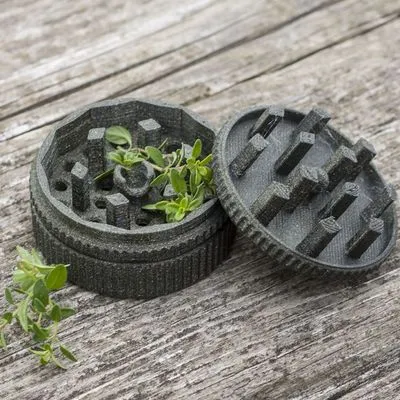
Compact Toothless Grinder
Thingiverse
This collection gathers 3D printing projects built around grinders: manual herb and spice mills, toothless versions with storage, wall mounts for angle grinders, sharpening jigs and bench or belt grinder assemblies. It is useful if you want a small functional print for the kitchen or a workshop accessory that holds a power tool in place. Most entries are shared as STL files, so you can slice them for your own 3D printer. Polyzon does not confirm whether models are free, their price, license, official status, affiliation, safety or fitness. Check the current terms at the source.
Le texte de cette collection est rédigé en anglais ; la recherche, elle, fonctionne dans toutes les langues.
 Une collection Polyzon · 48 modèles sur 7 plateformes
Polyzon compose cette collection à partir des résultats de recherche des plateformes connectées. Les doublons et les modèles sans aperçu sont retirés, les correspondances faibles sont placées à la fin, et le reste suit l’ordre de la recherche. Les modèles appartiennent à leurs auteurs : consultez les conditions sur la page de chaque modèle.
Règles de sélection : la rédaction de Polyzon · Texte mis à jour le 10/10/2026




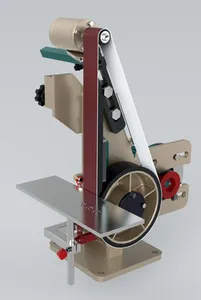

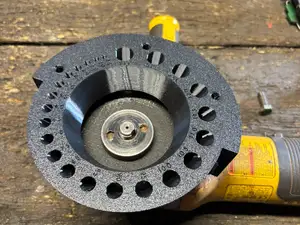
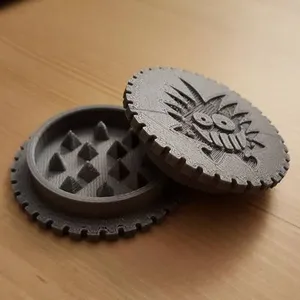

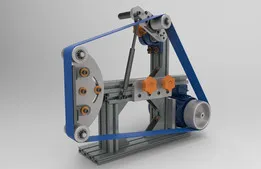

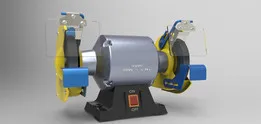


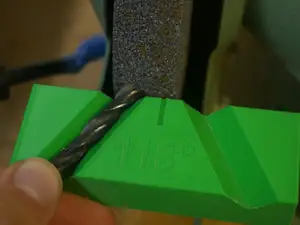
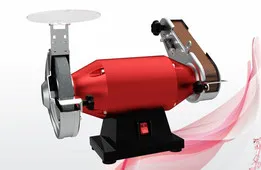

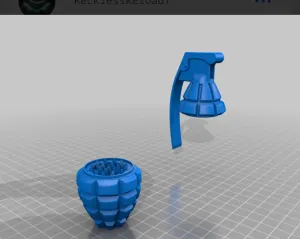


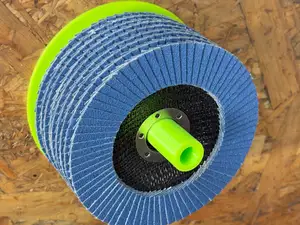

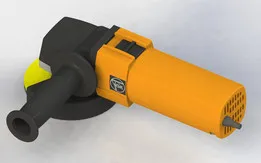


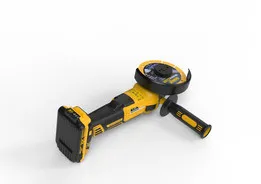
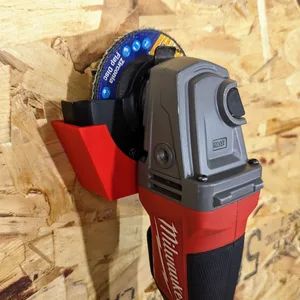


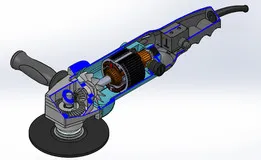
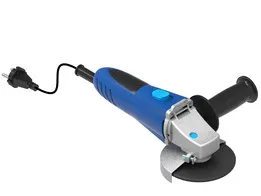
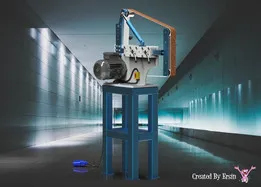


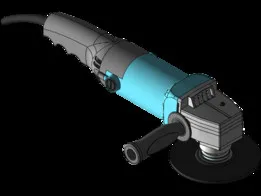


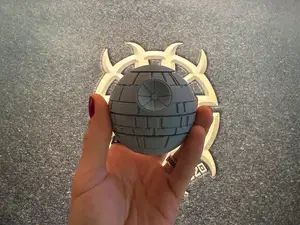
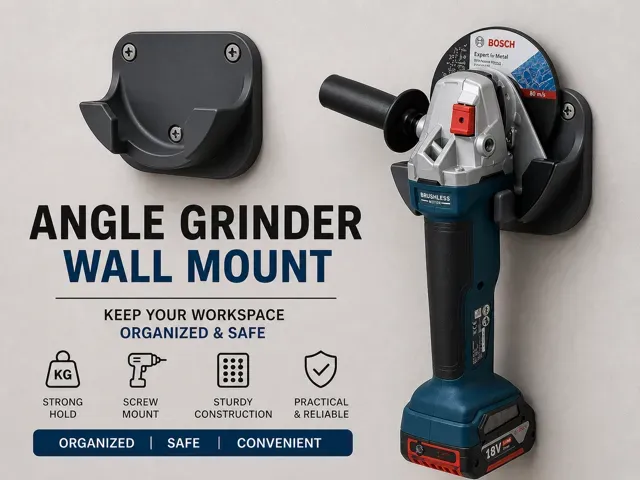
The models fall into two rough groups. Kitchen-oriented designs cover herb, spice and coffee mills, where the difference lies in the grinding chamber: toothed versions crush and tear, while toothless ones rely on a smooth cone or disc, and some add a storage compartment under the lid. Workshop-oriented designs include wall mounts and brackets for angle grinders, jigs that hold a drill bit at a fixed angle for sharpening, and larger bench or belt grinder frames that combine printed parts with standard hardware.
Before printing, open the author's model page and read the listed dimensions: chamber diameter, thread size, screw spacing and the tool body diameter for mounts. Check how many parts the assembly has, whether they are joined with screws, magnets or glue, and whether the author shows supports in the print orientation. Material and settings are usually stated there as well, and photos of real prints help you judge wall thickness and tolerances better than renders.
If a search returns little, try synonyms and related terms: mill, crusher, shredder, sharpening jig, holder, bracket, stand, wall mount. Combining a tool name with a part name often works better than a single broad word, and related topics such as workshop organization, kitchen tools or garden equipment can surface models that are not titled as grinders at all.



Le catalogue complet des thèmes, de la maison à la CNC, avec une recherche sur tous les sites connectés.