
Gratuit 
Hair Clips
Thingiverse
This collection covers STL files for hair clips, hairpins and claw clips, ranging from floral and gothic shapes to character-inspired pieces. It is useful when you want a small 3D printing project that can be scaled, recolored or adapted to a hairstyle. Many entries also include modular or customizable versions. Polyzon does not confirm whether models are free, their price, license, official status, affiliation, safety or fitness. Check the current terms at the source.
Le texte de cette collection est rédigé en anglais ; la recherche, elle, fonctionne dans toutes les langues.
 Une collection Polyzon · 41 modèles sur 3 plateformes
Polyzon compose cette collection à partir des résultats de recherche des plateformes connectées. Les doublons et les modèles sans aperçu sont retirés, les correspondances faibles sont placées à la fin, et le reste suit l’ordre de la recherche. Les modèles appartiennent à leurs auteurs : consultez les conditions sur la page de chaque modèle.
Règles de sélection : la rédaction de Polyzon · Texte mis à jour le 14/10/2026



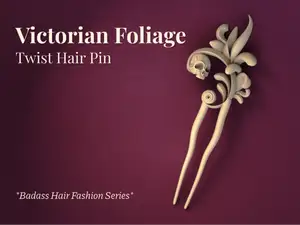

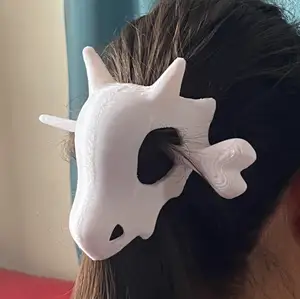

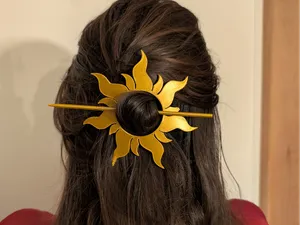

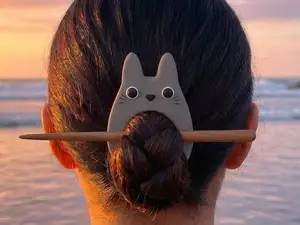

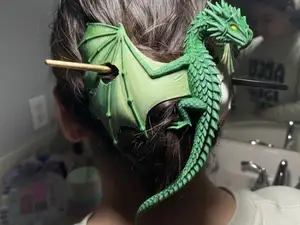

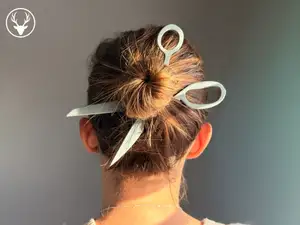

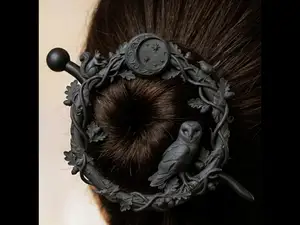

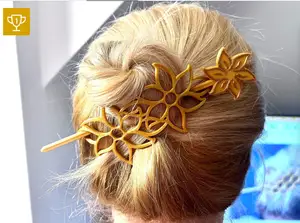

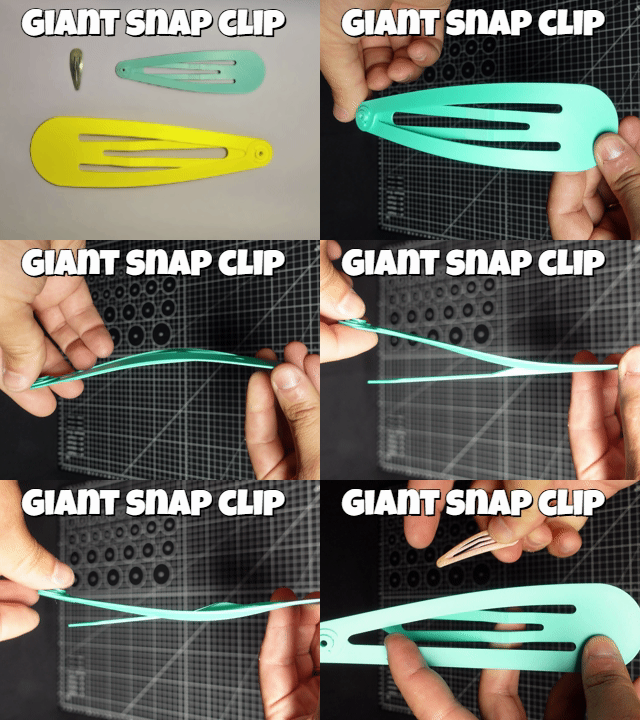

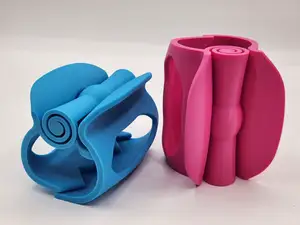



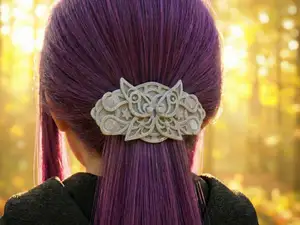

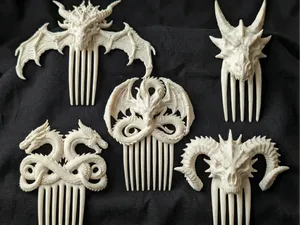

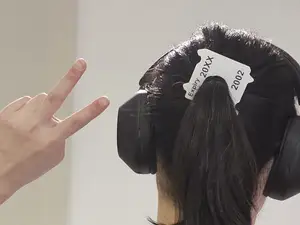

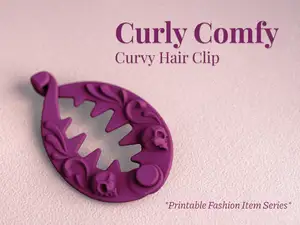

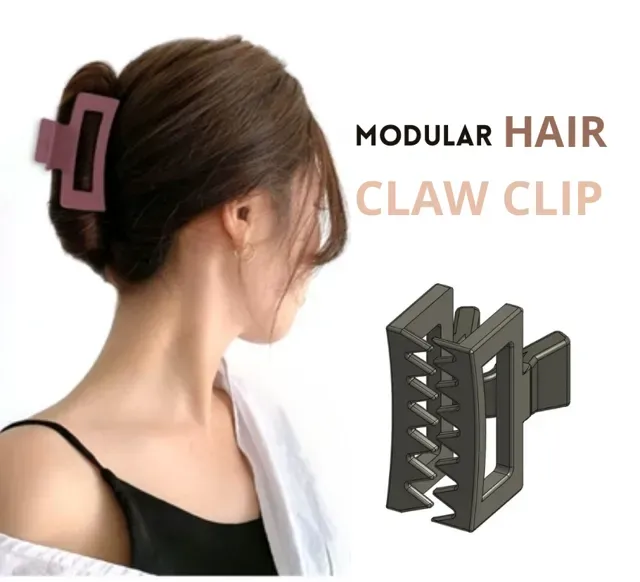
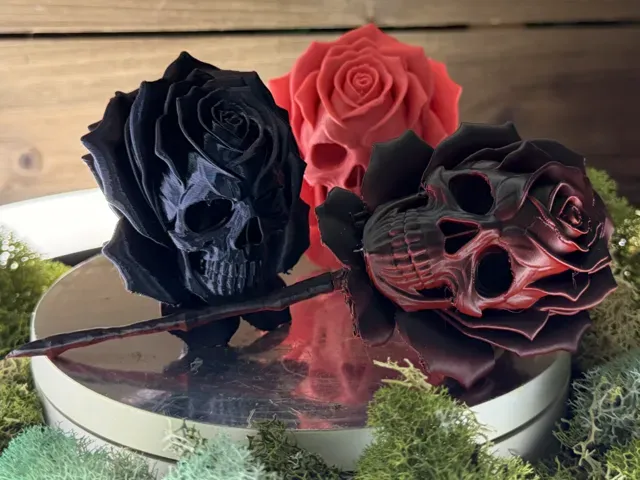
The models fall into a few groups. Floral and botanical pins use leaves, mushrooms or rose shapes as the visible part. Character and fandom clips copy an emblem, a note or a symbol from a film, game or series. Skull and gothic designs lean on darker ornament, while modular claw clips are built from several pieces that lock together. Holders and storage pieces appear as well, shaped to keep a set of clips in one place.
Before printing, look at the dimensions the author lists and compare them with the thickness of the hair section you want to hold. Check how many parts a model has, whether the pieces snap or need glue, and whether the overhangs require supports. The material matters for clips that bend: stiff filaments hold shape but crack, while more flexible ones tolerate repeated opening. Photos of real prints on the model page show how the surface and the hinge actually come out.
To widen the results, try the alternative names people use: hairpin, hairclip, barrette, snap clip, claw clip or brooch. Combining a shape with a theme helps, for example flower, leaf, skull, star or music note. Related searches such as cosplay accessories, keychains or bag charms often surface files with the same geometry in a different size.
If a clip is too large or too small, scaling it in the slicer is usually enough, but check that the wall thickness and the hinge still work at the new size. Print orientation also decides strength: a clip laid flat on the plate behaves differently from one printed upright. For multi-part designs, dry-fit the pieces before committing to a final assembly.



Le catalogue complet des thèmes, de la maison à la CNC, avec une recherche sur tous les sites connectés.