
Gratuit 
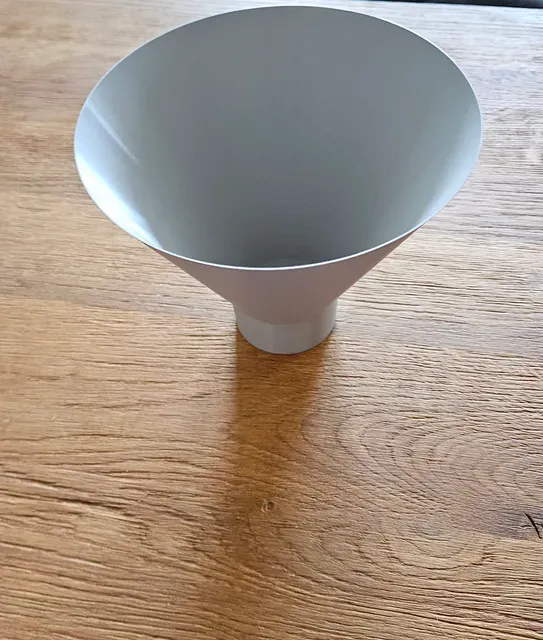
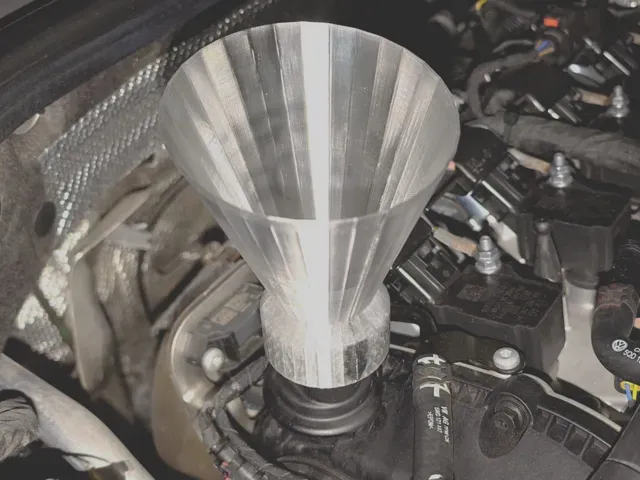
Quart Oil Can Screw-On Funnel
Thingiverse
This collection gathers 3D models of oil funnels, from threaded filler necks shaped around a specific engine to plain tapered funnels and funnel sets. Most of them are small parts meant to be printed on a home 3D printer and kept in a workshop drawer. The variety is useful because the thread, the neck angle and the venting differ from one engine to another. Polyzon does not confirm whether models are free, their price, license, official status, affiliation, safety or fitness. Check the current terms at the source.
Le texte de cette collection est rédigé en anglais ; la recherche, elle, fonctionne dans toutes les langues.
 Une collection Polyzon · 48 modèles sur 4 plateformes
Polyzon compose cette collection à partir des résultats de recherche des plateformes connectées. Les doublons et les modèles sans aperçu sont retirés, les correspondances faibles sont placées à la fin, et le reste suit l’ordre de la recherche. Les modèles appartiennent à leurs auteurs : consultez les conditions sur la page de chaque modèle.
Règles de sélection : la rédaction de Polyzon · Texte mis à jour le 16/10/2026






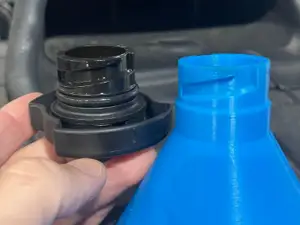


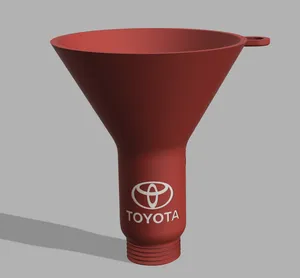


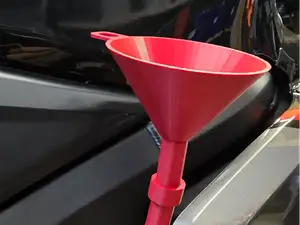


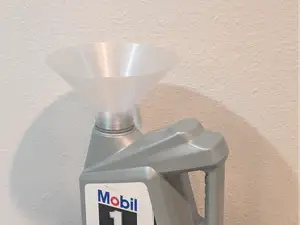


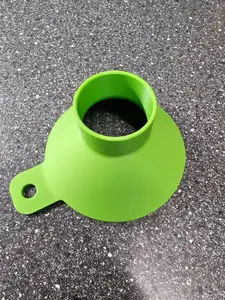


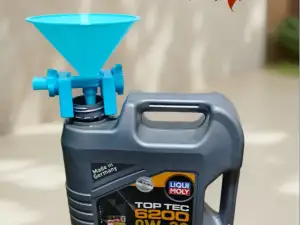


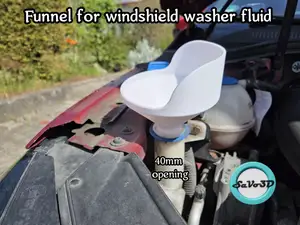

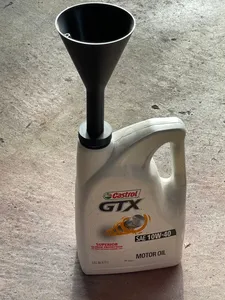


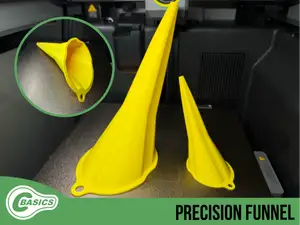


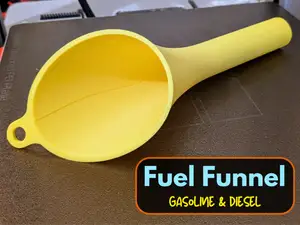


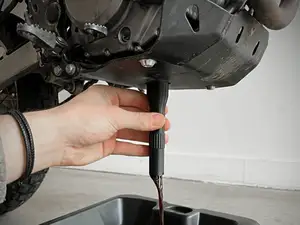


The models fall into a few groups. Engine-specific funnels are built around a filler neck with a defined thread, sometimes with a seal ring or a cap, and they appear for EA888 units as well as for other engine families. Motorcycle versions often add a vent channel or a screw-on base so the funnel stays in place while you pour. Beyond those, there are universal tapered funnels, multi-size funnel sets, and small accessories such as holders, caps and drip trays that keep the part and the surrounding area tidy.
When you open a model page, read the thread specification first: diameter and pitch decide whether the funnel will sit on your filler neck, and a printed thread behaves differently from a moulded one. Check the number of parts, whether the author expects a separate seal or cap, and whether supports are needed for the internal cone. Look at the material and settings the author lists, and at photos of real prints, since layer lines and wall thickness affect how the funnel feels in the hand. Orientation matters too: a funnel printed upright usually needs less cleaning inside the spout.
If the results feel narrow, try other wordings: oil filler funnel, oil refill funnel, engine oil top-up funnel, screw-on funnel, threaded funnel with cap, funnel holder, drip tray. Related searches include the engine code you are working on, motorcycle refill tools, and larger funnel sets for workshop use. Combining a funnel with a matching cap, seal or tray often leads to companion models by the same author, which is a quick way to build a small set of parts that work together.


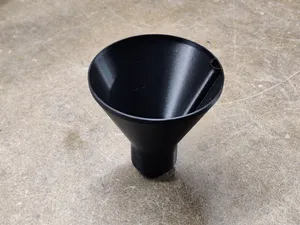

Le catalogue complet des thèmes, de la maison à la CNC, avec une recherche sur tous les sites connectés.