
Gratuit 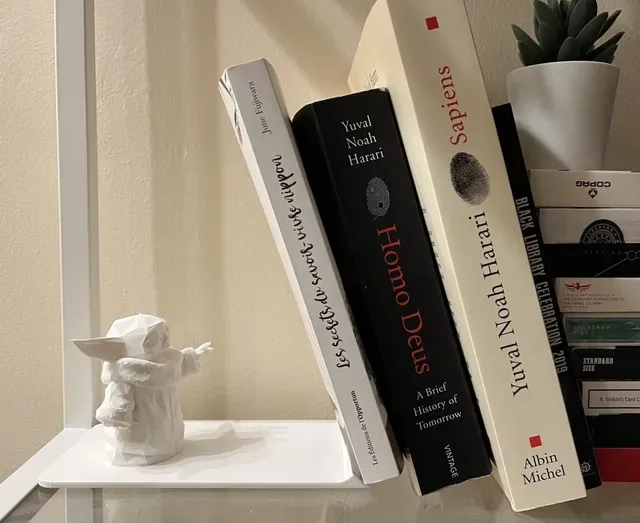
Low-Poly Baby Yoda book stand / book end
Printables
This collection gathers 3D models for holding books open, propping them upright and keeping shelves in order. It covers foldable stands, minimalist bookends, recipe holders and shelf-style organizers, so you can pick a shape that matches how you read. Every entry comes from a model page made for 3D printing, and the files are usually plain STL. Polyzon does not confirm whether models are free, their price, license, official status, affiliation, safety or fitness. Check the current terms at the source.
Le texte de cette collection est rédigé en anglais ; la recherche, elle, fonctionne dans toutes les langues.
 Une collection Polyzon · 48 modèles sur 5 plateformes
Polyzon compose cette collection à partir des résultats de recherche des plateformes connectées. Les doublons et les modèles sans aperçu sont retirés, les correspondances faibles sont placées à la fin, et le reste suit l’ordre de la recherche. Les modèles appartiennent à leurs auteurs : consultez les conditions sur la page de chaque modèle.
Règles de sélection : la rédaction de Polyzon · Texte mis à jour le 14/10/2026


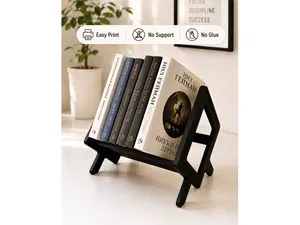


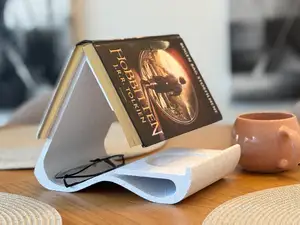
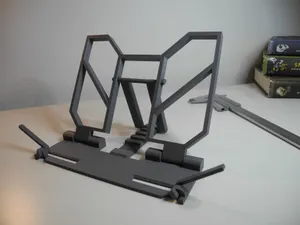

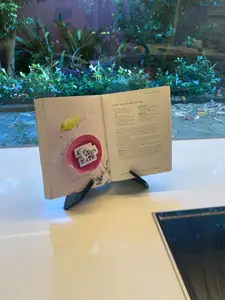

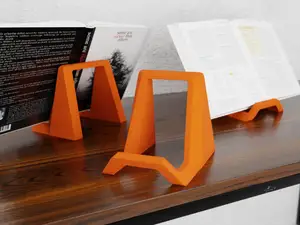
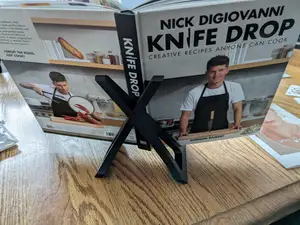


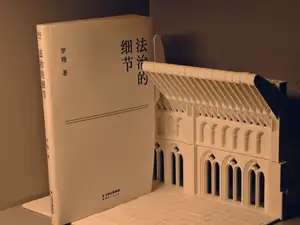
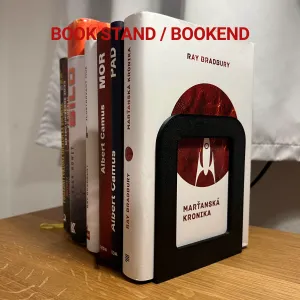

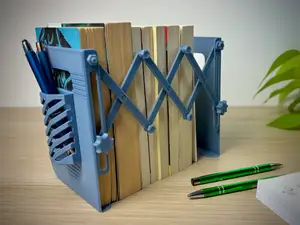

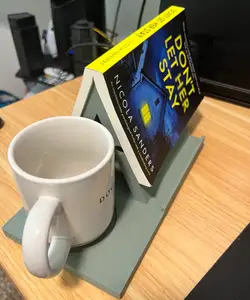
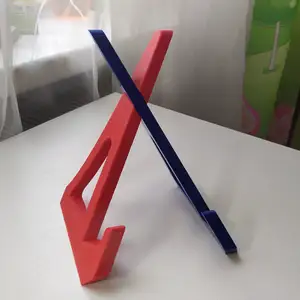

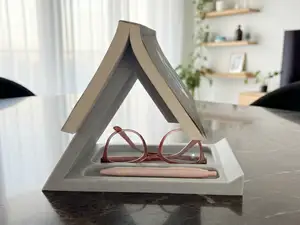

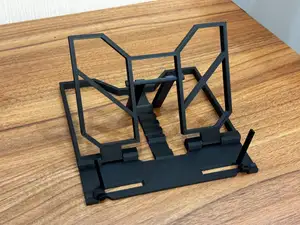

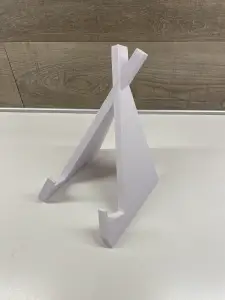
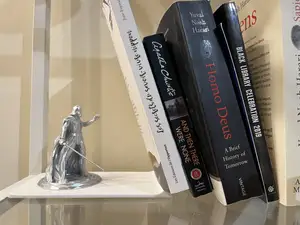


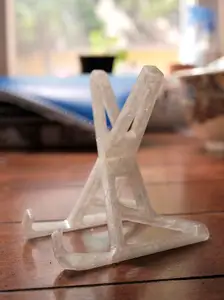


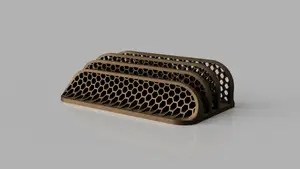

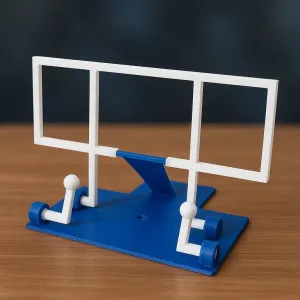
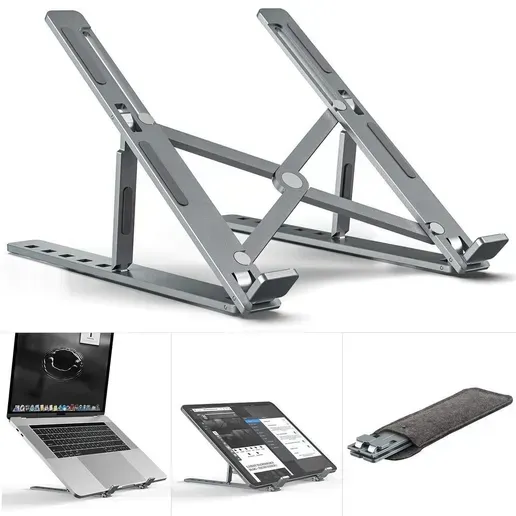
The models differ mainly in how they hold a book. Foldable and retractable stands use hinged or sliding parts and pack flat when not in use, while bookends and supports are simple rigid blocks or angled plates that keep a row of books upright. Recipe holders keep a page open at counter height, and some stands are shaped to take a laptop or e-reader as well as a book. Shelf-style designs combine a stand with a small organizer, sometimes from several modules that connect.
Before printing, open the author's model page and read the listed dimensions and scale, since a stand sized for a paperback will not hold a large hardcover. Check how many parts the model has and whether they need assembly, glue or screws, and whether the author calls for supports or a brim. Look at the material and settings the author lists, and at photos of real prints, to judge wall thickness and how the hinge or sliding joint behaves. Tall thin bookends often benefit from a wider base or added weight.
To widen the search, try synonyms such as book holder, book rest, book support, reading stand or cookbook stand, and combine them with words like foldable, adjustable, modular or minimalist. Related topics include tablet and e-reader stands, desk organizers, magazine holders and small bookshelf models, which often use the same shapes. If you want a particular look, search by style words such as low-poly, geometric or decorative, and check the collection again later, since the available models change.




Le catalogue complet des thèmes, de la maison à la CNC, avec une recherche sur tous les sites connectés.