Gratuit 
Базовые топперы War Gaming
Cults3D
This collection gathers terrain models used in wargames, dioramas and tabletop scenery: buildings, defenses, natural features and small scatter pieces. Most files are made for 3D printing at miniature scale, so the same piece can serve a skirmish board or a display base. The range of styles is wide, from ruined industrial structures to forest floors and stone walls. Polyzon does not confirm whether models are free, their price, license, official status, affiliation, safety or fitness. Check the current terms at the source.
Le texte de cette collection est rédigé en anglais ; la recherche, elle, fonctionne dans toutes les langues.
 Une collection Polyzon · 48 modèles sur 5 plateformes
Polyzon compose cette collection à partir des résultats de recherche des plateformes connectées. Les doublons et les modèles sans aperçu sont retirés, les correspondances faibles sont placées à la fin, et le reste suit l’ordre de la recherche. Les modèles appartiennent à leurs auteurs : consultez les conditions sur la page de chaque modèle.
Règles de sélection : la rédaction de Polyzon · Texte mis à jour le 15/10/2026


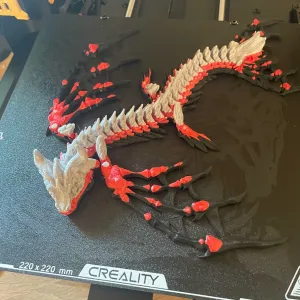


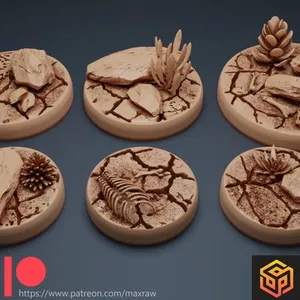


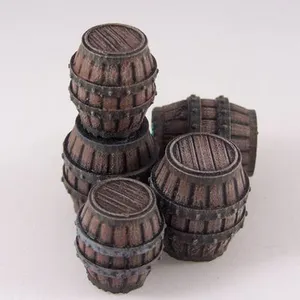

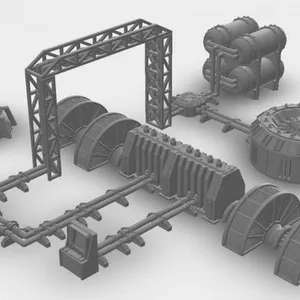


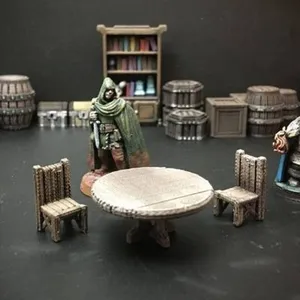
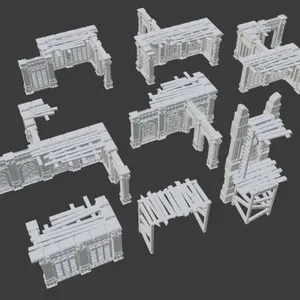


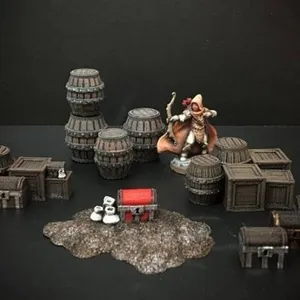

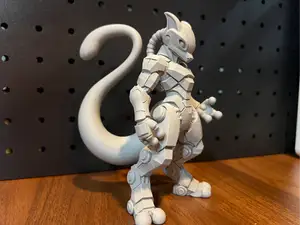

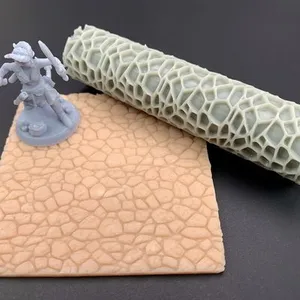

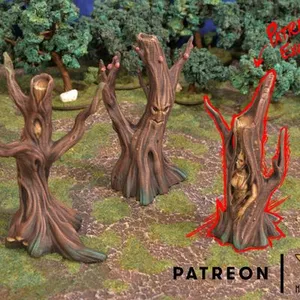


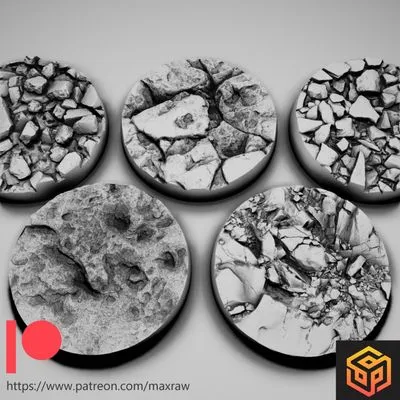
Terrain splits roughly into large structures and small props. Buildings, outposts and gothic ruins define the layout of a board, while crates, pipelines, consoles, rocks and stumps fill the gaps between them. Natural pieces are usually sculpted as single objects or as modular tiles, and game-specific sets bundle several pieces that share one style.
Before printing, look at the size and scale stated on the model page and compare it with the miniatures you already use. Check how many parts a piece has and whether it needs assembly, since a multi-part building takes more time than a solid rock. The author's notes usually mention whether supports are needed, which material was used and which layer height was chosen; photos of real prints show how the surface reads at table distance.
If a search returns too little, try related wording: scenery, tabletop, diorama, scatter, ruins, modular tiles, or the setting itself, such as fantasy, sci-fi or post-apocalyptic. Searching by function also helps, for example walls, barricades, floors or bases. Combining a broad term with a material or a game genre narrows the list without losing useful results.

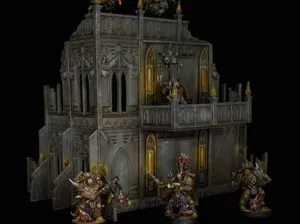


Le catalogue complet des thèmes, de la maison à la CNC, avec une recherche sur tous les sites connectés.