
Gratuit 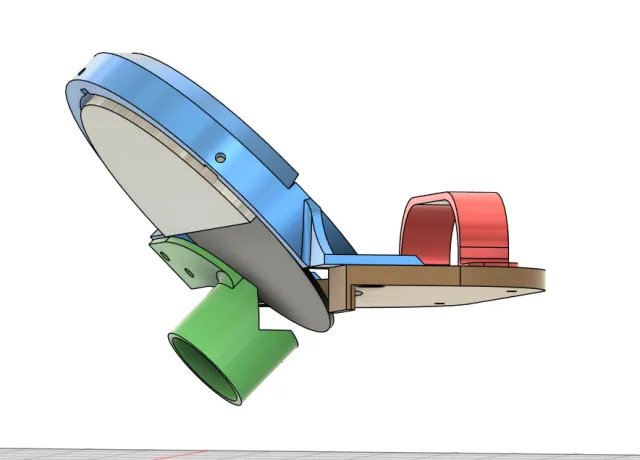
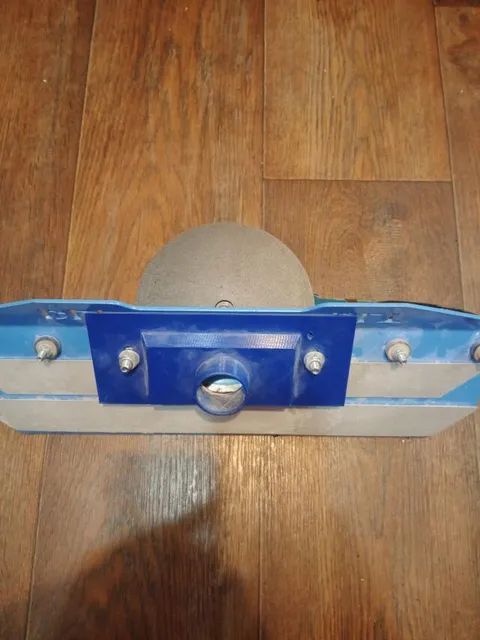
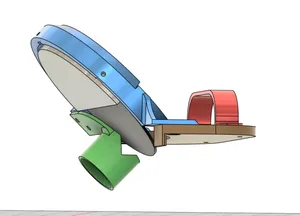
Заусовщик плитки на 45 градусов для 125 ушм
3DToday
This collection gathers STL files for tile chamfering jigs, dust-extraction adapters and small workshop holders. Most of them are printed on a desktop 3D printer and then fitted to a grinder, a cutter or a shop vacuum. The same wording also pulls in mounts, stands and heat accessories, so the results are wider than the tool itself. Polyzon does not confirm whether models are free, their price, license, official status, affiliation, safety or fitness. Check the current terms at the source.
Le texte de cette collection est rédigé en anglais ; la recherche, elle, fonctionne dans toutes les langues.
 Une collection Polyzon · 48 modèles sur 8 plateformes
Polyzon compose cette collection à partir des résultats de recherche des plateformes connectées. Les doublons et les modèles sans aperçu sont retirés, les correspondances faibles sont placées à la fin, et le reste suit l’ordre de la recherche. Les modèles appartiennent à leurs auteurs : consultez les conditions sur la page de chaque modèle.
Règles de sélection : la rédaction de Polyzon · Texte mis à jour le 11/10/2026





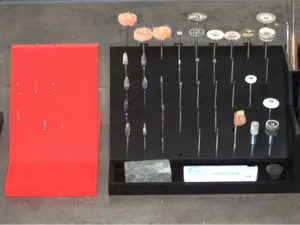
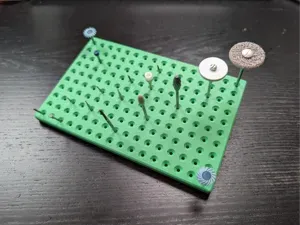

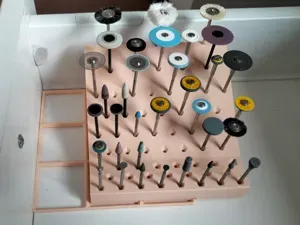
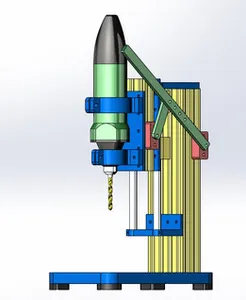

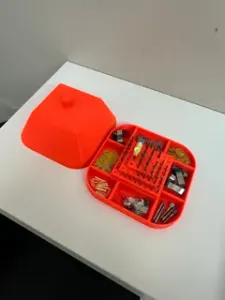


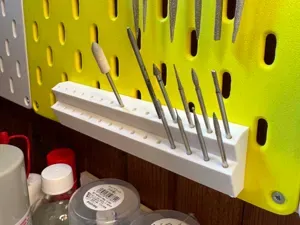
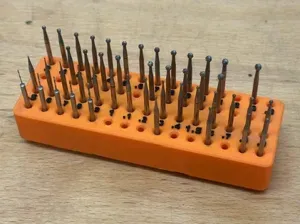


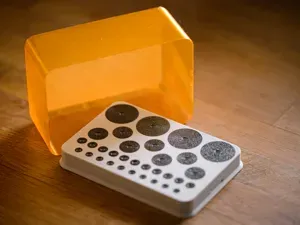



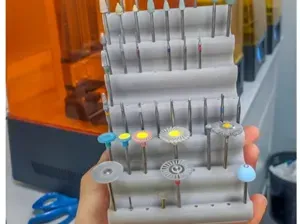

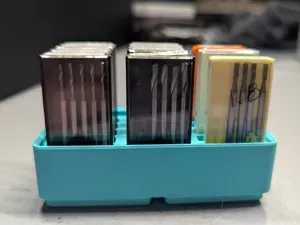

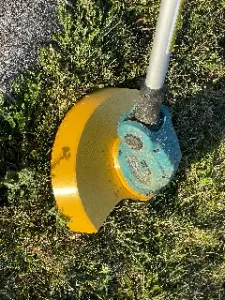

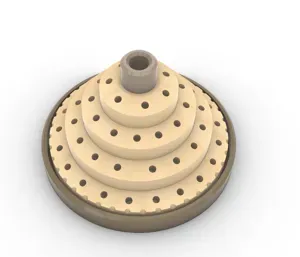

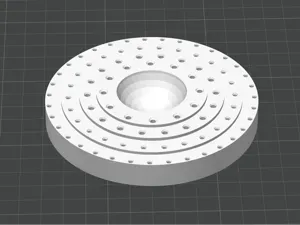




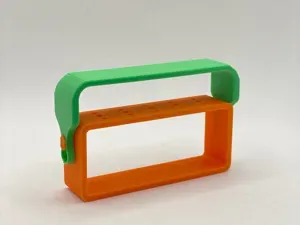
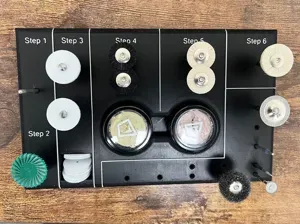


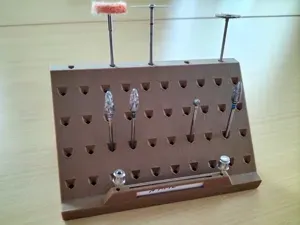
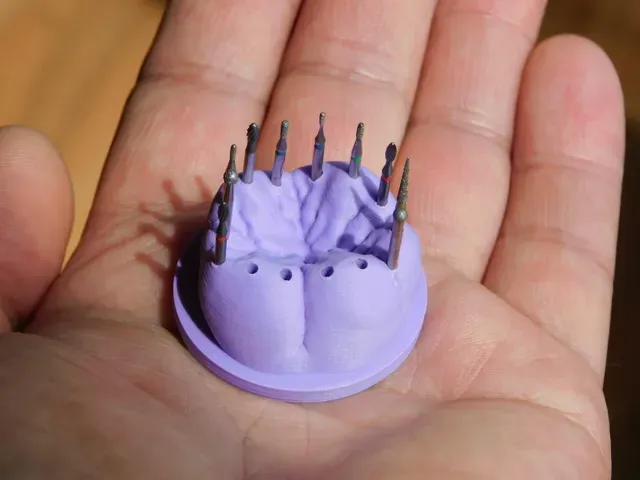
Chamfering aids differ mainly in the angle they hold and the way the tool is guided: some are flat plates with a fixed slot, others are clamps that carry a grinder along the tile edge. Dust-extraction parts are shaped around a particular hose or nozzle diameter, so the connection geometry matters more than the outer look. Holders and grid organizers are simpler, but their spacing and wall thickness decide whether small burs and bits stay in place.
On the author's page, check the stated dimensions and angle, the number of separate parts and how they join, and whether supports are needed for overhangs. Look at the material and settings the author lists, since a jig that takes side loads behaves differently in a stiff filament than in a flexible one. Photos of real prints show how the mating surfaces and screw holes came out.
Search terms can be widened with synonyms: bevel jig, chamfer guide, 45-degree tile cutter, edge trimming aid, or dust shoe and chip collector for the extraction side. Related topics such as grinder accessories, tile tools, bit holders and workshop storage often lead to the same kind of part. Adding the tool name, the angle or the hose diameter to the query narrows the results faster than a single word.


Le catalogue complet des thèmes, de la maison à la CNC, avec une recherche sur tous les sites connectés.