Gratis 
VHF UHF Moxon Antennas
Printables
This collection gathers 3D models for VHF antennas and their parts: Yagi beams, Moxon rectangles, dipoles, insulators, chokes, mast bases and connector adapters. Most files are made for 3D printing in plastic, while the conductive elements usually come from metal rod, tube or tape. It is useful when you want to build or repair an antenna for the 2 m band, 70 cm band or a dual-band setup. Polyzon does not confirm whether models are free, their price, license, official status, affiliation, safety or fitness. Check the current terms at the source.
Il testo di questa raccolta è in inglese; la ricerca funziona in qualsiasi lingua.
 Una raccolta di Polyzon · 48 modelli da 5 siti
Polyzon compone questa raccolta a partire dai risultati di ricerca dei siti collegati. I doppioni e i modelli senza anteprima vengono rimossi, le corrispondenze deboli finiscono in fondo e il resto mantiene l’ordine dei risultati. I modelli appartengono ai rispettivi autori: verifica le condizioni sulla pagina di ciascun modello.
Criteri di selezione a cura della redazione di Polyzon · Testo aggiornato: 11/10/2026






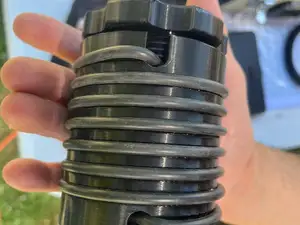

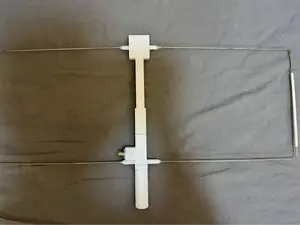


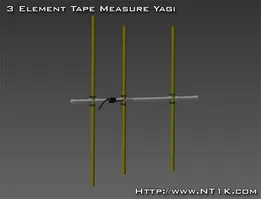
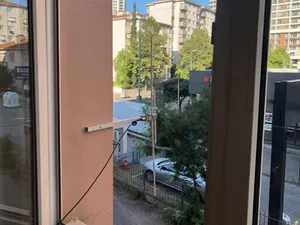
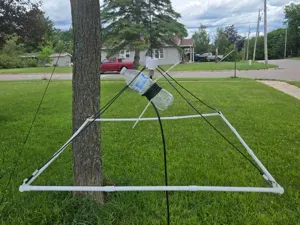

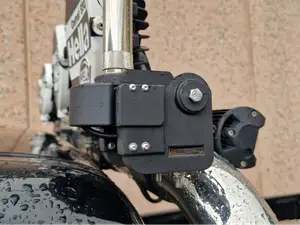


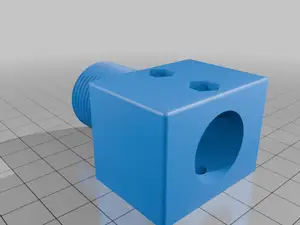

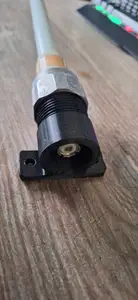
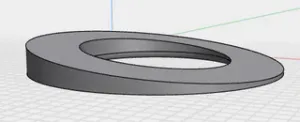


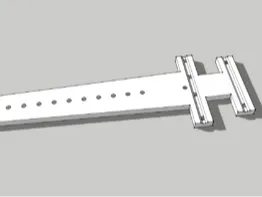
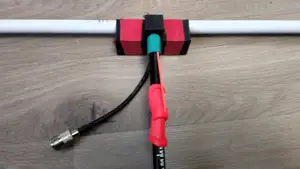

The models fall into a few groups. Beam antennas such as Yagi and Moxon designs use printed element holders, booms and spacers, and differ mainly in the number of elements and the band they are cut for. Dipole and turnstile designs are simpler in shape and often used for receiving. A second group is mechanical rather than radiating: insulators, chokes for coax, mast bases, boat and caravan mounts, and adapter bodies for connectors. Small-scale versions of antennas also appear, intended as detail parts rather than working radio gear.
When choosing a model, look at the band and frequency the author names, since element length and spacing change with it. Check how many parts the model has, how they join, and whether the author lists the rod or tube diameter the holders accept. The material and settings matter too: parts that stay outdoors are usually printed in a plastic that resists sunlight, and the author's page may note wall count, infill or whether supports are needed. Photos of real builds, if the author added them, show how the finished assembly looks.
To narrow the results, try related terms such as dual band, UHF, 145 MHz, 70cm, ham radio, base station, portable or SOTA. Searching for a specific part instead of a whole antenna often works better: insulator, choke, boom clamp, mast mount, SO-239 or BNC adapter. If you are working on a miniature or model-aircraft project, add scale words to the query. Combining a band name with a part name usually gives the shortest path to what you need.


Il catalogo completo dei temi, dalla casa alla lavorazione CNC, con ricerca su tutti i siti collegati.