Gratis 
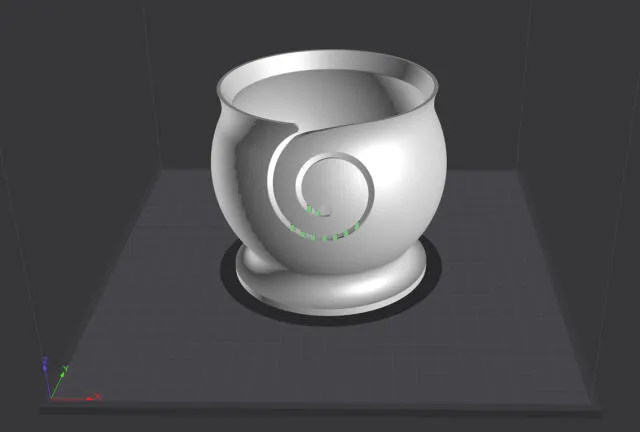
Comet-shaped glomerular neuron in a 50-year-old man
NIH 3D
This collection brings together 3D models of the kidney and the glomerulus, biology teaching aids, and round bowl-like forms used in craft work. Most files are made for 3D printing at home, and the mix shows how one word can point either to anatomy or to a knitting accessory. Use the list to find the direction you need. Polyzon does not confirm whether models are free, their price, license, official status, affiliation, safety or fitness. Check the current terms at the source.
Il testo di questa raccolta è in inglese; la ricerca funziona in qualsiasi lingua.
 Una raccolta di Polyzon · 7 modelli da 4 siti
Polyzon compone questa raccolta a partire dai risultati di ricerca dei siti collegati. I doppioni e i modelli senza anteprima vengono rimossi, le corrispondenze deboli finiscono in fondo e il resto mantiene l’ordine dei risultati. I modelli appartengono ai rispettivi autori: verifica le condizioni sulla pagina di ciascun modello.
Criteri di selezione a cura della redazione di Polyzon · Testo aggiornato: 12/10/2026
Whole-organ models of the kidney and nephron sit next to close-up studies of the glomerulus and its capillary loops; the first group shows the outer shape and the main internal parts, the second concentrates on a single microscopic structure. Biology lessons are covered by plant and animal cell models, some divided into colour-coded parts that are printed separately and then joined. Larger teaching sets combine several organs, while a smaller group of round, bowl-like shapes belongs to craft and decoration rather than medicine.
Before printing, read the author's page: overall size and scale, how many parts the file contains and how they connect, and whether the geometry needs supports. For fine structures such as capillary loops, resin printing usually holds detail better than filament, while larger organ models can be split and printed in sections. Photos of finished prints, together with the material and settings the author lists, tell you more about the result than a render alone.
If the results feel too broad, search by the anatomical term you have in mind — nephron, renal, urinary system, glomerulus — or by the teaching context, such as biology cell model or anatomy class aid. Craft-related results respond to yarn bowl, knitting bowl or ball holder. Related topics worth trying include organ sets, medical education models and decorative ring shapes.





Il catalogo completo dei temi, dalla casa alla lavorazione CNC, con ricerca su tutti i siti collegati.