

Gratis 
Турбина Пелтона
Cults3D
This collection gathers turbine-shaped and turbine-working 3D models: water rotors, wind blades, extractor impellers and decorative pieces. Most files are made for 3D printing at home, and the range runs from small keychains to parts that need a shaft and bearings. It helps you find a starting point, then compare the geometry and dimensions on each model page. Polyzon does not confirm whether models are free, their price, license, official status, affiliation, safety or fitness. Check the current terms at the source.
Il testo di questa raccolta è in inglese; la ricerca funziona in qualsiasi lingua.
 Una raccolta di Polyzon · 48 modelli da 4 siti
Polyzon compone questa raccolta a partire dai risultati di ricerca dei siti collegati. I doppioni e i modelli senza anteprima vengono rimossi, le corrispondenze deboli finiscono in fondo e il resto mantiene l’ordine dei risultati. I modelli appartengono ai rispettivi autori: verifica le condizioni sulla pagina di ciascun modello.
Criteri di selezione a cura della redazione di Polyzon · Testo aggiornato: 11/10/2026


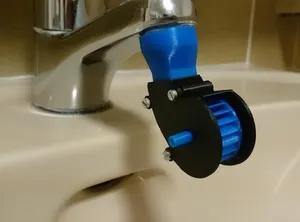
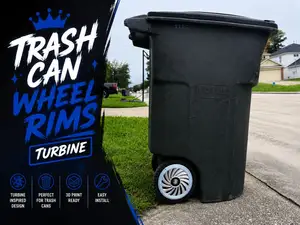




The models fall into a few groups that behave differently. Water turbines are built around an inlet and a rotor that spins on a shaft, so their size is tied to the hose or tap diameter. Wind rotors and single blades are usually larger and shaped for airflow, while extractor impellers are compact and meant to sit inside a housing. Decorative items such as lamps, vases and keychains borrow the same blade silhouette but carry no mechanical load.
Before printing, open the author's page and read the listed dimensions: rotor diameter, shaft bore, blade count and wall thickness. Check whether the model is split into several parts, how they join, and whether supports are needed for overhanging blades. Look at the material and settings the author lists, and at photos of real prints, since thin blades and long shafts often need a different approach than a solid body.
If the results feel narrow, try synonyms: impeller, rotor, blade, waterwheel, squirrel cage, wind rotor, propeller. Related searches such as hydropower, ventilation, desk decor or miniature mechanics often surface models that use the same geometry under a different name. Adding a size or a mounting detail to the query, like a shaft diameter or a hose size, narrows the list faster than a single broad word.



Il catalogo completo dei temi, dalla casa alla lavorazione CNC, con ricerca su tutti i siti collegati.

