Бесплатно 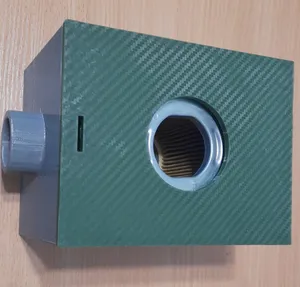
Air filter housing
Printables
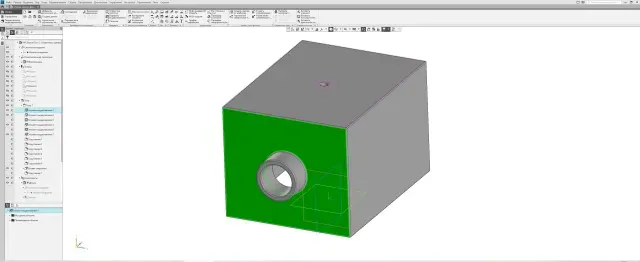
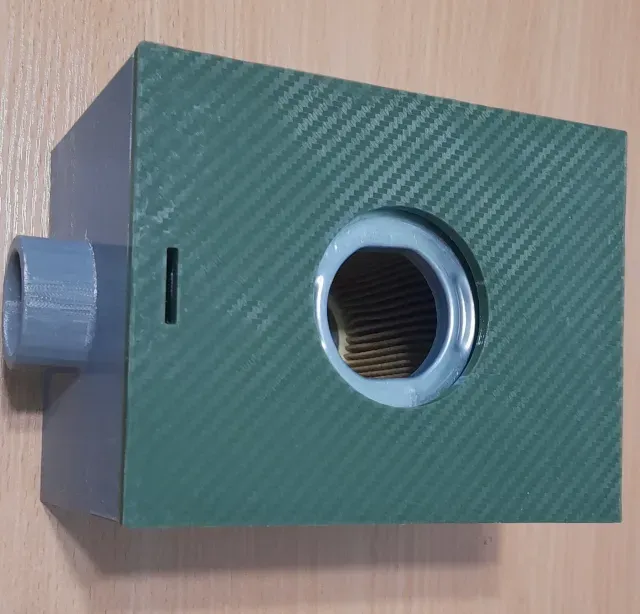
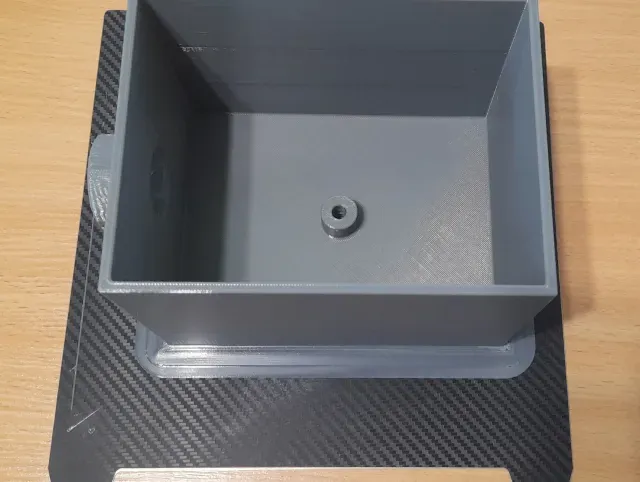
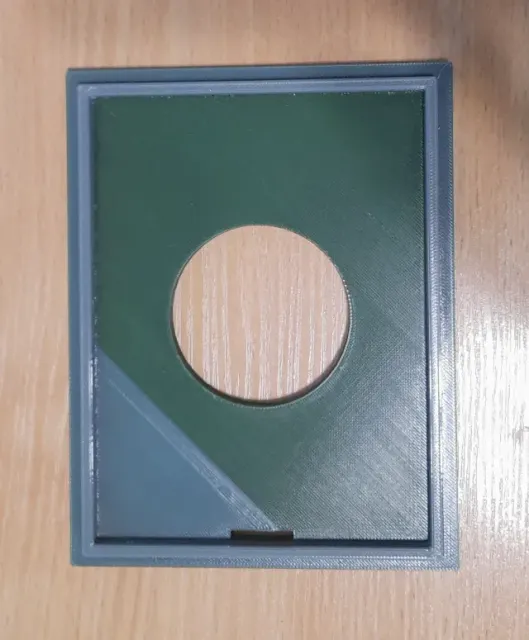

Air filter housing for a motorized towing vehicle or snow blower
On many motorized towing vehicles and snow blowers, after a snowfall, the engine may start running unevenly, with RPMs arbitrarily dropping and surging (the engine speed becomes noticeably "hunting"), losing power, and sometimes even failing to move the equipment. This is especially noticeable when the outside air temperature is not too low.
The reason is that loose, fluffy snow easily gets blown into the air—what they call "kurzhit" in the North—creating a cloud of snow dust. This dust penetrates through the gaps in the factory air filter. The vacuum inside the air filter housing draws in hot air from the nearby red-hot muffler of the exhaust system. Heating the air drawn into the air filter housing further increases its moisture content. Inside the carburetor passages, the air cools due to the vacuum, causing the moisture to condense on the walls as frost, which freezes the carburetor, jets, and valves. This icing over-enriches the fuel mixture and disrupts engine operation.
There are two ways to prevent this issue:
1. Draw colder air from further away from the exhaust pipe and filter out the snow dust, preventing it from melting inside the air intake system;
2. Draw hot air directly from the muffler body, thereby raising the temperature of the intake air enough so that when it cools in the carburetor, the moisture will not freeze on its walls.
The second method can reduce engine lifespan.
The implemented filter design allows for both options.
A 40 mm corrugated technical plastic pipe is attached to the filter housing branch pipe. This pipe can either be routed away from the muffler (for example, higher and further along the handlebar tube) or, conversely, pressed against the protective mesh of the muffler housing. Any other suitable pipe will also work.
In the first case, a fine mesh is placed on the far end of the pipe to block snow dust (a piece of thick nylon pantyhose works well), secured with a clamp or zip tie.
Tested on a Bars Sledopyt motorized towing vehicle with a Honda engine.
Printed on a K1, 0.4mm nozzle, 0.2mm layer height:
1. Housing base - PETG, 4 walls (for rigidity), 20% gyroid infill;
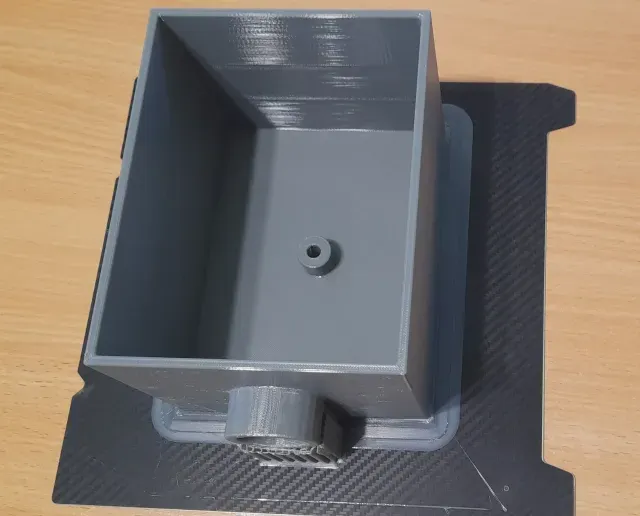
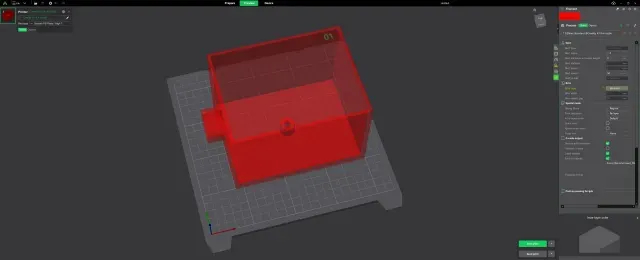
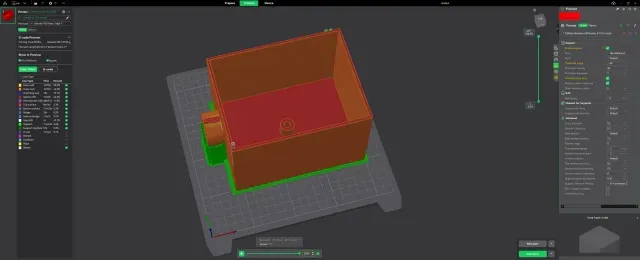
2. Housing - PETG, 3 walls, 15% gyroid infill, with conventional overhang supports up to 60 degrees, supports only from the build plate;
3. Gaskets in the air filter housing base hole - TPU, 2 walls, 15% gyroid infill;
4. Gaskets on the upper part of the air filter - TPU, 2 walls, 10% gyroid infill;
5. Insert in the housing base - PETG, 100% infill.
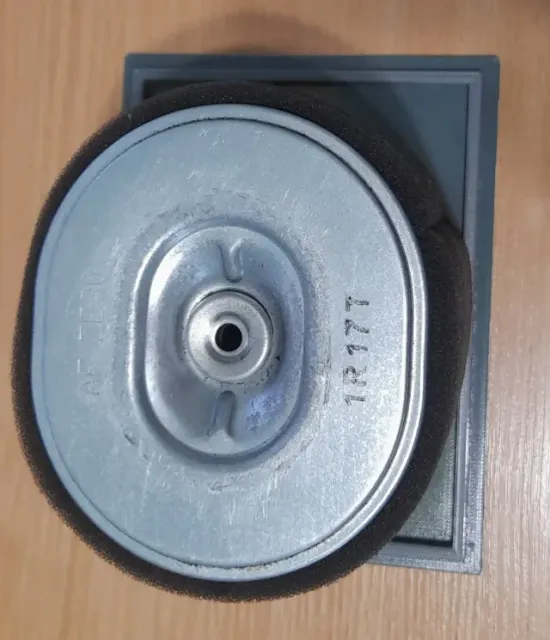
Gaskets on the upper part of the air filter are necessary due to the varying heights of the supplied air filters. As a result, a fairly large gap can form between the top of the air filter and the upper part of the filter housing. These gaskets compensate for this gap, allowing you to eliminate the need for a second wing nut inside the filter housing and preventing the upper part of the housing from denting when tightened with the outer knurled nut.
An insert in the base of the filter housing is needed if the mounting protrusion on your equipment does not align with the cutout in the filter housing base. The insert will cover the cutout, allowing you to create a new one in a different location or omit the cutout entirely. Attach it with cyanoacrylate glue or simply press it tightly into the cutout for a secure friction fit.
Названия используются только для указания источника результата. Polyzon не аффилирован с перечисленными площадками.