
Бесплатно 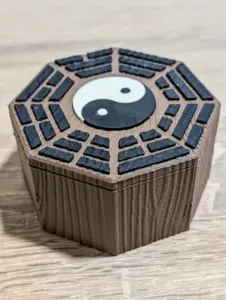
BaGua storage box 山海 ShanHai Realm-策略性桌遊Board game
MakerWorld
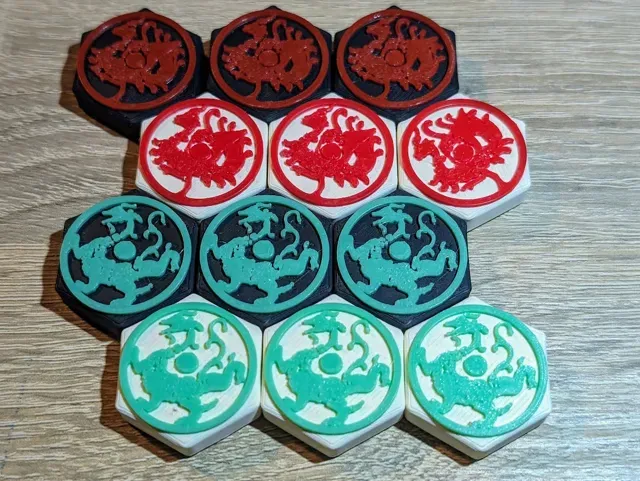
Please consider casting your Boost token if this model/design helps you, and don't forget to press the like button. Many thanks!
Makerworld has significantly reduced the download/print points awarded to designers. Instead, they have introduced the "Boost" token, which you can apply to models that may not be the most popular (already gaining points from downloads and prints), but are useful or meaningful to you in general. This supports and encourages us, the "losers" (those not focusing on popular themes like Star Wars, car keychains, countless airless balls, etc.), to create more useful or niche designs.
A Game to play with friends and family during the Chinese New Year seasons.
一款值得在春節期間和家人朋友一起相聚時玩的桌遊
山海 ShanHai Realm: an ancient Chinese auspicious beast themed boardgame
山海境界:一款以中國古代吉祥獸為主題的桌遊
2024 is not merely the year of the Dragon, ….
2024年不僅僅是龍年,...
Ancient Chinese astronomers observed a recurring celestial phenomenon: every twenty years, Saturn and Jupiter align on a straight line, often coinciding with significant geological and natural disasters on Earth, accompanied by unusual human behaviors. Further studies revealed a sixty-year alignment involving Saturn, Jupiter, and Mercury. Additionally, every one hundred and eighty years, all nine major planets align on one side of the Sun, forming what ancient astronomers termed the "conjunction of nine planets." This celestial cycle persists endlessly, displaying remarkable consistency
中國古代 天文學家 觀測發現, 每隔二十年 土星與木星就要相會一次,處在一條直線上。當土、木二星相會時,地球上往往會發生一些重大的地質災難和自然災難,人們的行為也會出現某種明顯的異常反應。觀察還發現,土星、木星與水星每隔六十年就要在一條直線上相會一次,並且,每隔一百八十年,太陽系的九大行星就會同處於太陽的一側,分佈在一個小的扇面內,形成九大行星的大會合,古代天文學家稱其為“九星連珠”。這種天體運行規律循環往復,永不改變。
Recognizing this pattern, ancient Chinese scholars devised the "Three Yuan Nine Yun" system to organize time. They divided one hundred and eighty years into three periods: "Shang Yuan" (上元), "Zhong Yuan" (中元), and "Xia Yuan" (下元), each lasting sixty years and subdivided into three "Yun" (運), spanning twenty years. This system comprised three Yuan and nine Yun, grouped into "Yuan Yun" (元運).
古人洞悉這一天機,創立了劃分時間的“三元九運”體系:以一百八十年作為一個正元,每一正元分為上元、中元、下元;每元六十年,再分為三個運,每運為二十年,即上元是一運、二運、三運,中元是四運、五運、六運,下元是七運、八運、九運。從而構成了完整的三元和九運體系。九個運分為三組,用“元運”來稱呼它。
In 2024, we enter the ninth Yun (九運), which spans from 2024 to 2043 and corresponds to the Li hexagram in BaGua. The Li hexagram symbolizes fire, armor, weapons, and the like, evoking thoughts of war and chaos on Earth, our mortal world.
在2024年,我們進入第九個運(九運),從2024年持續到2043年,對應八卦中的離卦。離卦象徵著火、盔甲、武器等,人們萌生戰爭和混亂的想法。
But beyond our mortal sight lies another realm—the celestial ShanHai (山海)realm, where mountains soar and seas churn with ancient power. Here dwell the auspicious beasts, guardians of balance and bringers of fate. Yet amidst the celestial harmony, a shadow looms. In the ShanHai realm, a fierce battle rages between the Yin and Yang clans, each striving to maintain the balance of the universe—Yin and Yang. Their conflict spans across time and space, profoundly shaping the destiny of the world, even that of mortals.
然而,在凡間之外,存在著另一個平行的天界——山海界,那裡山嶽巍峨,海洋湧動著古老的力量。這裡棲息著吉祥的瑞獸,守護著陰陽平衡,並決定著凡間的命運。然而,九運之際天上的和諧動搖,一道陰影籠罩。在山海界,陰陽兩族之間正展開激烈的戰鬥,他們的博弈象徵著陰陽之間的力量最終將達到平衡。他們的衝突橫跨時間和空間,深刻地塑造了天界與凡間的命運。
山海 ShanHai
The game employs hexagonal tiles to represent the diverse elements found in the ShanHai. A complete ShanHai set comprises 22 pieces (not including advance pieces), with 11 pieces allocated to each player, each symbolizing a creature and featuring distinct movement capabilities. The game also contain 12 pieces of landscape tiles, 6 mountains (Shan) and 6 seas (Hai).
這款遊戲使用六角形的棋子來代表山海界中的多樣元素。完整的山海套裝包括22枚棋子(不包括進階棋子),每個玩家分配11枚棋子,每枚棋子代表一種生物,並具有不同的移動規則和能力。遊戲還包含12枚地形棋子,其中6枚是山,另外6枚是海。
Main Pieces 主要棋子 :
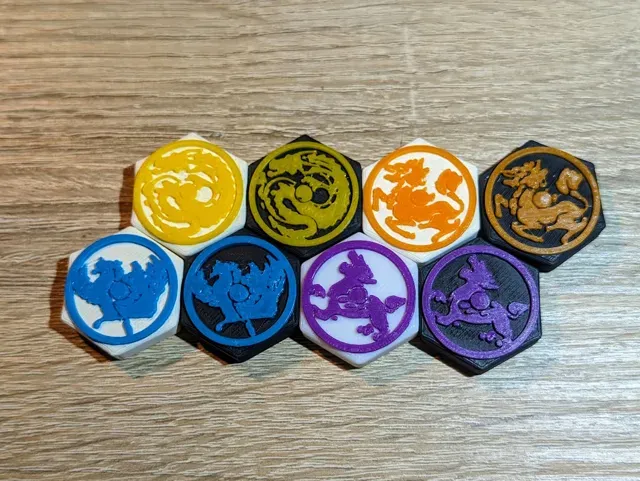
• 1x 應龍YingLong (Yellow-Gold)
YingLong, also known as the Yellow Dragon, is a colossal deity in ancient Chinese mythology revered as the embodiment of creation, preservation, and destruction. Ancients bestowed upon YingLong the titles of "God of Creation of the materials and the world we know" and depicted it as a war god and a great general by the side of the Emperor Huang. Residing in the celestial realm, according to the Classic of Mountains and Seas: The Great Wild North《山海經·大荒北經》, YingLong assisted the Emperor Huang in battle against Chiyou, ultimately aiding in his defeat. YingLong's characteristic feature is its wings, symbolizing the fusion of the dragon and phoenix. Not only did YingLong play a role in the creation of heaven and earth, but it is also revered as the ancestor of the Phoenix and QiLin. Wherever YingLong's tail passed, rivers flowed and mountains rose along its banks.
應龍,又稱黃龍 ,是中國遠古神話傳説中“集創世、造物、滅世三位一體的巨神”,被古人賦予了“創世神”和“造物神”的尊稱,也作為戰神出現,是黃帝身邊的大將。本居於天上世界,據《山海經·大荒北經》記載:黃帝與蚩尤作戰,應龍、魃等幫助黃帝,最終蚩尤戰敗被殺。應龍的形象特徵為有翼,象徵龍鳳圖騰的相融合. 應龍不僅能開闢天地,還是鳳凰與麒麟的祖先。應龍是“龍之始祖” 應龍的尾劃過的地方,平地出河,兩岸成為山巒。
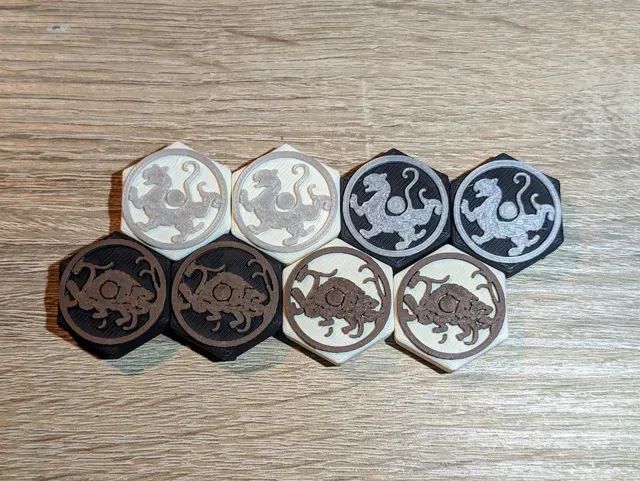
• 2x 玄武 XuanWu (Brown)
XuanWu, one of the four celestial guardians in ancient Chinese mythology, also known as the Turtle-Snake, originates from ancient star worship. It refers to the northern XuanWu constellation, composed of seven stars divided into four cardinal directions (east, south, west, and north) among the twenty-eight constellations.
XuanWu is a spiritual creature formed by the combination of a turtle and a snake. In traditional Chinese culture, the Four Symbols represent the cardinal directions, namely the Azure Dragon (QingLong), the White Tiger (BaiHu), the Vermilion Bird (ZhuQue), and XuanWu, representing the east, west, south, and north respectively. In the Eight Trigrams, XuanWu corresponds to the Kan trigram and is associated with the water element in the Five Elements theory, symbolizing the elderly Yin among the Four Symbols and the winter season among the four seasons, as well as the northern land of heaven.
The original meaning of XuanWu is "darkness," with "wu" sharing an ancient pronunciation with "ming." "Xuan" means black, while "ming" refers to the Yin aspect.
玄武,中國古代神話中的天之四靈之一,又名龜蛇,源於遠古星宿崇拜,是指二十八宿按東南西北分為四象中的北方玄武七宿。玄武是一種由龜和蛇組合成的一種靈物,四象在中國傳統文化中指青龍、白虎、朱雀、玄武,分別代表東西南北四個方向。北方玄武於八卦為坎,於五行主水,象徵四象中的老陰,四季中的冬季,同時也是天之北陸。玄武的本意就是玄冥,武、冥古音是相通的。玄,是黑的意思;冥,就是陰的意思。
• 2x 白虎 BaiHu (Silver/Grey)
BaiHu, one of the four celestial guardians in ancient Chinese mythology, is the deity of the west. Later revered by Taoism, along with QingLong, ZhuQue, and XuanWu, collectively known as the Four Gods of the Four Directions.
According to "Zhongxing Zhengxiang," BaiHu is described as entirely white like snow, without any mixed fur. BaiHu originated from ancient Chinese star worship, representing the western seven constellations, and is one of the four celestial guardians. Taoism refers to BaiHu as the "Guardian of Soldiers," and various Taoist scriptures refer to it as "Emperor," "Holy General," "Spiritual General," or "Ghost-Capturing General." Among the twenty-eight constellations, BaiHu is the collective term for the western seven constellations (Kui, Lou, Wei, Mao, Bi, Zui, Shen). In terms of the Four Symbols, BaiHu represents the Lesser Yin, and in terms of the Five Elements, it represents Metal, symbolizing the west and the autumn season.
白虎,中國古代神話中的天之四靈之一,西方之神,後為道教所信奉,同青龍、朱雀、玄武合稱四方四神。據《中興徵祥》記載,白虎全身如雪,無雜毛。 白虎起源於中國上古對於的星宿崇拜,是西方七宿, 天之四靈之一,道教將其稱為「監兵」,在不同的道經中有「帝君」、「聖將」、「神將」和「捕鬼將」等稱呼。 在二十八宿中,白虎是西方七宿(奎、婁、胃、昴、畢、觜、參)的總稱。於四象為少陰,在五行則為金,是主西方、秋季的神靈。
• 3x 青龍 QingLong (Green)
QingLong, also known as CangLong, is one of the Four Symbols and one of the Four Celestial Emblems in traditional Chinese culture. According to the theory of the Five Elements, it represents the eastern direction and is a green dragon. It belongs to the Wood element and symbolizes the spring season. In the Eight Trigrams, it corresponds to the "Zhen" trigram and is associated with the "Eastern Seven Mansions" among the "Four Symbols." QingLong has a long body with double horns on its head and scales covering its body. In ancient times, people believed that dragons, being associated with rain in the Wood element, controlled rainfall. Rainfall determined agricultural harvests, which in turn determined people's livelihoods, making dragons the primary totem of agricultural societies. Similar to YingLong, QingLong also possesses wings.
青龍,又名蒼龍,在中國傳統文化中是四象之一、天之四靈之一,根據五行學說,它是代表東方的靈獸,為青色的龍,五行屬木,代表的季節是春季,八卦主震, 對應“四象”中的“東方七宿”。青龍頭長雙角、身上披鱗,因五行中東屬木而色青古人認為是龍掌管着降雨,而降雨又決定着農耕收成,農耕的收成則決定着人們的生活水平,龍成了農耕社會最主要的“圖騰”。蒼龍與應龍一樣,都是身具羽翼。
• 3x 朱雀 ZhuQue (Red)
ZhuQue, also known as Zhuniao, is one of the Four Symbols and one of the Four Celestial Emblems in traditional Chinese culture, with origins dating back to at least the Spring and Autumn Period. It is one of the Four Celestial Emblems and represents the manifestation of the southern seven constellations among the twenty-eight mansions, with its body covered in flames that never extinguish. It symbolizes the southern direction and is the collective term for the southern seven constellations (Well, Ghost, Willow, Star, Extended Net, Wings, and Chariot) among the twenty-eight mansions. Its color is red, representing the sun among the Four Symbols, belonging to the Fire element in the Five Elements theory, corresponding to the "Li" trigram in the Eight Trigrams, and symbolizing the summer season, associated with Yan Emperor. In pre-Qin burial culture, ZhuQue was regarded as the deity guiding the souls of the deceased to ascend to the heavenly realm.
朱雀,別稱朱鳥,在中國傳統文化中是四象之一、天之四靈之一,起源時間應不晚於春秋,天之四靈之一。它是二十八宿中南方七宿的顯化,其身覆火焰,終日不熄。它是代表南方的神獸,在二十八宿中,南方七宿即(井、鬼、柳、星、張、翼、軫)的總稱. 代表的顏色是紅色,在四象為太陽,於五行屬火,於八卦為離,代表的季節是夏季,配屬炎帝。先秦墓葬文化中接引死者靈魂上升天界的神明。
Setup and Placement 游戲設置和放置 :
The game begins with an empty layout, and players arrange their pieces in stacks or as they prefer. During their turn, a player can either introduce a new piece from their supply or, if their YingLong has been placed, move a piece according to its unique function. Newly placed pieces must be adjacent only to the player's own pieces and cannot touch any pieces belonging to the opponent. However, an exception to this rule applies to the first piece played by each player, which cannot be adjacent to anything initially. Once placed, a piece can be moved to a new space, provided it remains adjacent to at least one other piece.
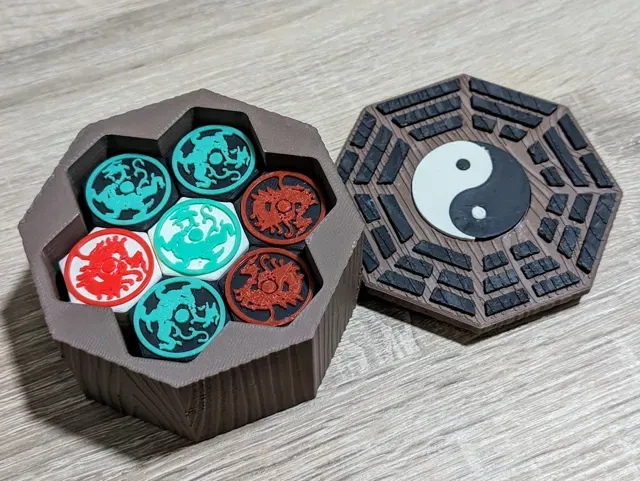
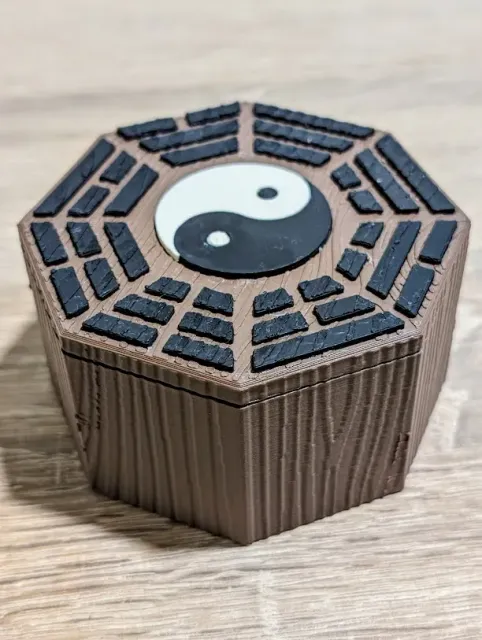
The Yin and Yang decoration pieces for storage box
Octagon storage box for standard game pieces will not fit landscape tiles Incase you want to play the games without the landscape tiles, the game thus a HIVE game with a bit of Chinese culture overhaul.
For the large box to fit all pieces visit https://makerworld.com/en/models/164415
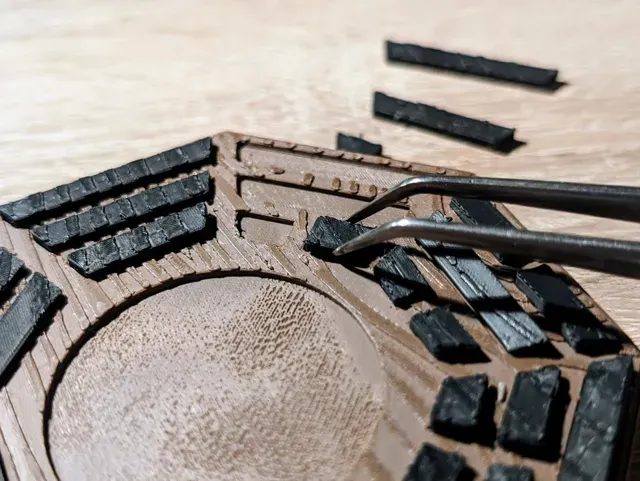
The BaGua decoration pieces for storage box
Baihu 白虎
FeiLian飛廉
Landscape: Hai 海 Sea
Pixiu 貔貅
QiLin 麒麟
QingLong 青龍
Landscape tile: Shan 山 mountain
XuanWu 玄武
YingLong 應龍
ZhuQue 朱雀
Названия используются только для указания источника результата. Polyzon не аффилирован с перечисленными площадками.