
Бесплатно 
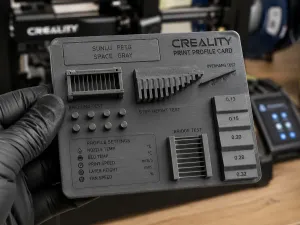
Radial Overhang Test Print
Printables

Features
- Angles: 10°, 20°, 30°, 40°, 45°. - Low waste! Print settings
- Use your normal print profile. How to reduce the staircase effect:
- Lower layer height — the most common fix. - Change orientation — printing the part so the sloped surface faces upward or vertically can reduce visible stepping. - Post-processing — sanding, priming, chemical smoothing, or resin coating can help smooth out the steps. - Variable layer height — some slicers can dynamically adjust layer thickness in curved areas to improve smoothness. - Change filament - Matte filaments can help hide this artifact. General info
The staircase effect is an artifact that occurs when you print sloped or curved surfaces. This occurs because 3d printers print layer by layer. On shallow slopes, the layer edges become more apparent because the steps extend farther horizontally per layer. On steep slopes, the effect is less noticeable.
Don't forget to share your results!
It helps me get Prusameters.





Названия используются только для указания источника результата. Polyzon не аффилирован с перечисленными площадками.