
Бесплатно 
Bateau à ressort - 100% 3D - mécanisme à remonter
MakerWorld
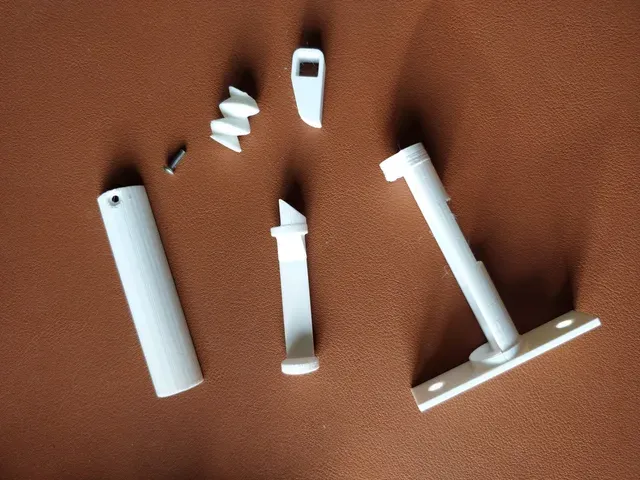
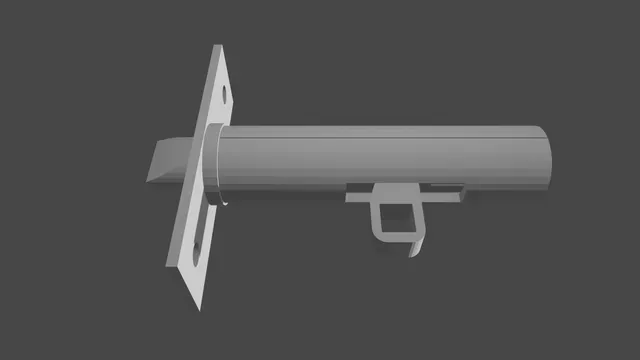

The mechanism of my interior doors is broken (everything is sealed, impossible to repair). They're 60 years old. So the door handles stay down and the doors don't close. Unfortunately, these 18 mm mechanisms are no longer on sale. You'd have to replace the whole door. So I decided to reproduce the mechanism.
There are 5 parts.
1 - The cylinder
It encompasses the mechanism. For printing, I applied the revolutionary "arc overhang" technique, which you can see on cnc kitchen. No need for supports! Unfortunately, there's not enough adhesion between the layers to screw the cylinder and lid together, so you'll have to glue them. Or use brackets and a M2 .5x8 screw.
The version supplied is for a right-hand door. The left-hand version will come later.
2 - The cover
Holds all the parts of the mechanism together. A M2.5x8 screw (up to 12mm) is required to close it.
3 - The actuator
This is where the door handle shaft slides into place. It is mechanically very stressed. 100% PETG filler seems the most appropriate. If you have nylon or PC, that's even better.
4 - The pin (penne)
The version supplied is for a right-hand door. The left-hand version will come later. It requires great solidity and horizontal printing. Otherwise it could break when the door slams. PETG 100% filler seems best. PC or nylon could also help. Of course, it will never be as strong as metal, and I don't recommend using it for an exterior door.
5 - The spring
The simplest seems to me to be TPU. After a few tests with varioshore, I found the ideal parameters. Maximum foaming and gyroide filling around 10% (to be adapted according to the weight of your handle).
The Blender file is supplied if you wish to adapt it to your needs.
6 - Assembly
Prepare your parts.
Insert the penne into the cylinder
Place the spring
Slide the cover into the cylinder
Screw or glue the cylinder
Place the actuator in the slot, as shown in the photo
And slide the tip of the actuator forward (left of the picture)
Now you just need to insert the mechanism into the door
Press down on the pin, and the actuator falls back.
Scew the mecanism on the door
Refit your handles
You've got a working door again!
--------------
Le mécanisme de mes portes intérieur est cassé (tout est scellé, impossible à réparer). Il faut dire qu’ils ont 60 ans. Les poignées de portes restent donc baissées et les portes ne ferment plus. Malheureusement ces mécanismes de 18 mm ne se vendent plus. Il faudrait changer la porte entière. J’ai donc décidé de reproduire le mécanisme.
Il y a 5 parties.
1 - Le cylindre
Il englobe le mécanisme. Pour l’impression, j’ai appliquer la technique révolutionnaire du « arc overhang », à voir sur cnc kitchen. Pas besoin de supports ! Malheureusement l’adhésion entre couche est insuffisante pour visser le cylindre et le couvercle, il faudra coller. Ou alors utiliser des supports et une vis M2 .5x8.
La version fournie est pour une porte poussant droit. La version poussant gauche viendra plus tard.
2 - Le couvercle
Il permet de maintenir toutes les pièces du mécanisme ensemble. Il faut un vis M2.5x8 (jusqu’à 12mm) pour le fermer.
3 - L’actionneur
C’est là que l’axe de la poignée de porte vient se glisser. Il est mécaniquement très sollicité. Du PETG 100% de remplissage me semble le plus approprié. Si vous avez du nylon ou du PC, c’est encore mieux.
4 - Le penne
La version fournie est pour une porte poussant droit. La version poussant gauche viendra plus tard. Il nécessite une grande solidité et une impression horizontal. Sinon il pourrait casser quand la porte claque. Du PETG 100% de remplissage me semble le plus approprié. Du PC ou du nylon pourrait aussi aider. Bien sur ce ne sera jamais aussi solide que du métal et je dé-conseil de l’utiliser pour une porte extérieure.
5 - Le ressort



Названия используются только для указания источника результата. Polyzon не аффилирован с перечисленными площадками.