
Grátis 
high fantasy graveyard - modular - terrain
Thingiverse
The collection gathers graveyard terrain for 3D printing: modular wall and fence sets, single gravestones, tombs and crypts, and larger ruined scenery. It is useful for tabletop players building a cemetery board and for modelers who need STL pieces for a diorama. Most items follow a fixed scale, so the stated size is the first thing to compare with your figures. Polyzon does not confirm whether models are free, their price, license, official status, affiliation, safety or fitness. Check the current terms at the source.
O texto desta coleção está em inglês; a busca funciona em qualquer idioma.
 Uma coleção do Polyzon · 48 modelos de 4 sites
O Polyzon monta esta coleção a partir dos resultados de busca dos sites conectados. Repetições e modelos sem prévia são removidos, correspondências fracas vão para o final e o restante segue a ordem da busca. Os modelos pertencem aos seus autores — confira os termos na página de cada modelo.
Regras de seleção: equipe editorial do Polyzon · Texto atualizado em 14/10/2026


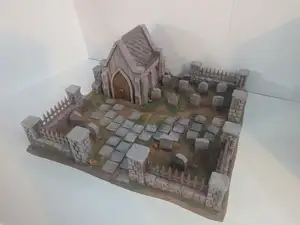


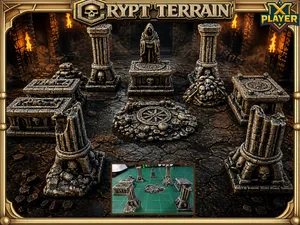


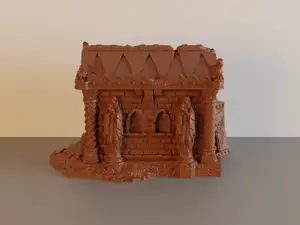


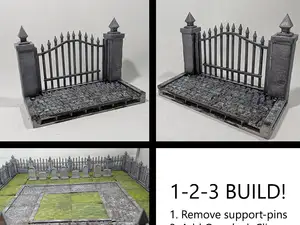




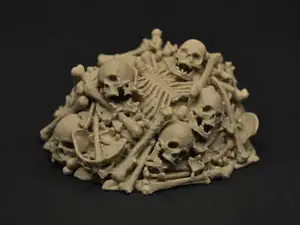

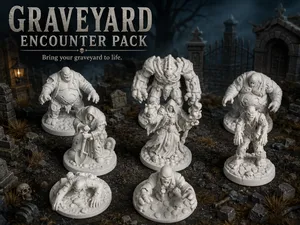


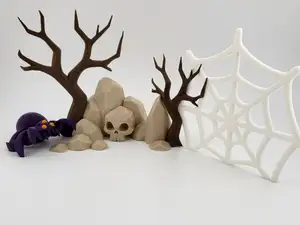


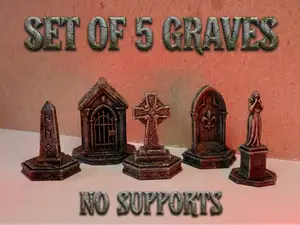


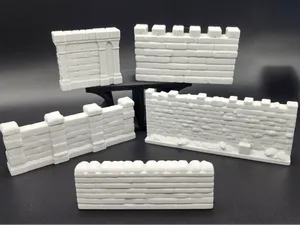


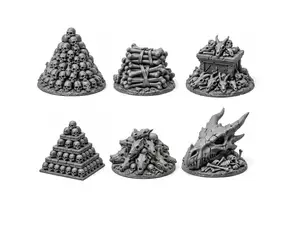

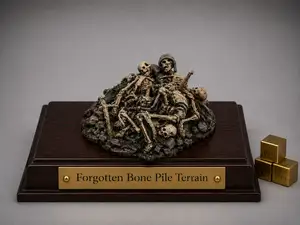


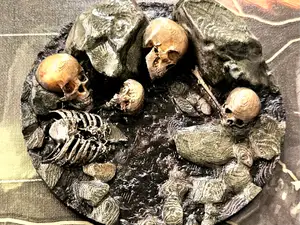

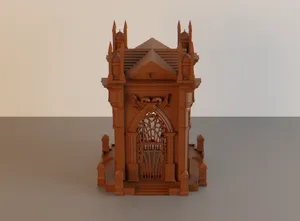


The pieces fall into two broad groups. Modular sets are built from repeating wall, floor and fence sections that can be arranged into different layouts, while scatter pieces such as headstones, crosses and skull piles are placed one by one to fill open ground. Tombs, crypts and mausoleums sit between the two: they are single buildings, but often with removable roofs or an interior you can see into.
When choosing a model, look at the scale and footprint first, then at the number of parts and how they join. Check whether the author lists supports, layer height, material and wall thickness, and look at photos of real prints to judge how stone texture and ironwork come out. Tall thin crosses, arches and open gates are usually the parts that need the most attention while slicing.
To widen the search, try synonyms such as cemetery, crypt, tomb, mausoleum, headstone and ossuary, and combine them with terms like scatter terrain, ruins, gothic or haunted. Related topics include wargame terrain, diorama scenery and modular dungeon tiles, which often share the same scale and connection systems.
If a set is meant to grow, check how the sections connect: some use printed clips or pegs, others rely on a slot system, and mixing systems can leave gaps in the ground plane. For painting, a primer over the assembled piece and a dry brush on the raised edges bring out lettering and carved detail. Printing in a few batches rather than one large plate also makes it easier to replace a single damaged part later.




O catálogo completo de temas — de casa e utilidades a CNC, com busca em todos os sites conectados.