

Kostenlos 
Дизельный локомотив PRINTABLE поезд 3D цифровой STL файл
Cults3D
This collection gathers 3D models of trains, from small toy locomotives and wagons to track sections and themed rail sets. It is useful for 3D printing hobbyists who want to build a running train, a static display piece or extra track for an existing set. Polyzon does not confirm whether models are free, their price, license, official status, affiliation, safety or fitness. Check the current terms at the source.
Der Text dieser Sammlung ist auf Englisch verfasst; die Suche selbst funktioniert in jeder Sprache.
 Eine Sammlung von Polyzon · 48 Modelle von 2 Plattformen
Polyzon stellt diese Sammlung aus den Suchergebnissen der angebundenen Plattformen zusammen. Dubletten und Modelle ohne Vorschaubild werden entfernt, schwache Treffer rutschen ans Ende, der Rest bleibt in der Reihenfolge der Suche. Die Modelle gehören ihren Urhebern – die Bedingungen findest du auf der Seite des jeweiligen Modells.
Auswahlregeln: Polyzon-Redaktion · Text aktualisiert: 13.10.2026




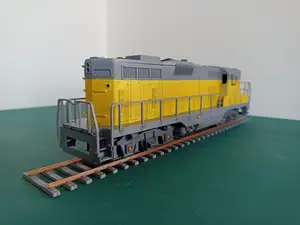
The models fall into a few groups. Toy trains are usually simplified, with few parts and chunky wheels, while scale locomotives and passenger wagons copy real proportions and often come as separate bodies, chassis and bogies. Track appears both as rigid sections and as flexible or customizable pieces, and a smaller group covers themed trains and mechanical builds driven by air or a follower mechanism.
When choosing a model, open the author's page and read the listed scale or gauge, the number of parts and how they join, and whether supports are needed for overhangs such as cabs, chimneys or underframes. Check the material and settings the author lists, since small wheels, axles and couplers behave differently in resin and in filament. Photos of real prints show how the surfaces, gaps and clearances come out.
To widen the search, try synonyms such as locomotive, wagon, rolling stock, railcar or model railway, and add terms like gauge, scale, track connector or coupler. Related topics include dioramas, miniature scenery, terrain and display bases, which often share the same scale. Combining a train term with a scale or a track system narrows the results quickly.


Der komplette Themenkatalog – von Wohnen & Haushalt bis CNC, mit Suche auf allen angebundenen Plattformen.

