

免费 
Дизельный локомотив PRINTABLE поезд 3D цифровой STL файл
Cults3D
This collection gathers 3D models of trains, from small toy locomotives and wagons to track sections and themed rail sets. It is useful for 3D printing hobbyists who want to build a running train, a static display piece or extra track for an existing set. Polyzon does not confirm whether models are free, their price, license, official status, affiliation, safety or fitness. Check the current terms at the source.
本合集的文字为英文,搜索本身支持任何语言。
 Polyzon合集 · 48个模型 来自2个平台
此合集由Polyzon根据已接入平台的搜索结果整理而成:去除重复项和没有预览图的模型,匹配度低的排在最后,其余按搜索结果顺序排列。模型归作者所有——请在各模型页面查看使用条款。
筛选规则:Polyzon编辑部 · 文字更新于2026年10月13日




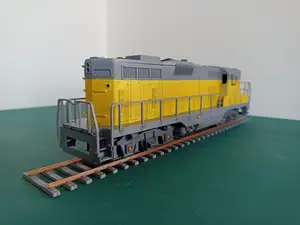
The models fall into a few groups. Toy trains are usually simplified, with few parts and chunky wheels, while scale locomotives and passenger wagons copy real proportions and often come as separate bodies, chassis and bogies. Track appears both as rigid sections and as flexible or customizable pieces, and a smaller group covers themed trains and mechanical builds driven by air or a follower mechanism.
When choosing a model, open the author's page and read the listed scale or gauge, the number of parts and how they join, and whether supports are needed for overhangs such as cabs, chimneys or underframes. Check the material and settings the author lists, since small wheels, axles and couplers behave differently in resin and in filament. Photos of real prints show how the surfaces, gaps and clearances come out.
To widen the search, try synonyms such as locomotive, wagon, rolling stock, railcar or model railway, and add terms like gauge, scale, track connector or coupler. Related topics include dioramas, miniature scenery, terrain and display bases, which often share the same scale. Combining a train term with a scale or a track system narrows the results quickly.


完整的主题目录:从家居日用到CNC,均可在已接入的来源平台中搜索。

