
Free 
Fully 3D-printable wind-up car gift card
Thingiverse
This collection gathers 3D models where gears do the moving: fidget toys, turntables, shutters, ratchets and replacement parts. It is useful if you want a mechanism to assemble, test and tune rather than a static object. Most files are made for a desktop 3D printer, and many are shared as STL sets with several parts. Polyzon does not confirm whether models are free, their price, license, official status, affiliation, safety or fitness. Check the current terms at the source.
 A Polyzon collection · 47 models from 3 platforms
Polyzon assembles this collection from search results on the connected platforms. Repeats and models without a preview are removed, weak matches go to the end, and the rest keeps the search order. Models belong to their authors — check the terms on each model's page.
Selection rules: the Polyzon editorial team · Text updated 2026-10-13

%2Fhttps%3A%2F%2Ffbi.cults3d.com%2Fuploaders%2F15891207%2Fillustration-file%2Fb3f467bf-84d7-477b-9dfe-2c449c6c5d31%2Fekko-mace-arcane-league-of-legends-3d-model-for-cosplay-stl.webp&w=300)

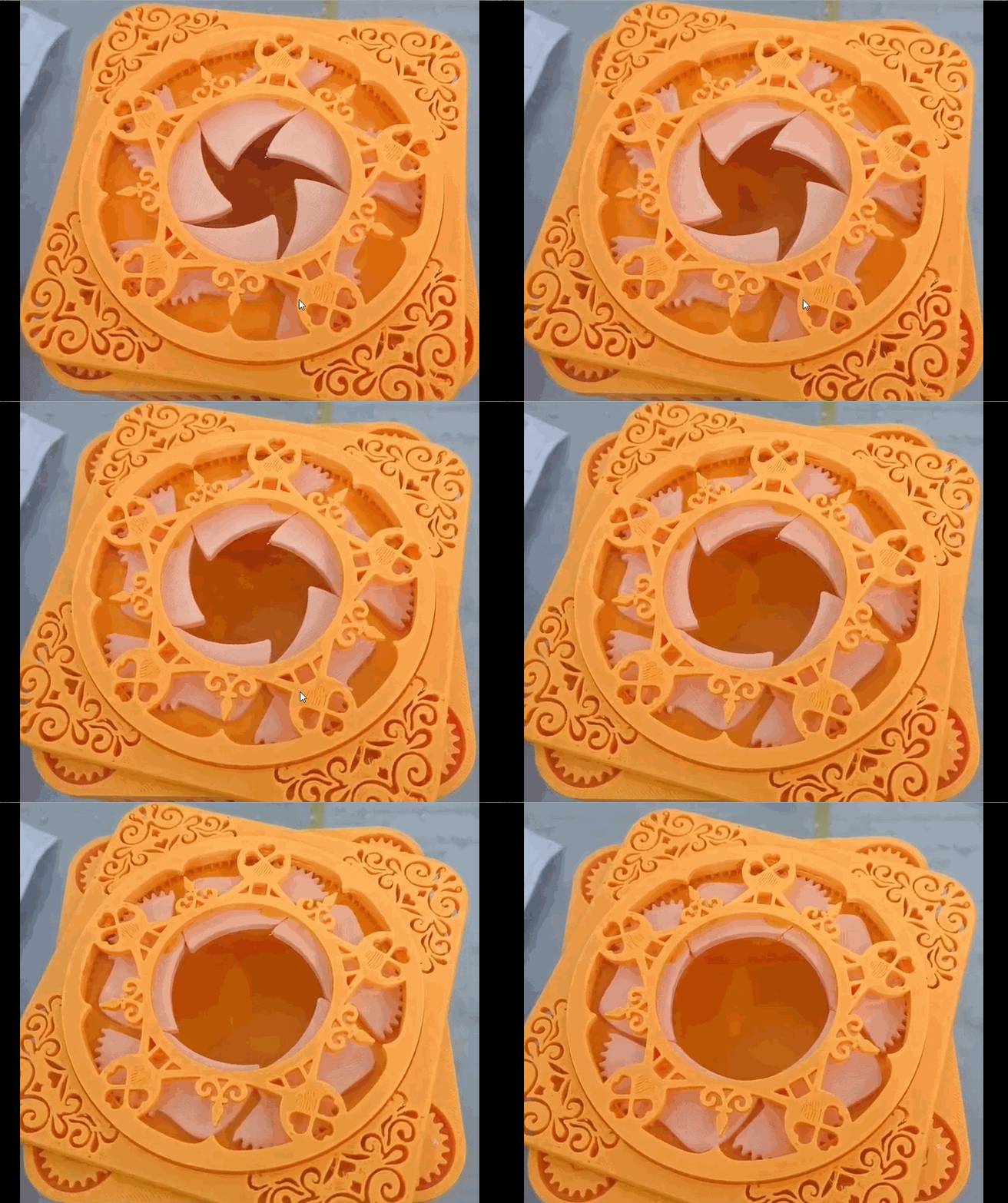
%2Fhttps%3A%2F%2Ffbi.cults3d.com%2Fuploaders%2F15596751%2Fillustration-file%2F08030913-0bd5-4ef7-9eeb-3b1ae99e5fd9%2Fmechanical%2520iris-gear%2520structure-s.gif&w=300)

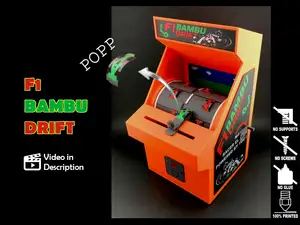

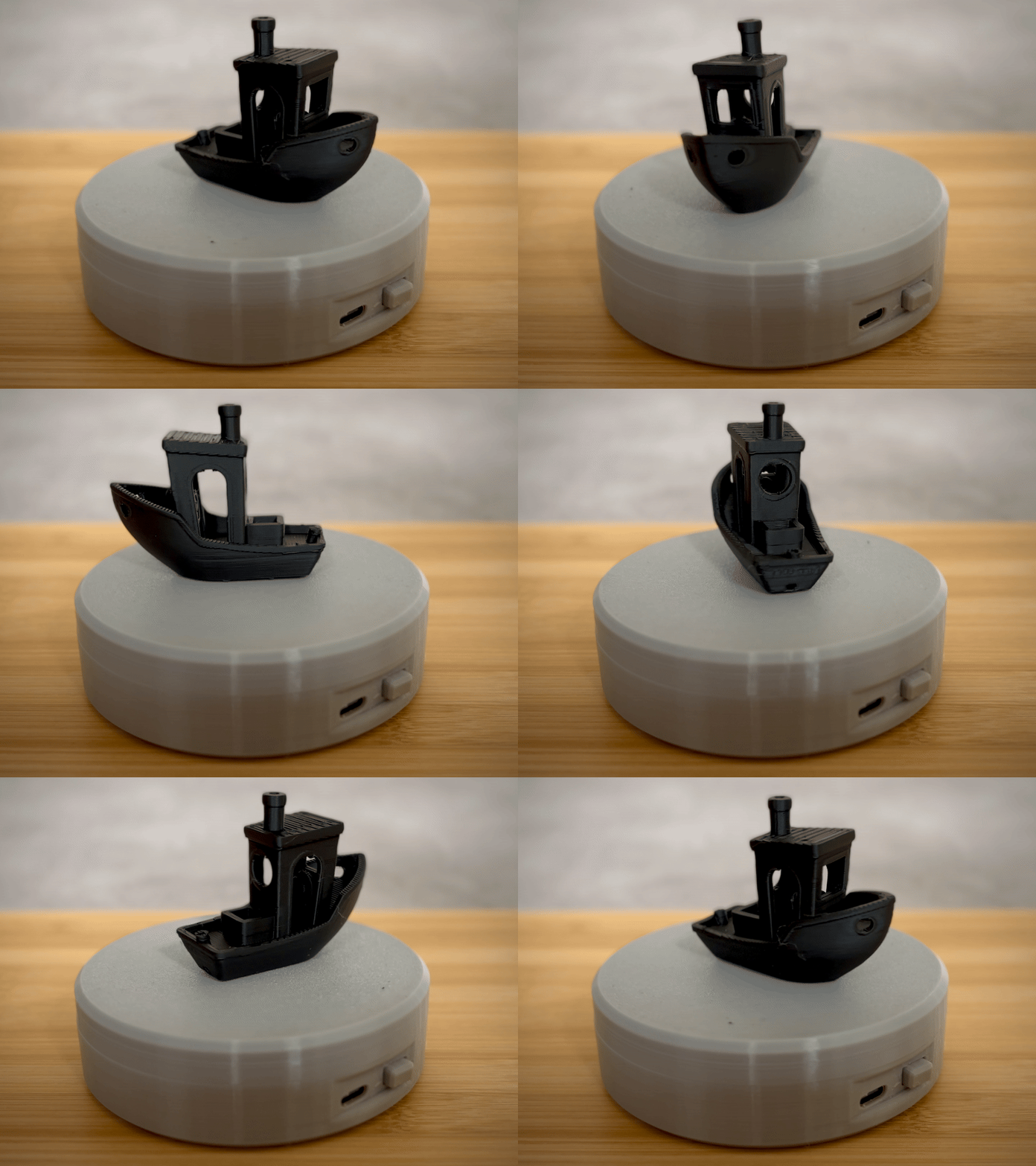

%2Fhttps%3A%2F%2Ffbi.cults3d.com%2Fuploaders%2F50206600%2Fillustration-file%2F84c532fe-1ff0-4d88-b67f-8ba4ab6ede3b%2FDrill.png&w=300)
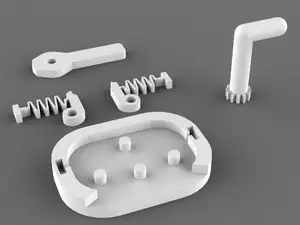





%2Fhttps%3A%2F%2Ffbi.cults3d.com%2Fuploaders%2F47526791%2Fillustration-file%2F3bbc8008-d240-4216-9f7e-de780fff7cf3%2FEkran-Alintisifinal.png&w=300)

%2Fhttps%3A%2F%2Ffbi.cults3d.com%2Fuploaders%2F14150496%2Fillustration-file%2F105b90b8-7804-4d0d-9146-7d1b04282c5d%2FScreenshot_14.png&w=300)

%2Fhttps%3A%2F%2Ffbi.cults3d.com%2Fuploaders%2F26101419%2Fillustration-file%2F989d6f1d-5377-4cdc-bd34-0a626e198c74%2FHARRY-POTTER.gif&w=300)





%2Fhttps%3A%2F%2Ffbi.cults3d.com%2Fuploaders%2F36232455%2Fillustration-file%2F6db629f7-cf26-4bdf-8840-f20efd295475%2Fimage_2025-11-23_20-33-31.png&w=300)


%2Fhttps%3A%2F%2Ffbi.cults3d.com%2Fuploaders%2F47149268%2Fillustration-file%2Fbba0bc2c-2258-4a34-bdfb-813e498be911%2F0.png&w=300)
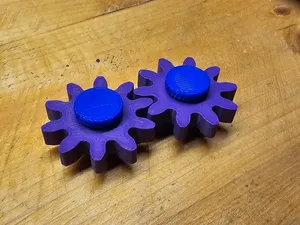

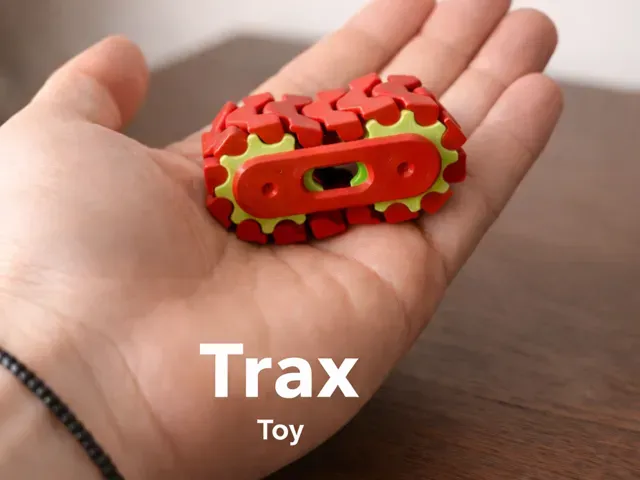
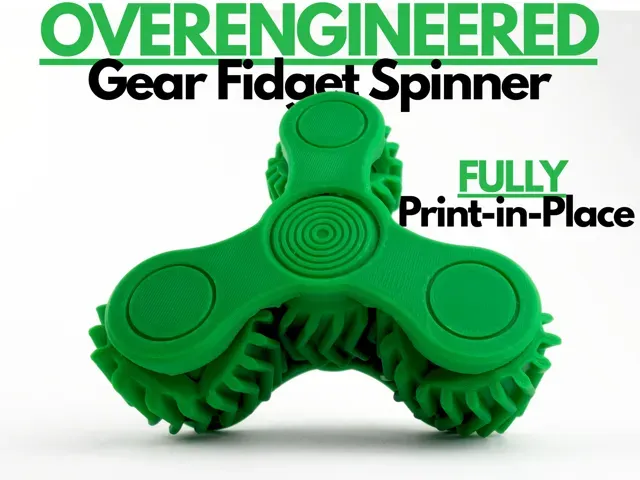
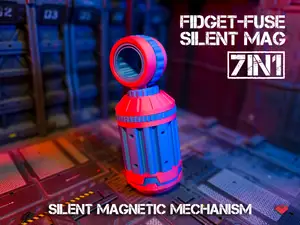
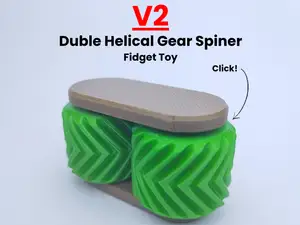
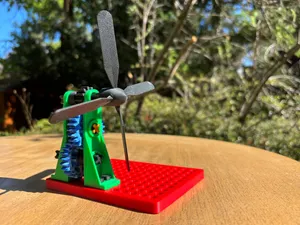
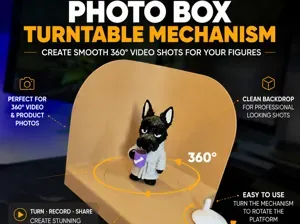
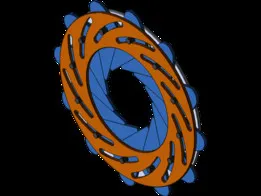
The models fall into a few groups. Fidget spinners and antistress toys often use exposed gear trains that turn by hand, while display stands and turntables hide an internal gear ring under a platform. Shutter, iris and ratchet designs turn one input into a controlled movement, and wind-up gift cards combine a small gear drive with a folded card body. Replacement gears and working model engines sit closest to real hardware, since they copy an existing part or drivetrain.
Before printing, open the author's model page and read the details. Check the size and scale, the number of parts and the assembly order, whether supports are needed, and the material and settings the author lists. Look at photos of real prints to judge tooth clearance and surface finish, and consider printing a single gear pair first to test the fit before committing to the full set.
Search results widen quickly once you try related wording. Terms such as planetary gears, worm gear, Geneva mechanism, ratchet, print-in-place and rotating stand lead to different families of models, and so do kinetic sculpture, mechanical puzzle and model engine. Combining a mechanism word with a use, for example turntable or phone stand, narrows the list further.


The full catalog of topics — from home & household to CNC, searchable across the connected sources.
%2Fhttps%3A%2F%2Ffbi.cults3d.com%2Fuploaders%2F16036302%2Fillustration-file%2Fc7fccd67-4fcf-48fe-a3b8-3fbec9fb01d2%2FSugarSifterMain-min.gif&w=640)