
Free 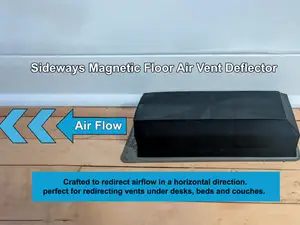
Sideways Air Vent Deflector
MakerWorld
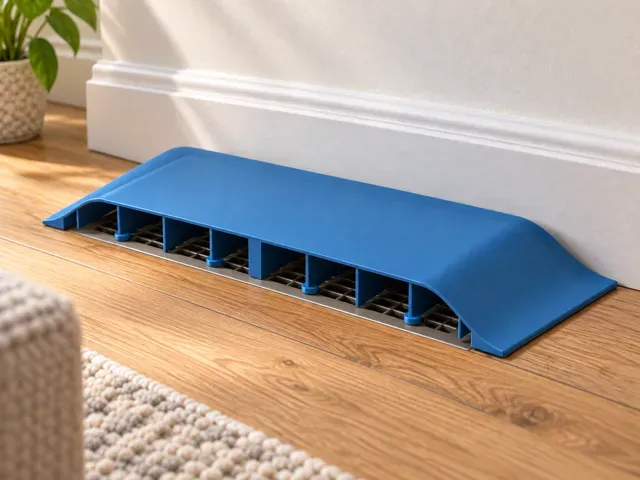
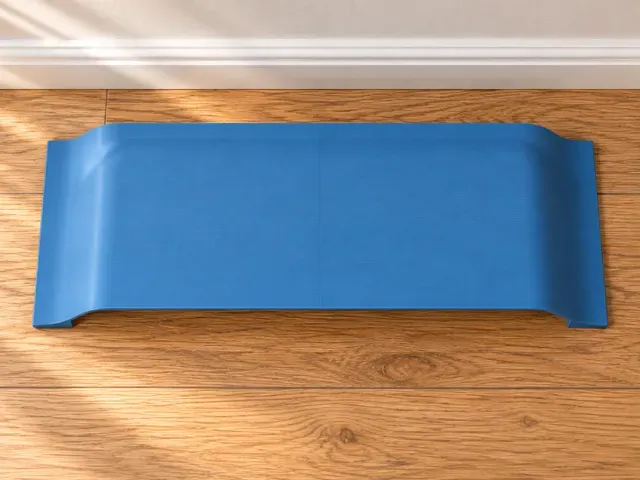
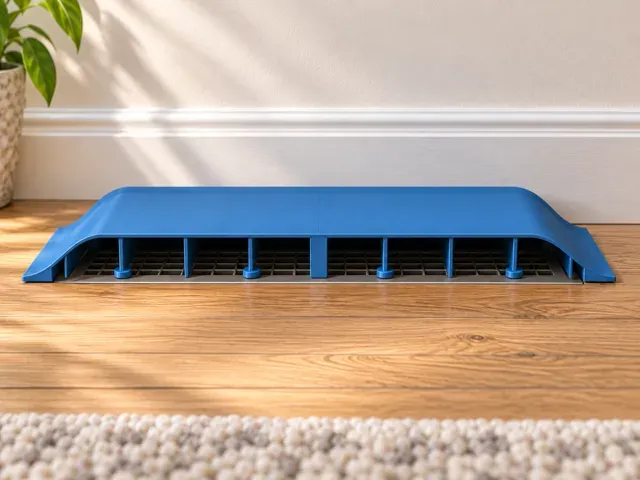
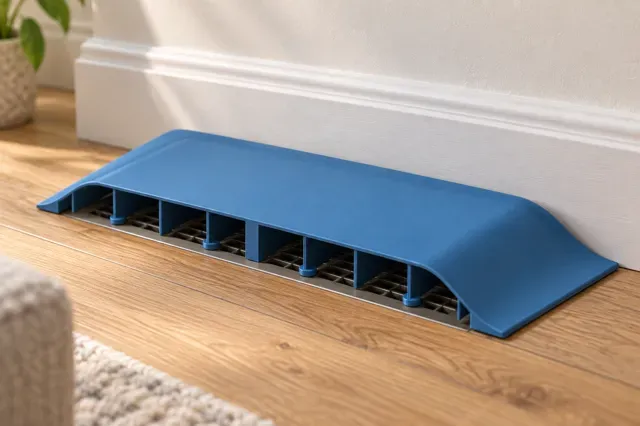
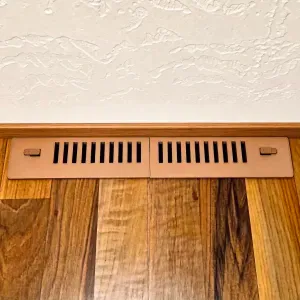
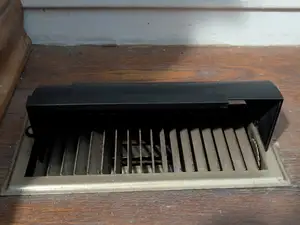
Tired of curtains catching on a tall vent deflector every time they open and close? This deflector sits low, snaps onto a steel floor register with hidden magnets, and has no vertical walls for a curtain hem to catch on. It sends air straight out into the room instead of up behind your curtains.
Designed for and tested on my own bedroom vent next to motorized curtains.
FEATURES - Low profile: 32 mm (1.25 in) tall at the outlet, and just 3 mm tall at the wall-side edge where curtains hang - Ramped ends and a curved back, so a curtain hem slides up and over instead of snagging - Wide arched outlet (about 12 sq in) with 9 internal vanes that straighten the airflow and support the roof - Attaches with 12 hidden 6 x 2 mm magnets. Nothing is stuck or screwed to your vent - Split into two halves that each fit a 256 x 256 mm bed, aligned with filament pins
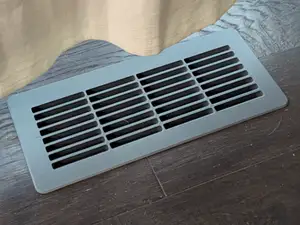
WILL IT FIT YOUR VENT? - Sized for a floor register faceplate of 13.5 x 7.5 in (343 x 190.5 mm). Measure the outer edge of the faceplate that sits on the floor. - Needs a flat border of about 3/4 in (19 mm) around the louvers for the magnets to seat on. - The faceplate must be steel. If a fridge magnet sticks, you're good. Aluminum, plastic, and wood registers won't work. - Check for a damper lever that sticks up through the louvers.
WHAT YOU NEED - 12 disc magnets, 6 x 2 mm - 2 pieces of 1.75 mm filament, about 8.5 mm long (alignment pins) - Super glue, CA glue or epoxy
PRINT SETTINGS - Material: At least PETG recommended. Do not use PLA. Heating air runs around 50 to 60°C (120 to 140°F), and PLA will sag over time. - Orientation: as supplied, flat side down - Supports: Tree (auto). The inside ceiling needs them, and they come out easily through the open bottom. - Walls: 3 to 4. Infill: 15% gyroid. - Recommended, add a 5 mm brim to keep the corners down.
ASSEMBLY 1. Scrape the bottom edge of each cut face. Elephant's foot there keeps the halves from closing flush. 2. Glue the magnets into their pockets. Polarity doesn't matter, since they attach to steel. Set each half on the register over plastic wrap while the glue cures, so the steel pulls the magnets flush. 3. Push the filament pins into one half. Glue them into that half only if you want the halves to stay separable for vacuuming the vent. For one solid piece, glue the faces too (CA, or acetone on ASA). 4. Place the first half, then slide the second half onto the pins from the side. If you lower it straight down, the magnets grab it before the pins line up.
GOOD TO KNOW - Any deflector restricts airflow compared with an open register. If you hear a whistle or the room gets noticeably less air, your system may need a taller outlet. - Cool air hugs the floor and carries farther than warm air, so the effect across the room is strongest in cooling season. - Air passes under furniture with open legs. Solid or skirted furniture in front of the vent will block it.
FILES - Left and right halves
Need a different register size? Leave a comment with your faceplate measurements and we might make it for you.
0.2mm layer, 2 walls, 15% infill

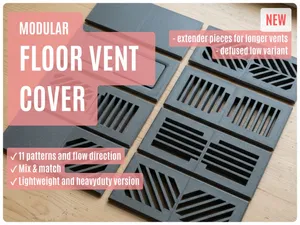
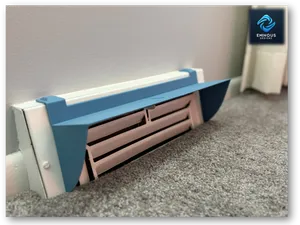


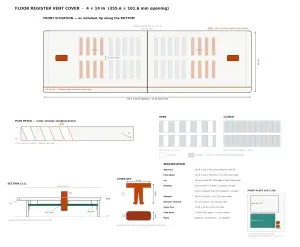

Names are used only to indicate the source of a result. Polyzon is not affiliated with the listed sites.
Comments