Paga lo que quieras 
Круглый воздушный волчок
Cults3D
This collection gathers 3D models of spinning tops, from plain one-piece tops to battle tops, launcher versions and self-righting designs. It is useful if you want a small 3D printing project that shows how mass, balance and tip shape affect spin time. Most files are small enough to print in a single session. Polyzon does not confirm whether models are free, their price, license, official status, affiliation, safety or fitness. Check the current terms at the source.
Esta colección está escrita en inglés, pero la búsqueda funciona en cualquier idioma.
 Una colección de Polyzon · 48 modelos de 5 plataformas
Polyzon reúne esta colección a partir de los resultados de búsqueda de las plataformas conectadas. Se eliminan los duplicados y los modelos sin vista previa, las coincidencias débiles van al final y el resto mantiene el orden de la búsqueda. Los modelos pertenecen a sus autores: consulta las condiciones en la página de cada modelo.
Criterios de selección: el equipo editorial de Polyzon · Texto actualizado el 11/10/2026


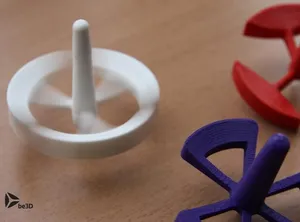


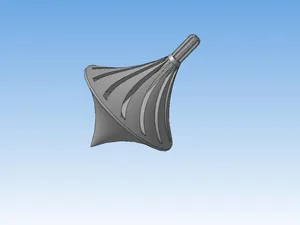


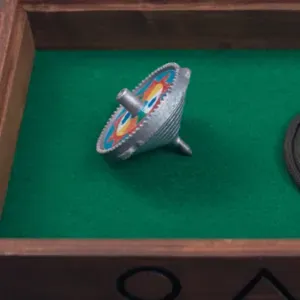
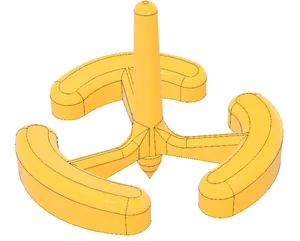


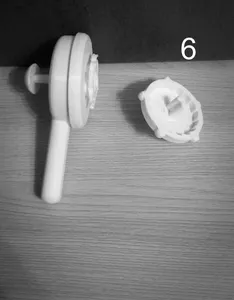

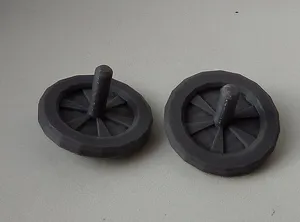
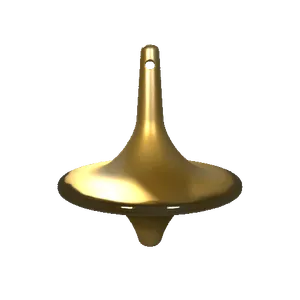



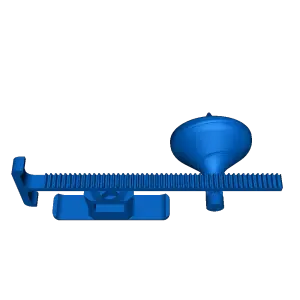



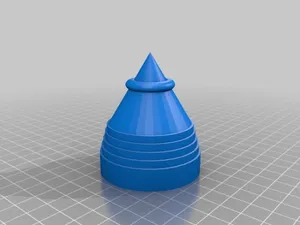


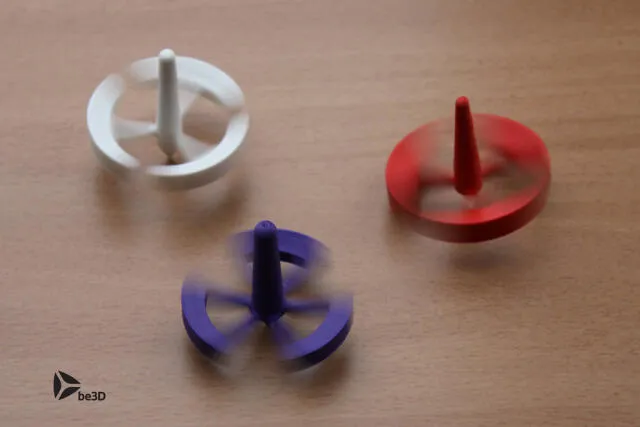
The models differ mainly in how they are meant to be used. Classic tops are usually a single body with a rounded or pointed tip, while battle tops add a wider rim and are printed in pairs so they can knock each other out of a ring. Launcher versions include a separate handle or a socket for a string, and tippe tops are shaped so they flip onto their stem as the spin slows. Themed sets take the same basic geometry and change the outline, so the printed object reads as a planet, an animal or an abstract shape.
When choosing a file, open the author's page and read the listed dimensions first, since a top that is only a few centimetres wide behaves differently from a larger one. Check how many parts are in the download, whether they are meant to be glued or press-fitted, and what material and layer height the author used. A low centre of mass and a smooth tip matter more than decoration: a rough tip or an uneven bottom layer shortens the spin noticeably.
To narrow the results, try synonyms such as top, toupie, gyro or fidget spinner, and combine them with words like battle, launcher or tippe. Related searches include kinetic toys, desk toys and fidget models, which often contain similar spinning parts. If you want a specific behaviour, search for the mechanism instead of the object name, for example self-righting or long-spin designs.


El catálogo completo de temáticas, del hogar al CNC, con búsqueda en todas las plataformas conectadas.