Knife Models in Parts: STL Files for 3D Printing
This collection gathers knife designs that are split into separate parts, from folding and gravity mechanisms to fixed utility blades and multi-part combat builds. It helps you compare how each model is assembled before you send an STL to a 3D printer. Some files focus on a few printed components, while others include handles, sheaths and display stands. Polyzon does not confirm whether models are free, their price, license, official status, affiliation, safety or fitness. Check the current terms at the source.
Le texte de cette collection est rédigé en anglais ; la recherche, elle, fonctionne dans toutes les langues.
 Une collection Polyzon
Comment cette collection est composée
Polyzon compose cette collection à partir des résultats de recherche des plateformes connectées. Les doublons et les modèles sans aperçu sont retirés, les correspondances faibles sont placées à la fin, et le reste suit l’ordre de la recherche. Les modèles appartiennent à leurs auteurs : consultez les conditions sur la page de chaque modèle.
Règles de sélection : la rédaction de Polyzon · Texte mis à jour le 13/10/2026
La base de résultats est en cours d’alimentation. Ouvrez la recherche complète pour obtenir dès maintenant des modèles à jour.
Rechercher « knife models in parts: STL files for 3D printing »«Knife Models in Parts: STL Files for 3D Printing»
Folding and gravity styles often rely on printed pivots, pins or sliding channels, so their part count and clearances matter more than surface detail. Fixed utility knives usually separate into blade, handle scales and a sheath, which changes how you orient each piece on the build plate. Multi-part combat or display knives may include removable sections, stands or extra blades, making assembly a larger part of the project.
On the author’s model page, check the listed size and scale, the number of separate parts, and whether supports are needed for overhangs. Look at the material and settings the author mentions, then compare those notes with photos of real prints to judge how the parts fit together. If the design uses moving joints, pay attention to tolerances and the direction each piece should be oriented.
To narrow the results, try related terms such as folding knife, balisong, gravity knife, utility blade, sheath, handle scales or segmented blade. You can also search by mechanism, part count or assembly style, and combine those words with 3D printing or STL. If you want a simpler build, look for models described as print-in-place or few-part, and review the part list before downloading.
Questions fréquentes
What does "knife in parts" mean in 3D printing?
Do folding knife models need supports?
How can I find a knife model with fewer assembly steps?
What should I check before printing a multi-part knife?
Collections similaires

Knife Accessories: 3D Models and STL Files
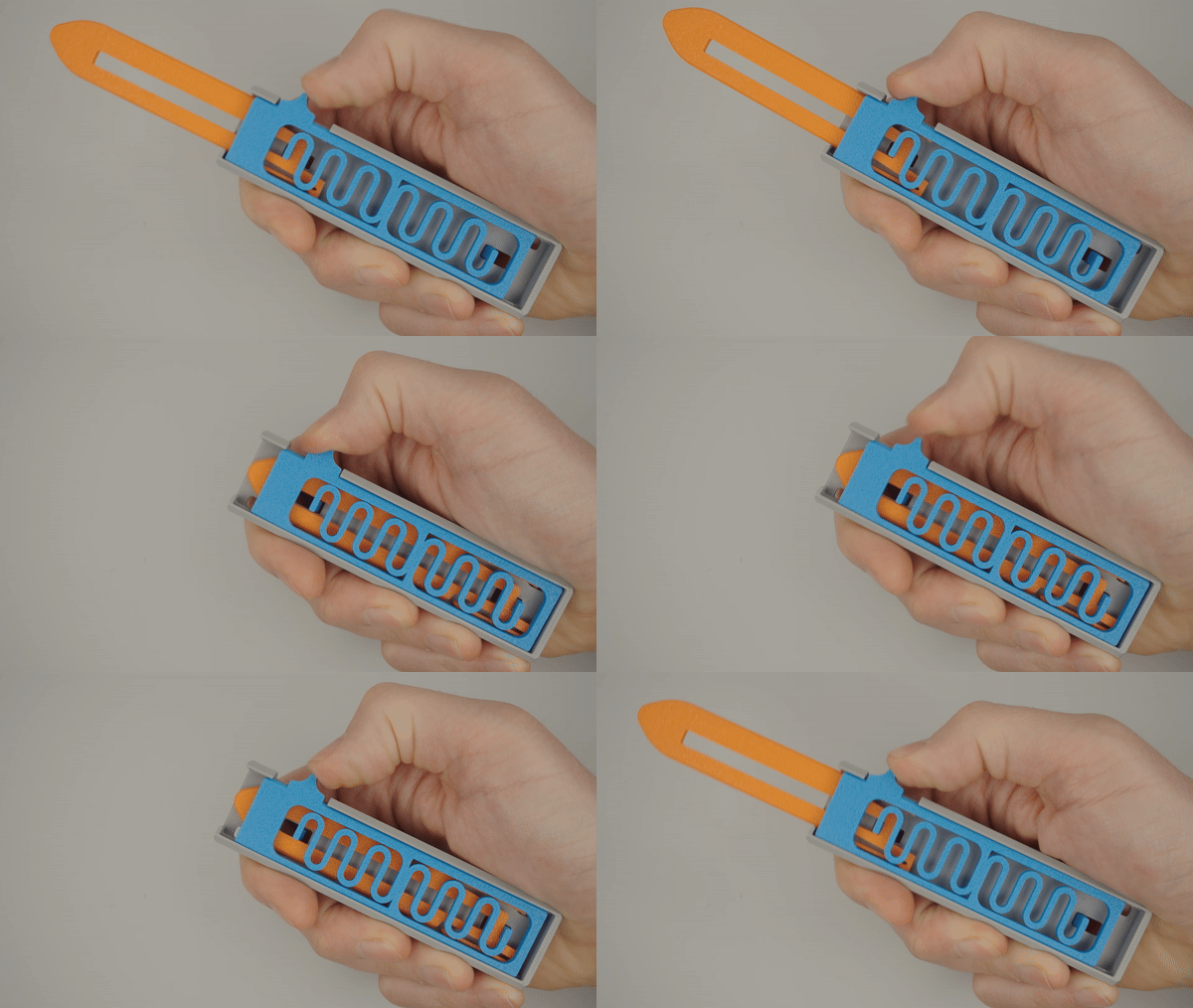
3D Models of Knives: Fidget, Utility and Hobby

Knife Stand 3D Models and STL Files

Knife Handle 3D Models: STL Files for Printing

Multipart Hare and Bunny 3D Models to Print

Knife Handle 3D Models and STL Files
Toutes les catégories de modèles 3D
Le catalogue complet des thèmes, de la maison à la CNC, avec une recherche sur tous les sites connectés.