
Gratuit 
Customizable Cable Tie
Thingiverse
This collection gathers 3D models of cable ties and the parts that go with them: reusable straps, flexible ties, clips, mounts and organizers. It is useful when you want to replace a disposable tie with something you can open and close again, or when a cable run needs a holder rather than a knot. Every file here is meant for 3D printing, so the choice usually comes down to material and geometry rather than to the tie alone. Polyzon does not confirm whether models are free, their price, license, official status, affiliation, safety or fitness. Check the current terms at the source.
Le texte de cette collection est rédigé en anglais ; la recherche, elle, fonctionne dans toutes les langues.
 Une collection Polyzon · 48 modèles sur 4 plateformes
Polyzon compose cette collection à partir des résultats de recherche des plateformes connectées. Les doublons et les modèles sans aperçu sont retirés, les correspondances faibles sont placées à la fin, et le reste suit l’ordre de la recherche. Les modèles appartiennent à leurs auteurs : consultez les conditions sur la page de chaque modèle.
Règles de sélection : la rédaction de Polyzon · Texte mis à jour le 12/10/2026




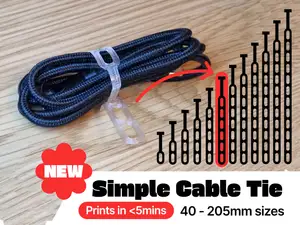
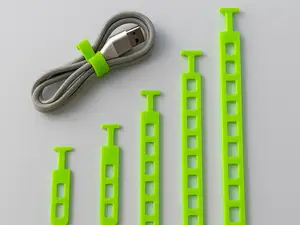


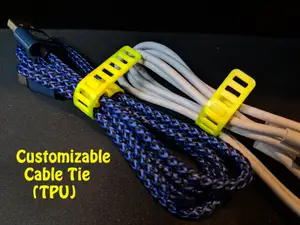
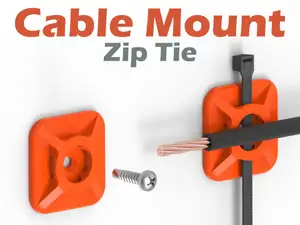


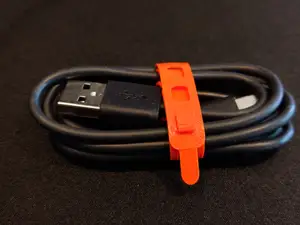
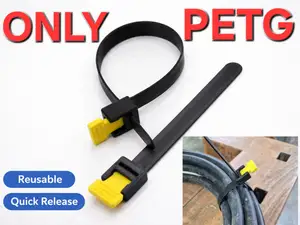


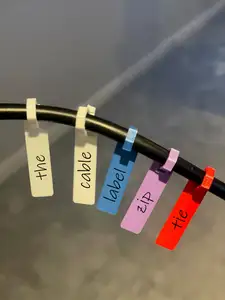


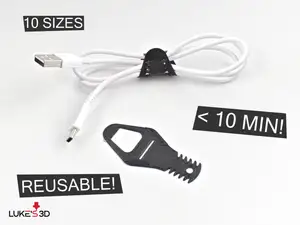
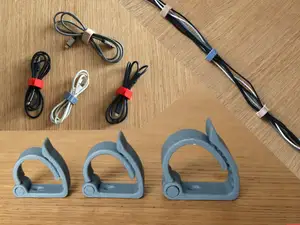


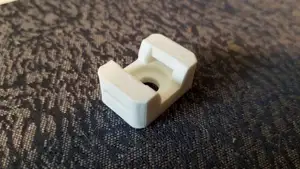
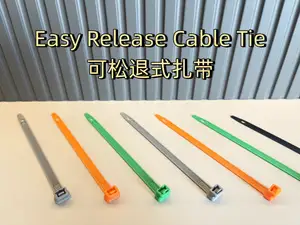


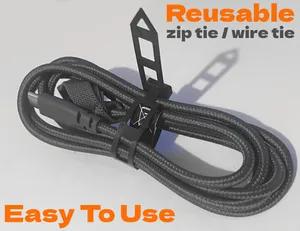
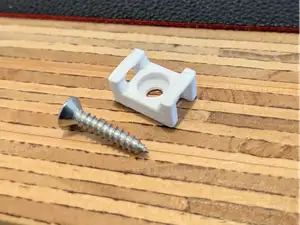


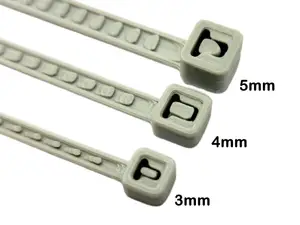


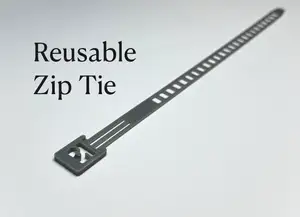


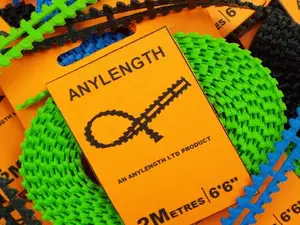
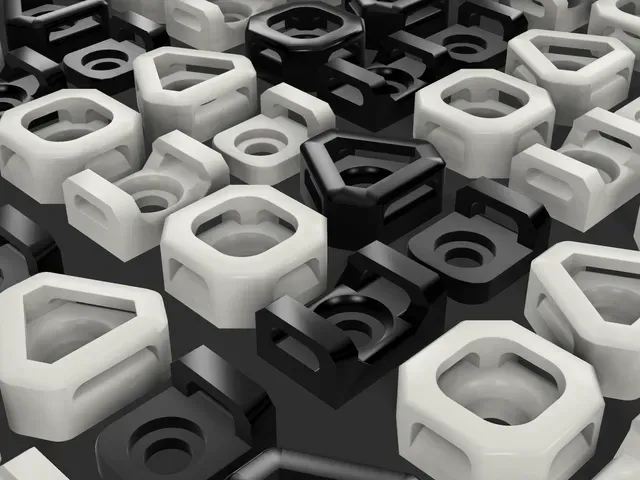
The models fall into a few groups. Some are straight replacements for a common tie, with a latch or a release tab so the loop can be undone. Others are printed in a soft filament so the strap bends without cracking, and a third group is not a tie at all but a mount, clip or base that holds a bundle against a wall, a desk edge or a frame. Parametric versions let you change length and width before exporting the mesh.
When you open a model page, look at the dimensions and the number of parts first, since a tie that is too short for your bundle is useless and a multi-part latch needs assembly. Check whether the author lists supports, layer height and material, and read how the latch or hinge is oriented on the plate, because that decides whether the moving part survives. Photos of real prints show how the mechanism behaves better than a render does.
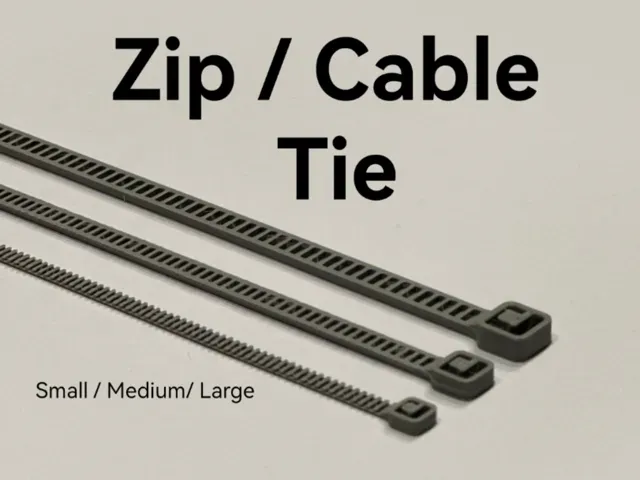
To widen the search, try the words people use for the same object: zip tie, cable clip, cable holder, cord organizer, cable comb or cable management. Related topics are worth a look too, such as desk cable routing, printer frame clips, wall mounts for network cables, and reusable straps for travel bags. Adding the material or the printer type to the query often narrows the list faster than adding another synonym.


Le catalogue complet des thèmes, de la maison à la CNC, avec une recherche sur tous les sites connectés.