

Ücretsiz 
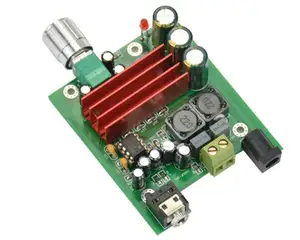
Bluetooth 2.1 Amplifier 2x50W+100W TPA3116D2
Thingiverse
This collection gathers 3D printing files built around TPA3116 amplifier boards: enclosures for bare boards, housings for 2.1 subwoofer setups, Bluetooth versions with room for a module, and smaller parts such as front panels and desk mounts. It helps you find a case that matches the board you already have instead of designing one from scratch. Most files are STL meshes you slice for your own 3D printer. Polyzon does not confirm whether models are free, their price, license, official status, affiliation, safety or fitness. Check the current terms at the source.
Bu koleksiyonun metni İngilizce; arama ise her dilde çalışır.
 Bir Polyzon koleksiyonu · 48 model 5 siteden
Polyzon bu koleksiyonu bağlı sitelerdeki arama sonuçlarından oluşturur. Tekrarlar ve önizlemesi olmayan modeller çıkarılır, zayıf eşleşmeler sona alınır, geri kalanlar arama sırasını korur. Modeller yazarlarına aittir; her modelin sayfasındaki koşulları kontrol edin.
Seçim kuralları: Polyzon editör ekibi · Metin güncellendi: 14.10.2026


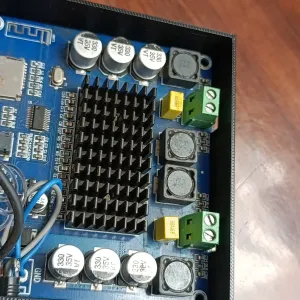


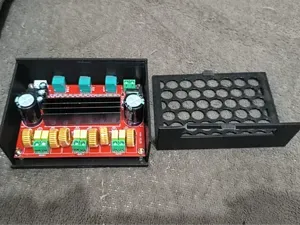

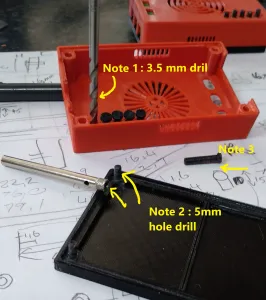
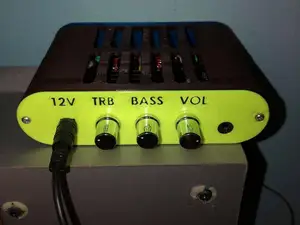

The models differ mainly in what they are meant to hold. Simple enclosures wrap a single stereo board and leave cutouts for power, input and speaker terminals. Larger 2.1 housings add space for a subwoofer channel, a power supply or a heatsink, and Bluetooth variants include openings for a module, a switch and a volume control. Smaller pieces such as front panels, mounting plates and desk stands solve one part of the build rather than the whole box.
Before printing, compare the model against your board. Check the outer dimensions, the spacing of the mounting holes, and the position and size of every connector cutout, since a few millimetres of difference can block a jack or a terminal. Look at how many parts the case has and how they join, whether the author notes supports for overhangs, and which material and slicer settings are listed. Photos of finished prints show how the lid, vents and cable openings actually come out.
If the first results are too narrow, widen the search. Try enclosure, housing, box or chassis instead of case, and add terms such as stereo, class D, 2.1 channel, subwoofer board, volume knob, heatsink or ventilation. Related chips and board families appear under similar names, so searching for a neighbouring amplifier chip or for a generic mini amplifier often surfaces files that fit the same footprint. Combining a board size with a connector type also narrows things down.


Ev ve günlük yaşamdan CNC'ye kadar tüm konuların kataloğu; bağlı sitelerin hepsinde arama yapabilirsiniz.

