
免费 
Smart compact temperature calibration tower
Thingiverse
This collection gathers STL files for temperature towers, bridging tests, stringing checks, and G-code helpers used in 3D printing. It helps you compare how a filament behaves across a temperature range before committing to a larger print. Some entries are compact single tests, while others bundle several calibration steps. Polyzon does not confirm whether models are free, their price, license, official status, affiliation, safety or fitness. Check the current terms at the source.
本合集的文字为英文,搜索本身支持任何语言。
 Polyzon合集 · 48个模型 来自7个平台
此合集由Polyzon根据已接入平台的搜索结果整理而成:去除重复项和没有预览图的模型,匹配度低的排在最后,其余按搜索结果顺序排列。模型归作者所有——请在各模型页面查看使用条款。
筛选规则:Polyzon编辑部 · 文字更新于2026年10月12日




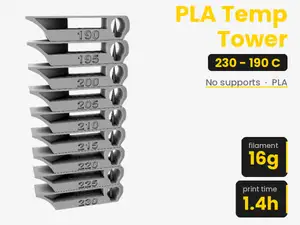


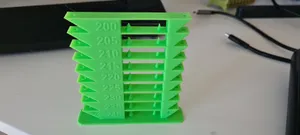
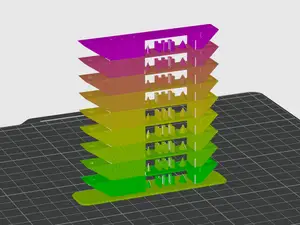


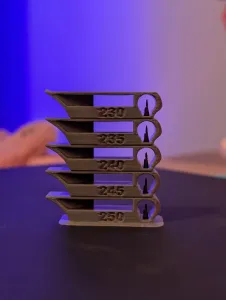

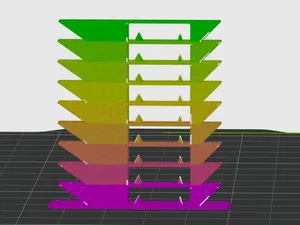
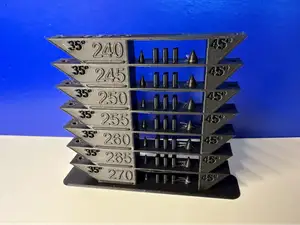
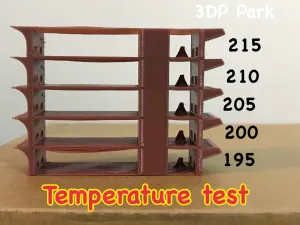


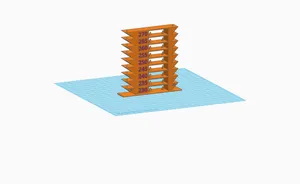

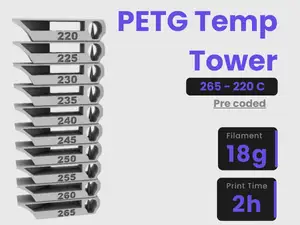
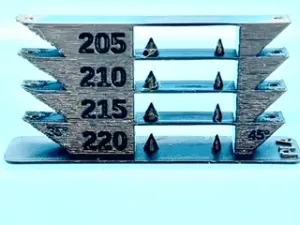



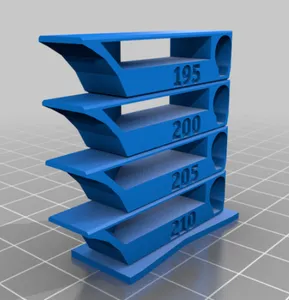
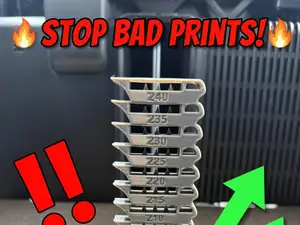


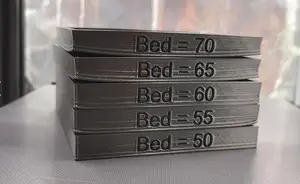
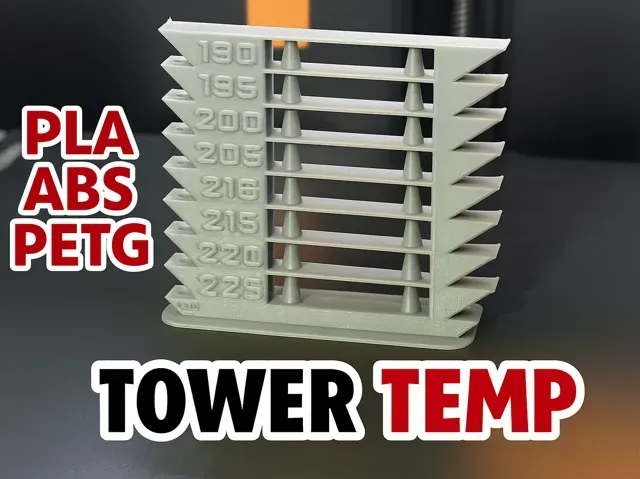
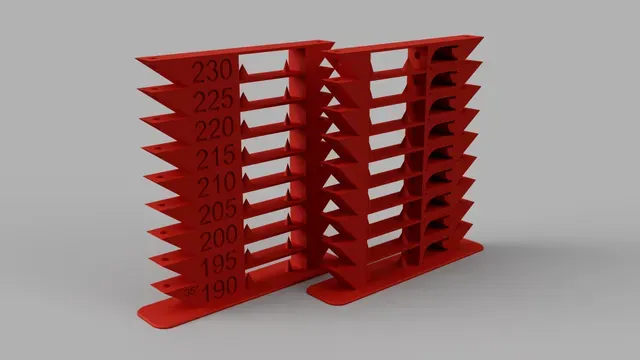
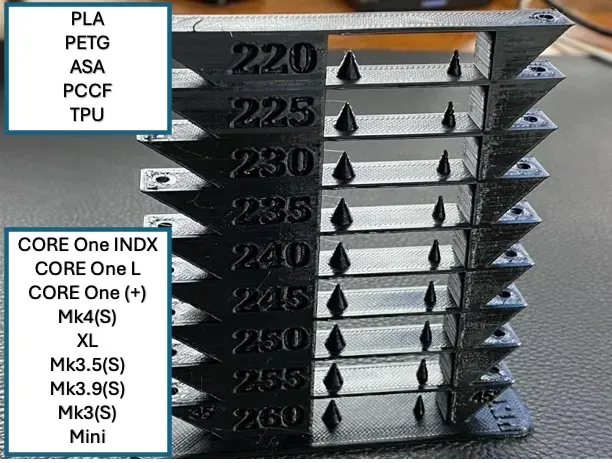
Temperature towers usually step through a range of nozzle temperatures in one print, so you can see where layers bond cleanly, where stringing appears, and where bridging sags. Bridging and stringing blocks isolate those effects with gaps, spans, and thin pillars. All-in-one pieces combine temperature steps with bridging or stringing sections, while material-specific files list ranges for PLA, PETG, ABS, ASA, TPU, or other filaments.
When choosing a model, look at the temperature range and step size, the number of sections, and whether the file includes a pre-made G-code profile or expects you to edit temperatures yourself. Check the author's notes for nozzle size, layer height, material, and any required supports or brim. Photos of real prints can show how clearly the tower labels temperatures and how the test sections are arranged.
To refine a search, try terms such as temp tower, temperature calibration, bridging test, stringing test, and G-code editor. Related topics include retraction tests, flow calibration, and filament-specific tuning. Adding a material name or a printer profile name to the query can narrow results, but always verify the details on the model page.





完整的主题目录:从家居日用到CNC,均可在已接入的来源平台中搜索。