
Kostenlos 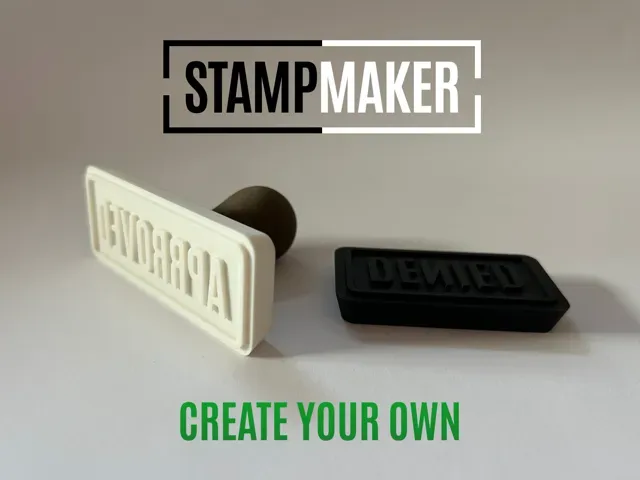
Stamp Maker - Customizable Stamps
MakerWorld
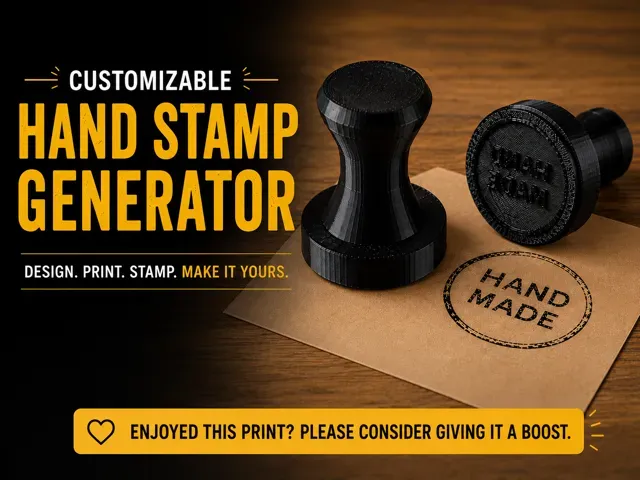
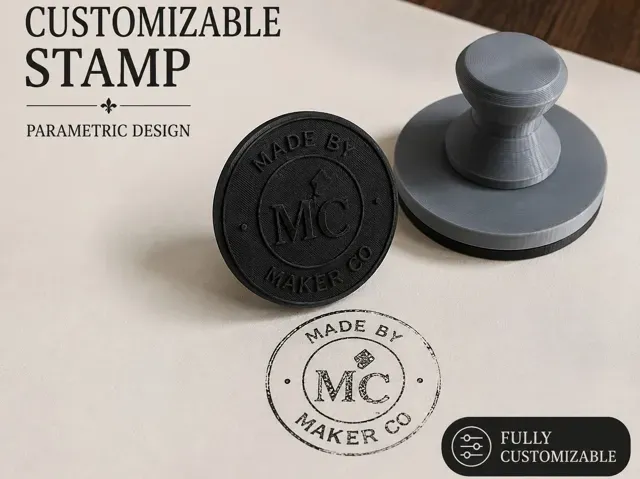
This collection gathers 3D models for stamps of several kinds: customizable text and mark stamps, wax seals, paper embossers, and cutter-and-stamp sets for dough or clay. Each entry is a file you can slice for a 3D printer, and many can be adapted to your own text or shape. Browsing the range helps you compare how a stamp is built before you commit to a print. Polyzon does not confirm whether models are free, their price, license, official status, affiliation, safety or fitness. Check the current terms at the source.
Der Text dieser Sammlung ist auf Englisch verfasst; die Suche selbst funktioniert in jeder Sprache.
 Eine Sammlung von Polyzon · 48 Modelle von 6 Plattformen
Polyzon stellt diese Sammlung aus den Suchergebnissen der angebundenen Plattformen zusammen. Dubletten und Modelle ohne Vorschaubild werden entfernt, schwache Treffer rutschen ans Ende, der Rest bleibt in der Reihenfolge der Suche. Die Modelle gehören ihren Urhebern – die Bedingungen findest du auf der Seite des jeweiligen Modells.
Auswahlregeln: Polyzon-Redaktion · Text aktualisiert: 11.10.2026



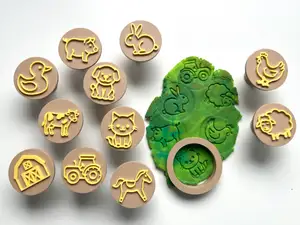


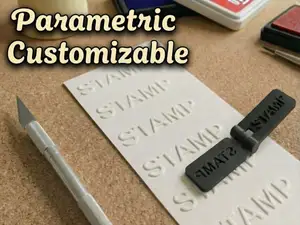


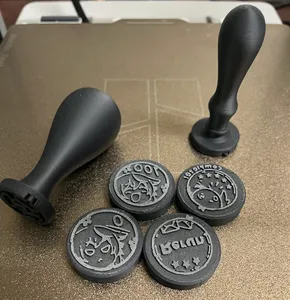

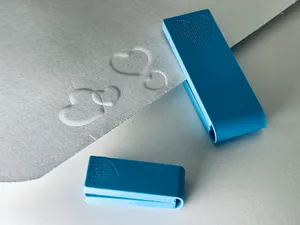
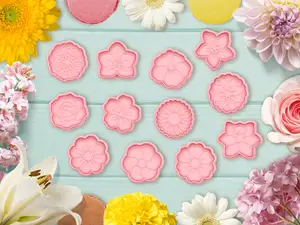

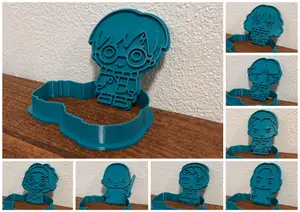
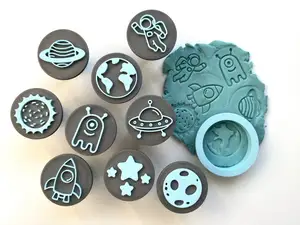
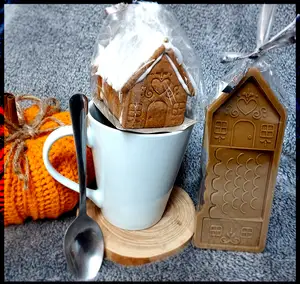


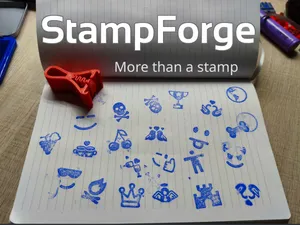
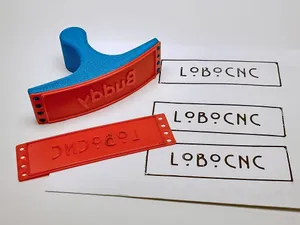
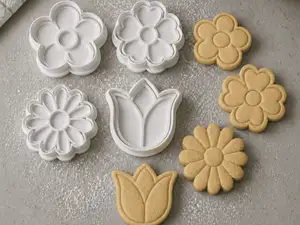
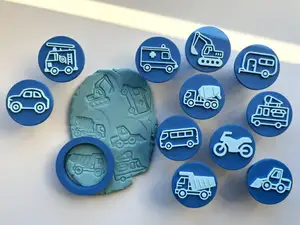


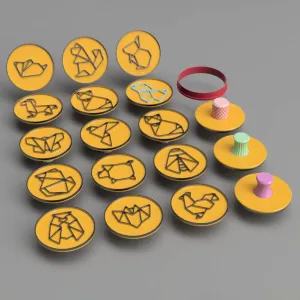


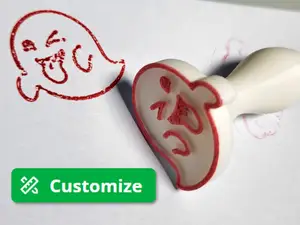

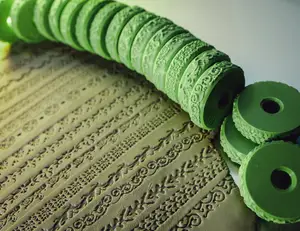


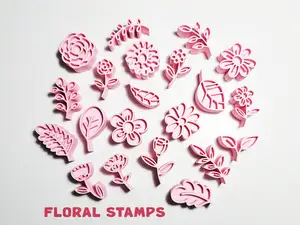
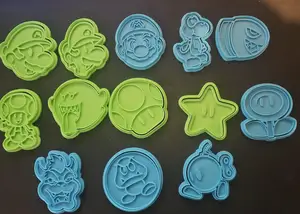
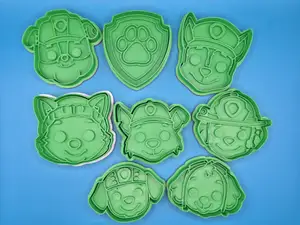

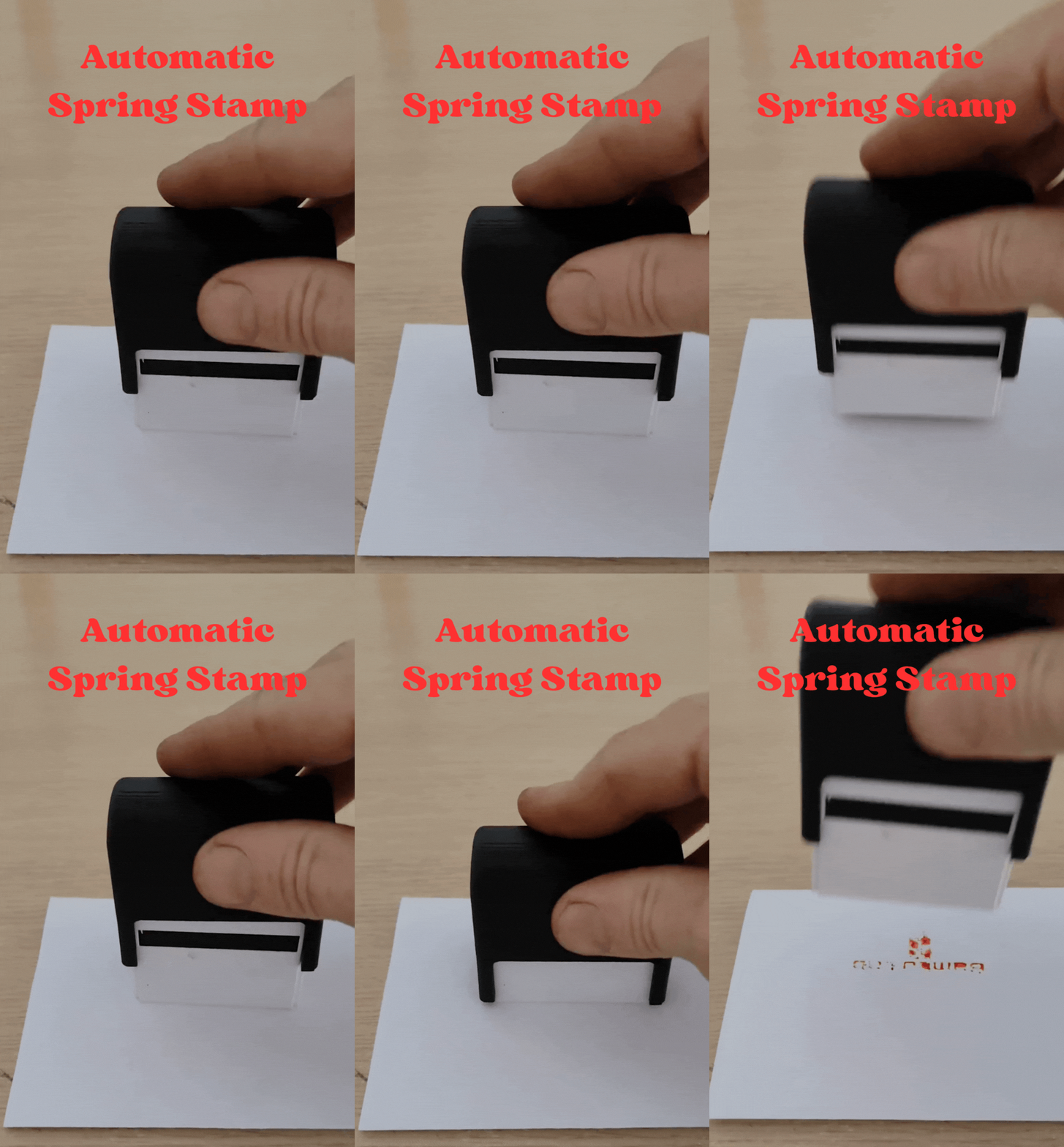
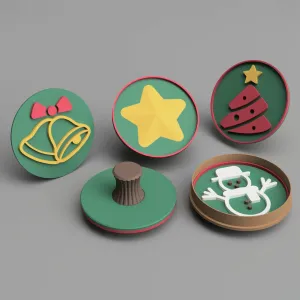
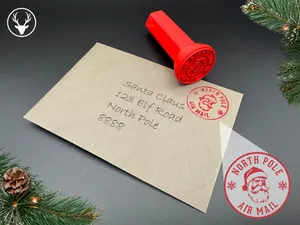
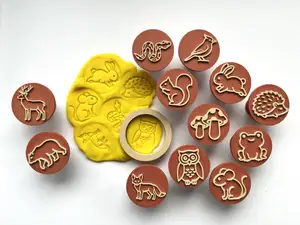
The entries differ mainly in what the stamp presses into and how the design is held. Text and mark stamps often take a separate insert or a generated plate that fits a common handle, while seal stamps are pressed into wax and are frequently a single piece with a grip. Cutter-and-stamp sets combine a shape that cuts an outline with a plate that presses a pattern into the surface.
Before printing, read the notes on the model page: overall size and scale, how many parts there are and how they join, and whether the file needs supports. The material and settings the author lists matter as much as the geometry, because a stamp pressed into dough behaves differently from one pressed onto paper. Photos of real prints show how fine the relief turns out after slicing.
If a search returns little, try the words people use for the same object: seal, embosser, punch, mark, monogram or press. Adding the surface or material narrows it further — wax, clay, leather, dough, paper — and a related term such as cookie cutter or playdough set brings up combined tools. How the design is generated, from typed text or from an image, is another way to split the results.


Der komplette Themenkatalog – von Wohnen & Haushalt bis CNC, mit Suche auf allen angebundenen Plattformen.